Two white horses pulled the hearse into Concord’s Sleepy Hollow Cemetery, a top-hatted driver at the reins. A band of mourners followed on foot as they made their way toward Authors’ Ridge.
Except for the bright sunshine, this scene wouldn’t seem out of place in a story by Nathaniel Hawthorne. But it happened a mere twenty years ago, on June 26, 2006. That was the day Hawthorne and his wife and daughter were reunited after his death separated them 142 years earlier.
Few American writers are as closely connected to a place as Henry David Thoreau (1817–1862). The landscapes of Concord and the surrounding towns—today part of Freedom’s Way National Heritage Area—shaped his ideas, inspired his writing, and helped define a philosophy that continues to influence readers around the world.
This itinerary follows Thoreau’s journey through the places that mattered most to him. From his birthplace at Thoreau Farm to his final resting place in Sleepy Hollow Cemetery, these homes, buildings, fields, forests, and waterways reveal the people and topography that helped form one of America’s most influential thinkers.
In the fall of 2002, a group of Concord residents formed The Friends of Sleepy Hollow Cemetery with the mission to provide leadership to beautify, enhance, and advance the Cemetery, one of Concord’s treasures.
One of the most important decisions we can make is where to spend our time – either on a visit, or when thinking about where to put down roots and build a family and community. One of the aspects of Concord that attracts so many people from around the world to come here – to spend time, or to stay – is the unique essence of ‘place.’
In 2002, a volunteer group of citizens formed The Friends of Sleepy Hollow Cemetery with the mission focused on the continuing enhancement and beautification of and furthering education about that Concord treasure. Guided by a Board of Directors, with full appreciation to those supporters who contribute through an Annual Appeal and otherwise, and in liaison communication and collaboration with the Town’s Cemetery Committee, the organization has successfully continued for two decades, and goes on.
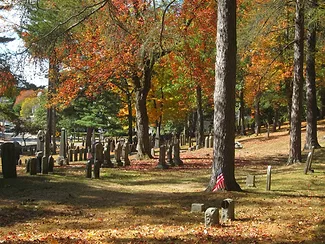
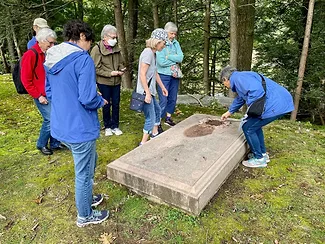
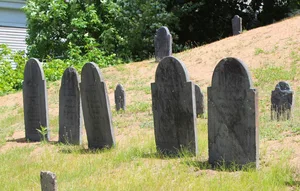
The expression “dead men tell no tales” may not quite ring true. The men, women, and even small children buried in Concord’s three burying grounds have much to teach us about the town’s early colonial history, its revolutionary chapter, and even our literary legacy. Take a stroll, enjoy the stunning fall foliage, and take a trip back in time to learn more about Concord’s British and American history.
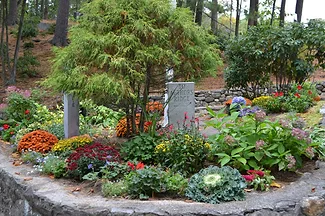
Sleepy Hollow Cemetery, which is recognized on the National Register of Historic Places, is the final resting place of many well-known luminaries like Louisa May Alcott, Nathaniel Hawthorne, Henry David Thoreau, and others whose lives have been documented in numerous ways.
But there is much more to Sleepy Hollow Cemetery, including the burial sites of some fascinating people who may not be as familiar. Their graves can be located on the framed maps at the Cemetery entrances.