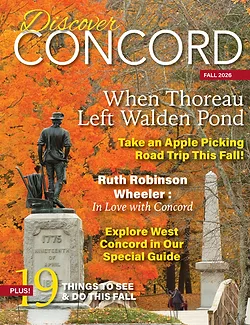
It’s Fall - time to venture out and explore the places, people, and stories that make this region so special. Begin by planning a day out with our special insert, “An Apple Picking Road Trip.” Our second special guide invites you to spend a day exploring West Concord. Discover the fascinating lives Henry David Thoreau lived after leaving Walden Pond and encounter a possible Hawthorne family curse, a forgotten Yankee hero, and Ruth Robinson Wheeler. And of course, concerts, exhibitions, festivals, walks, talks, and family activities await you throughout the season. Turn to “Things to See & Do this Fall” and “Arts Around Town” for all the details. Happy fall.
Discover West Concord and find surprises on every corner. From great food to eclectic shops, activities for kids, the arts, and more. West Concord has so much to offer!
Your palm is crossed by unique flowing lines that fortune tellers link to your fate. But what if that fate passed through your hand to someone else? In a poem he wrote in childhood, Nathaniel Hawthorne mused, “Oh could I raise the darken’d veil, which hides my future life from me. Could unborn ages slowly sail, before my view—and I could see my every action painted there, to cast one look I would not dare.”