Americans have a deep reverence for those who perished in military service. Communities remember those who died during their service by providing free military gravestones, placing flags on graves, and erecting monuments or memorials. The soldiers who died during the Revolutionary War were America’s first veterans. Here in Concord, there has been a long-standing tradition each Memorial Day of reading the names of those who died in service. Until 2023, only one name was read for the Revolutionary War: Reverend William Emerson. For as long as anyone could remember, he was the only person remembered by the town for dying during his service in the Revolutionary War.
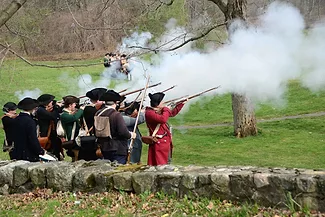
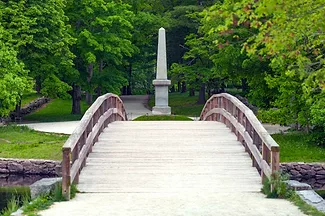
The Battle at the North Bridge on April 19, 1775, was well documented, but the running battle of the minutemen and militia companies chasing the Regular Army out of Concord back to Charlestown along what we now call Battle Road is lesser-known. Records are incomplete and make the first five miles of the retreat impossible to reconstruct accurately. Nevertheless, the National Park Service has hunted down slender clues to provide a more complete history to the forgotten families who experienced fighting on their front lawns. Minute Man National Historical Park Ranger Jim Hollister was able to share some stories about families that lived on the Battle Road.
Welcome to Concord! Wondering how to make the most of your time here? Whether you are in town for a morning, a day, or a weekend, this itinerary will help you get started!
Some folks visit Concord for its role in the American Revolution, while others are on a mission to see a favorite author’s home. If you are eager to visit sites related to Concordians who influenced American culture thanks to their connection to Transcendentalism, here is a nice way to turn that interest into a pleasant walk in Concord, Massachusetts.
What was the Provincial Congress?
In 1630, when colonists from England
settled the Massachusetts Bay Colony, a charter allowed the settlers to run the colony as they saw fit. Therefore, there was a bottom-up government in addition to a top-down government.
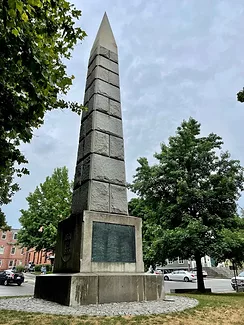
The focal point of Concord’s historic Monument Square is the Civil War Monument. A bronze plaque on the obelisk honors the names of 48 local men who lost their lives in the Civil War; however, 49 Concord men paid the ultimate price. Private George Washington Dugan’s name is missing.
Wanderlust became a real thing for many during the pandemic. As a result, people found themselves pining to take trips they had put off previously. Now, as travel returns, we welcome you to Concord. Whether you are in town for an afternoon, are a day-tripper, or can spend an entire weekend in town, don’t worry. We have you covered.
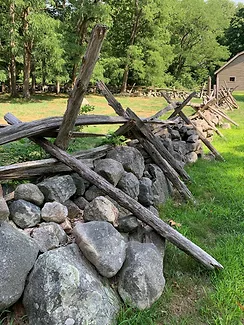
When thinking of famous walls in history, what are the first that come to mind? The Great Wall of China, Hadrian’s Wall, and the Berlin Wall are all common answers. What about the stone walls at Minute Man National Historical Park? Those simple barriers might not be the first wall you think of, but their role in history is just as important as the more well-known walls.