In the mid-1830’s, a new word entered the American lexicon; Transcendentalism. It was a word that was vague and confusing, a word that seemed mystical, spiritual, and possibly even blasphemous. Even today, 170 years later, Transcendentalism is still misunderstood, and many people have a hard time explaining what it was and what it means.
Lexico.com defines Transcendentalism as
“an idealistic philosophical and social movement which developed in New England around 1836 in reaction to rationalism. Influenced by romanticism, Platonism, and Kantian philosophy, it taught that divinity pervades all nature and humanity, and its members held progressive views on feminism and communal living. Ralph Waldo Emerson and Henry David Thoreau were central figures.” Simply put, it is the idea that God is present in all things, that we are surrounded by divinity. All of nature is divine, and therefore, since man is a part of nature, we have the capability to be divine as well.
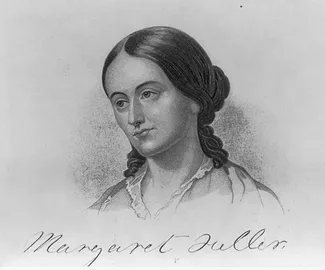
Margaret Fuller (1810-1850) was a “feminist” before the word existed.
Fuller’s father rigorously educated his eldest child as if she were a son, bestowing on her a formative belief in the gender-equality of the mind and spurring her own career as a teacher. In her thirties, Fuller’s erudite reputation preceded her as a leader in the emerging Transcendentalist movement, a philosophy that revitalized the role of the individual in society in the decades preceding the American Civil War. Along with Elizabeth Peabody, Sophia Ripley, Abigail May Alcott, and Lidian Emerson, Fuller was among those women who actively shaped Transcendentalism and used its impetus to further social aims.