Discover Concord Logo
Toggle Mobile MenuToggle Mobile Menu
Subscribe
  • Home
  • Current Issue
  • Back Issues
    • Spring 2026
    • Fall 2025
    • Spring 2025
    • Winter 2025
    • 2024 Back Issues
    • 2023 Back Issues
    • 2022 Back Issues
    • 2021 Back Issues
    • 2020 Back Issues
    • 2019 Back Issues
  • Browse Topics
    • Abolitionism in Concord
    • American Revolution
    • Arts & Culture
    • Celebrity Profiles
    • Civil War
    • Concord History
    • Concord Writers
    • First Nations People of Concord
    • Historic Sites in Concord
    • Parks & Nature
    • Patriots of Color
    • Things to See & Do
    • Transcendentalism
    • Trivia
    • Untold Stories of Concord
  • Plan Your Visit
  • Events
  • Purchase Subscriptions and Back Issues
  • Discover the Battle Road
  • 250 Collectibles
  • More
    • About Us
    • Advertise
    • Contact Us
Toggle Mobile MenuToggle Mobile Menu
Home » Authors » Kristi Lynn Martin
Kristi Lynn Martin

Kristi Lynn Martin

Dr. Kristi Lynn Martin is an independent interdisciplinary scholar specializing in Concord’s nineteenth-century literary circle. She has worked with Concord’s many literary-historic sites, including portraying Margaret Fuller for living history programming during and following Fuller’s bicentennial celebration.

Articles

ARTICLES

sculptor-May-2026-ChihaPortraits.jpg

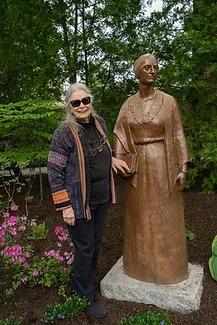
“At Home in My Heart”: Margaret Fuller Returns to Concord

June 30, 2026
Kristi Lynn Martin
No Comments

Transcendentalist and feminist writer Margaret Fuller—Emerson’s friend and collaborator, Bronson Alcott’s colleague, Thoreau’s first editor, and Ellery Channing’s sister-in-law—was central to Concord’s literary and intellectual life. She first came to Concord in the summer of 1836, when she met Emerson and stayed with his family for three weeks. 


Read More
816+M7xxBzL._SL1500_.jpg

Finding Margaret Fuller in Concord: A Book Review

June 15, 2024
Kristi Lynn Martin
No Comments

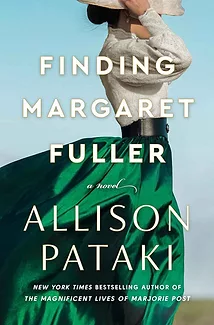
Fiction is a fun introduction to history! Allison Pataki encourages her readers to visit Concord, where her novel is predominately set—to tour the Emerson House, The Old Manse, and Orchard House—as she did while writing. Indeed, shortly after Finding Margaret Fuller: a novel’s publication (Ballentine Books, 2024), book clubs scheduled group tours at Emerson’s home.


Read More
The Death of Margaret Fuller

Safely Sailing On: Margaret Fuller’s Spirit in Concord

March 15, 2024
Kristi Lynn Martin
No Comments

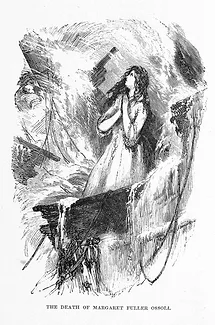
It was nearly twelve hours since the Elizabeth ran aground on a sandbar in a raging hurricane. Returning home from Italy in July 1850, after years abroad as a foreign correspondent, Margaret Fuller huddled before the ship’s mast, clutching her two-year-old son, as waves violently washed over the deck. Fuller had given her life preserver to a sailor, who swam to shore for help.


Read More
IMG_3858-edited.jpg

A New Season at the Emerson House

June 15, 2022
Kristi Lynn Martin
No Comments

The Emerson family has been welcoming tourists since the mid-nineteenth century, when writer and lecturer Ralph Waldo Emerson personally greeted visitors in his study. Emerson’s house, at the Lexington Road and Cambridge Turnpike intersection, was convenient to the Boston stagecoach and remains today only a short walk away from the railroad depot. 


Read More
Ralph+Waldo+Emerson+MET+DP-17643-015.jpg

Sacred Integrity: Emerson & the Home of Transcendentalism

September 15, 2020
Kristi Lynn Martin
No Comments

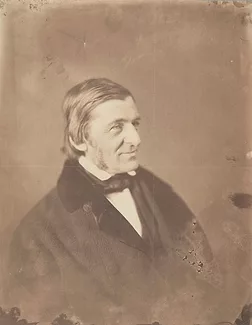
Ralph Waldo Emerson was not the originator of the romantic ideals known as Transcendentalism. Nor was his premier essay, Nature (1836), the first publication to set forth the philosophy. Emerson was, rather, the most successful public voice of New England Transcendentalism in the nineteenth century. Dissatisfied with his traditional ministry, Emerson embarked on an untried profession as a lecturer, essayist, and poet; gaining an international reputation. His eloquent and provocative prose resonated with a young American republic yearning to define itself against the time-honored past. Emerson turned his personal search for meaning into a national paean for a self-actualized identity. Nature was closely followed by his controversial “American Scholar,” “Divinity School Address,” and iconic “Self-Reliance.” 


Read More
Margaret_Fuller_LCCN2002712183.jpg

“The Most Remarkable Woman of Our Time:” Margaret Fuller, Transcendental Feminism, and Women’s Rights

March 15, 2020
Kristi Lynn Martin
No Comments

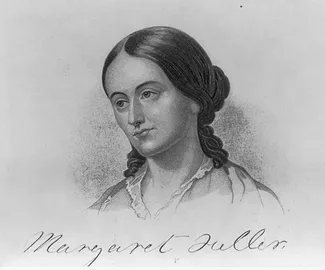
Margaret Fuller (1810-1850) was a “feminist” before the word existed. 

Fuller’s father rigorously educated his eldest child as if she were a son, bestowing on her a formative belief in the gender-equality of the mind and spurring her own career as a teacher. In her thirties, Fuller’s erudite reputation preceded her as a leader in the emerging Transcendentalist movement, a philosophy that revitalized the role of the individual in society in the decades preceding the American Civil War. Along with Elizabeth Peabody, Sophia Ripley, Abigail May Alcott, and Lidian Emerson, Fuller was among those women who actively shaped Transcendentalism and used its impetus to further social aims.


Read More

Featured Stories

  • Cover Summer26.jpg

    The Summer Issue is Here!

    As our nation celebrates the 250th anniversary of the Declaration of Independence, this issue explores the people, ideas, and stories that continue to shape its legacy. Inside, Professor Robert A. Gross offers fresh perspective in “A Referendum on Independence,” while a special foldout guide, “Following in Thoreau’s Footsteps,” invites you to explore the landscapes that inspired him. Discover an unexpected connection in “A Tale of Two Authors,” revisit the moving story of “A Hawthorne Homecoming,” and enjoy summer events, arts, and ways to experience Concord firsthand.
  • 17760705_Wood_A.jpg

    A Referendum on Independence

    The road to American independence took time to complete, and Massachusetts, despite its reputation as a vanguard state, was not always in the lead. In 1775, even after the battles of Lexington and Concord and Bunker Hill, most Patriot leaders were still seeking restoration of colonial rights within the British empire. Thomas Paine broke the logjam with the publication of Common Sense early the next year. The instant best-seller argued the case for separation by appealing to economic and political self-interest, emotional resentment of a brutal and oppressive king, and a utopian vision of America as “an asylum for mankind.” 
  • Hearse-Concord-Patch.jpg

    A Hawthorne Homecoming

    Two white horses pulled the hearse into Concord’s Sleepy Hollow Cemetery, a top-hatted driver at the reins. A band of mourners followed on foot as they made their way toward Authors’ Ridge.Except for the bright sunshine, this scene wouldn’t seem out of place in a story by Nathaniel Hawthorne. But it happened a mere twenty years ago, on June 26, 2006. That was the day Hawthorne and his wife and daughter were reunited after his death separated them 142 years earlier. 
©2026. All Rights Reserved. Content: Voyager Publishing LLC. Design, CMS, Hosting & Web Development: ePublishing
Facebook Instagram