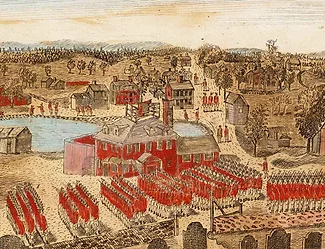
In colonial America, taverns were commonplace throughout Freedom’s Way National Heritage Area. But these early American taprooms were much more than just watering holes. They served an important purpose in the community as a place for townsfolk to gather and plan. This proved especially important in the years leading up to the Revolution. Taverns became Patriot refuges, where decisions were made about separation from the Crown and what a more democratic form of government would look like. As British-colonial relations finally boiled over, taverns became meeting spots for Patriot militias to assemble and prepare for battle.
This year, the Trinitarian Congregational Church (TriCon) on Walden Street is celebrating its 200th anniversary. However, from the early days of Concord’s founding in 1635, there was only one meeting house, and that was First Church in the center of town. In 1778, Reverend Ezra Ripley assumed
the pastorate, a position he would
hold for 63 years. By 1825, First Parish, like many Congregational churches
in Massachusetts, had changed, adopting a Unitarian theology. But
not all parishioners were happy with
“Dr. Ripley’s church” or his unorthodox preaching. In March 1826, nine dissenters, joined by seven townspeople, left First Parish to form their own “religious conference.”
This year marks the 85th Annual Gathering of the Thoreau Society—the oldest and largest community devoted to an American author. Founded in 1941 by Walter Harding, the Society began with a simple invitation to a “Thoreau Birthday Mecca”: meet at Walden Pond, share lunch at Concord’s Colonial Inn, and talk about forming a group devoted to Henry David Thoreau.
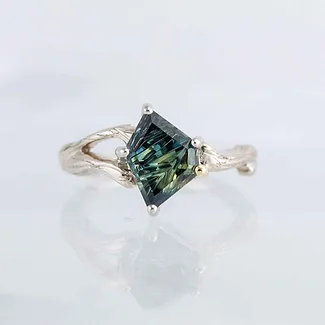
From November 8 through the holidays, Loveday Boutique will showcase hand crafted contemporary lockets from 14 artisans, alongside a selection of vintage finds. These modern heirlooms are created with a range of materials, including precious metals, diamonds and gemstones, walnut wood, and Formica veneer.
“Lockets can open a conversation and create meaningful connections,” said Kirsten Ball, owner of Loveday Boutique. “I often wear my grandmother’s locket, which holds a photograph of her inside it. When I’m wearing it, I feel her comforting presence.”
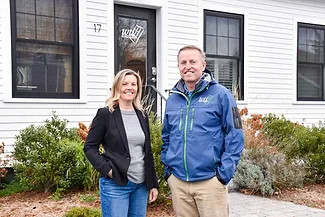
Concord’s own Megan and Mark Pesce have been hard at work to launch their latest Dunkin’ restaurant at 794 Elm Street, just off Route 2. This flagship property clearly shows their love of Concord, inside and out. They have struck the perfect blend of taking the coffee, drinks, and food that makes Dunkin’
such a hallmark of New England - and wrapped it in a vibe that is all Concord.
West Concord is embracing Fall fun, with events and activities for the whole family this year. From music and arts to the village’s biggest annual birthday bash, you won’t want to miss the chance to discover what makes West Concord such a vibrant place for shopping, eating, and exploring.
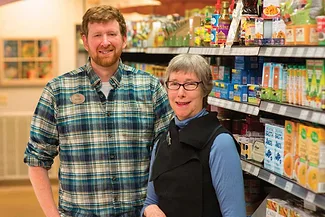
The foundation of Discover West Concord Day (October 19 from 10-3) is the annual birthday bash for Debra’s Natural Gourmet. This tradition is now in its 35th year and the whole community jumps in to make it an event to remember! Like any great party, it’s more fun with friends, so please come out to join us. You are warmly invited to be a part of a fun-filled day of celebrating the character, charm, and family fun vibe that makes this part of town so special.
Inside the stately 1929 former Emerson School building at 40 Stow Street, The Umbrella Stage Company’s recently constructed theater wing is a surprise and delight to all who discover one of the “best kept secrets” of the Greater Boston/Metrowest theater scene.
Since becoming a professional theater company in late 2019, The Umbrella Stage Company (the live theater division of The Umbrella Arts Center) has strived to produce high quality work. Its reputation has steadily grown as audiences begin to return to live theater.
Artisans Way, located at 18 Walden Street in Concord Center, has been representing American craft and fine art for 13 years. From their early days dating back to 2011, Native American jewelry as well as hand-carved spirit animal fetishes from the Southwest have always been included in their collection. This fall will mark the 9th anniversary of a specialized Native American Jewelry and Craft show over the weekend of October 19-20.
Tea’s association with Great Britain began in the 17th-century when it was introduced to British society by Portuguese and Dutch traders. Initially, it was considered a luxury item, affordable only to the elite. However, the British East India Company’s monopoly on tea trade and the subsequent expansion of tea cultivation in British colonies like India and Sri Lanka, made tea more accessible to the masses.