
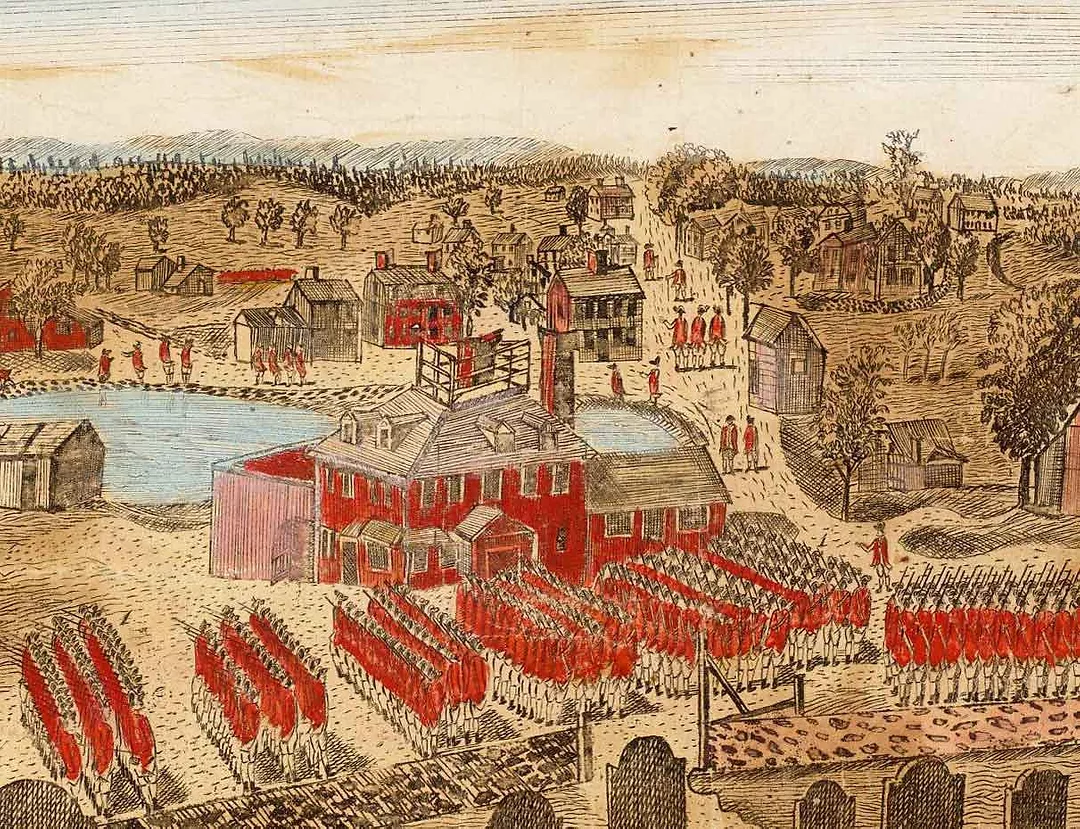
In colonial America, taverns were commonplace throughout Freedom’s Way National Heritage Area. But these early American taprooms were much more than just watering holes. They served an important purpose in the community as a place for townsfolk to gather and plan. This proved especially important in the years leading up to the Revolution. Taverns became Patriot refuges, where decisions were made about separation from the Crown and what a more democratic form of government would look like. As British-colonial relations finally boiled over, taverns became meeting spots for Patriot militias to assemble and prepare for battle.
This article explores key colonial taverns in the Massachusetts communities of our heritage area. You may notice that many of the “taverns” included in this list are actually “inns.” Inns and taverns of the colonial period served many of the same purposes: offering food, drink, and lodging to travelers. For the purposes of this list, we have focused on the overall experience and used “taverns” and “inns” interchangeably.
Despite the passage of time, some taverns remain open to the public. Many have been preserved as museums. Others have been repurposed as offices or reclaimed as private homes. In a few instances, the taverns remain taverns where visitors can still meet, converse, and enjoy a drink.
Whether you are just driving by or stopping off for a pint, we hope this list emphasizes the importance of these longstanding witness houses, and the crucial role they played in fostering the early American right to assembly.
Jones Tavern
128 Main Street, Acton
The Jones Tavern on Acton’s Main Street is an amalgamation of wings and ells added at various stages of the building’s evolution. The original home was built in 1732 for the family of Samuel Jones Jr., who was a jack of all trades. He operated a series of sawmills nearby on Fort Pond Brook, as well as a cooperage and a cider mill on Main Street. In 1750, he opened his home as a store — believed to be the first in Acton — and added a tavern to the west ell of the house. Jones’ son Aaron, a Revolutionary War veteran, took over the tavern in 1782, then passed it to his own son Elnathan. Elnathan operated the tavern until 1845, when it was taken over by his son-in-law James Tuttle. Tuttle closed the tavern amid the temperance movement of the nineteenth century and the building returned to residential use. In the 1960s, the home was very nearly demolished, but it was rescued by a group of local residents dedicated to preserving the area of town known as Iron Work Farm. The Jones Tavern was listed on the National Register of Historic Places in 1986 and is now preserved by Iron Work Farm as a museum and event space.
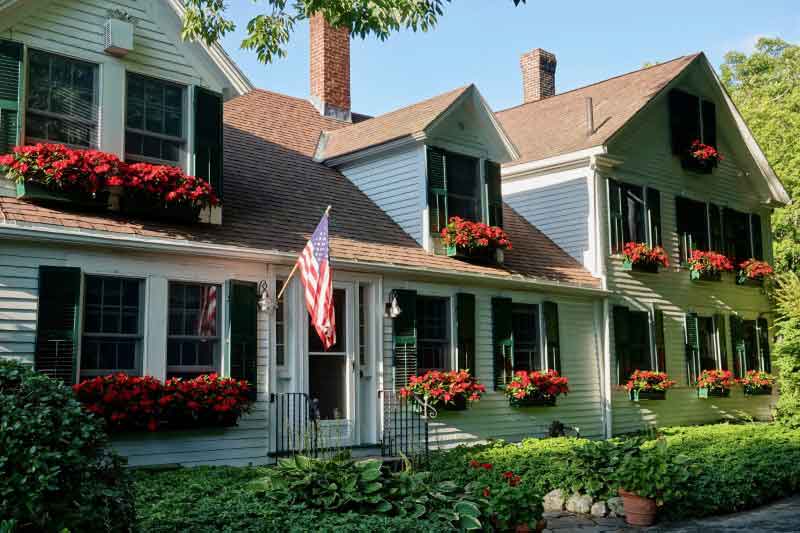
Captain Deliverance Davis House
| Courtesy of Maguire House Bed & Breakfast
Captain Deliverance Davis House/Uncle Tim’s Inn
(Maguire House Bed & Breakfast)
30 Cobb Road, Ashburnham
The elegant federal-style inn off Cobb Road in Ashburnham that became commonly known as “Uncle Tim’s Inn” was built around 1764. But before “Uncle Tim” Willard opened his renowned inn and public house in 1781, the home was owned by Captain Deliverance Davis. Davis was a town Warden, Moderator, and Highway Surveyor who was elected to the Committee of Correspondence and appointed lieutenant of the local militia during the American Revolution. In 1775, he led 33 men to answer the call at Lexington. After Davis passed the tavern on to Willard, it blossomed in popularity, reportedly serving fresh pickerel from nearby Upper Naukeag Lake. David Russell Sr. purchased the inn in 1798 and renamed it Cockerel Tavern. The property was later divided among Russell’s children and fell out of use as a taproom. However, in 1997 local residents Paul and Terry Maguire re-opened the property as a Bed and Breakfast.
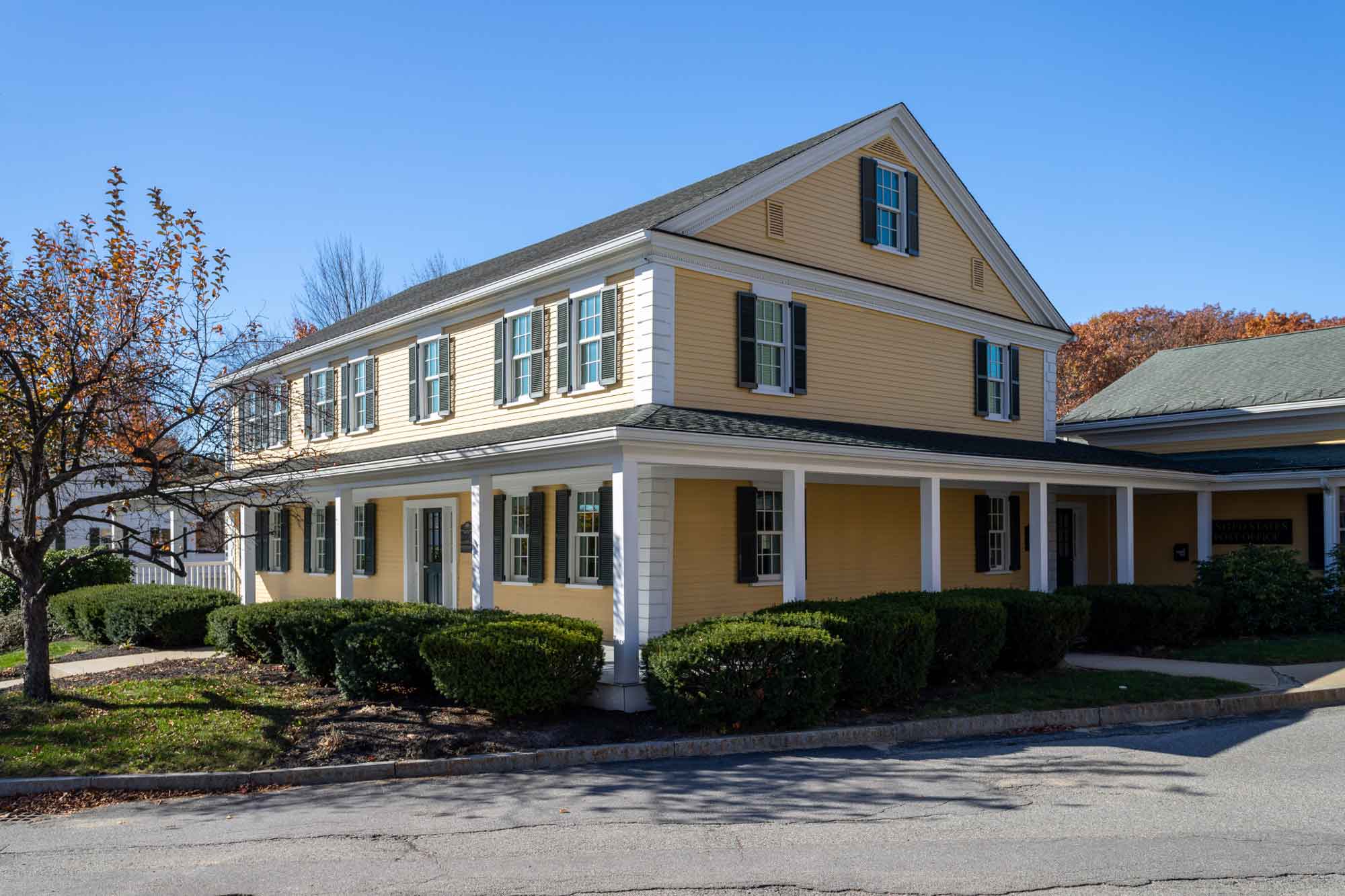
Captain Abijah Wyman Tavern
| Courtesy of North Central Massachusetts Chamber of CommerceCaptain Abijah
Wyman Tavern
10 Common Road, Ashby
A few years before the end of the American Revolution, Captain Abijah Wyman constructed a home near the Ashby Town Common. Wyman, and then his son John, operated a tavern there for several years. With the construction of a turnpike in 1803, Ashby experienced increased wagon and coach traffic from travelers between Boston, Vermont, and New Hampshire. The tavern and inn business held strong until at least 1812, when the Ashby Post Office moved into the location. It then served as a library, a shop, and a private residence until the Post Office resumed its tenancy in 2000. While the tavern is not “open to the public” in the traditional sense, it is an especially beautiful place to mail a letter!
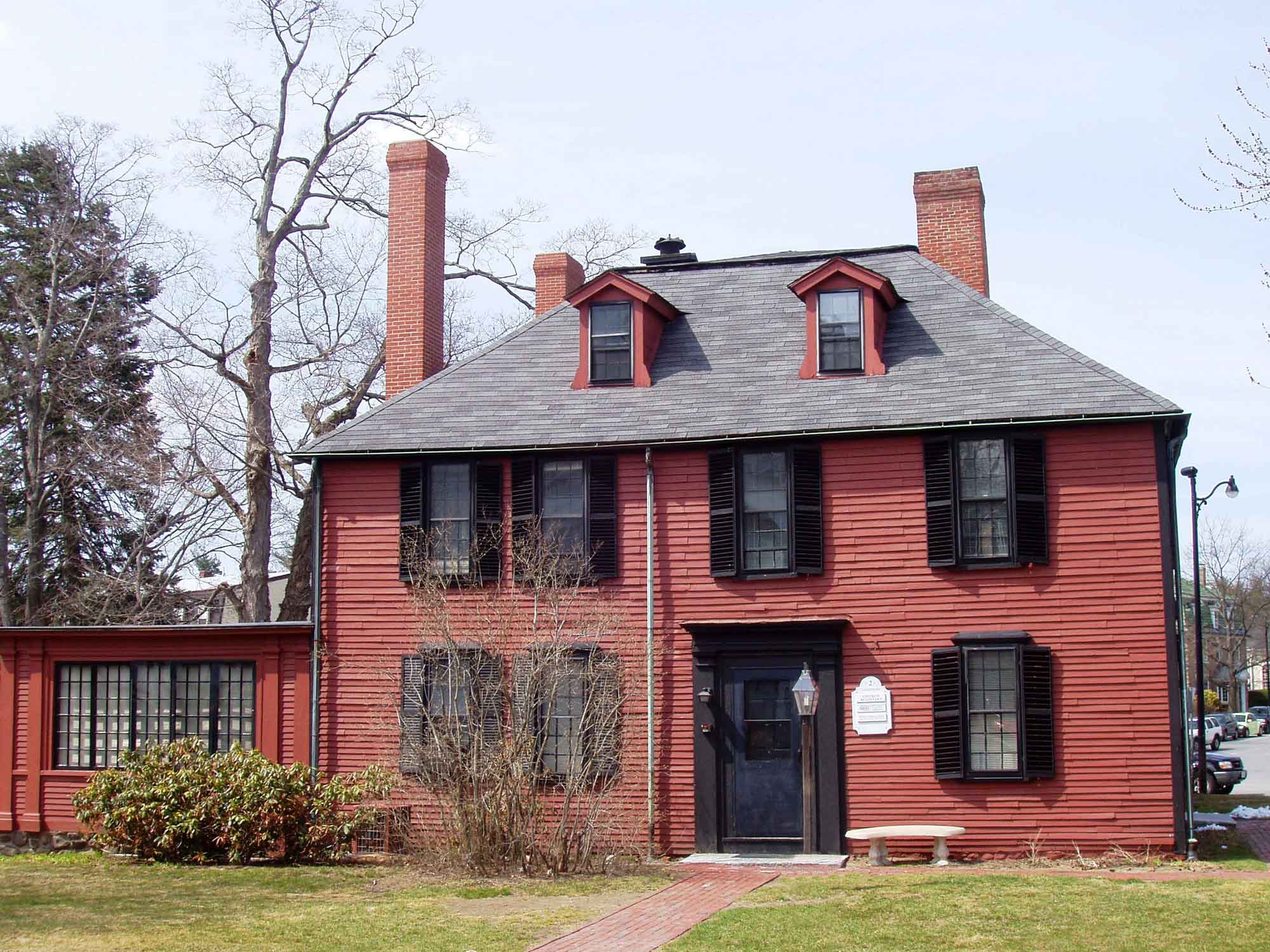
Wright Tavern
| Public domainWright Tavern
2 Lexington Road, Concord
The Wright Tavern is perhaps the most famous colonial tavern still open to the public today. This 1747 Georgian-style home at the heart of Concord bore witness to several remarkable events surrounding the American Revolution. In 1774, the decision makers who formed the First Massachusetts Provincial Congress met here and planned the blueprints for a government separate from the British Crown. On the morning of April 19, 1775, more than 150 minutemen and militia gathered at the tavern to prepare for the impending British march on Concord. Later that day, the tavern became the meeting place of the British regulars as they recovered from battle before retreating to Boston. In 1885, the First Parish in Concord obtained ownership of the building and set a wheel of historic preservation in motion. By 1961 the Wright Tavern was listed as a National Historic Landmark. Recently, the Wright Tavern became a dedicated museum, open to the public for tours and events.
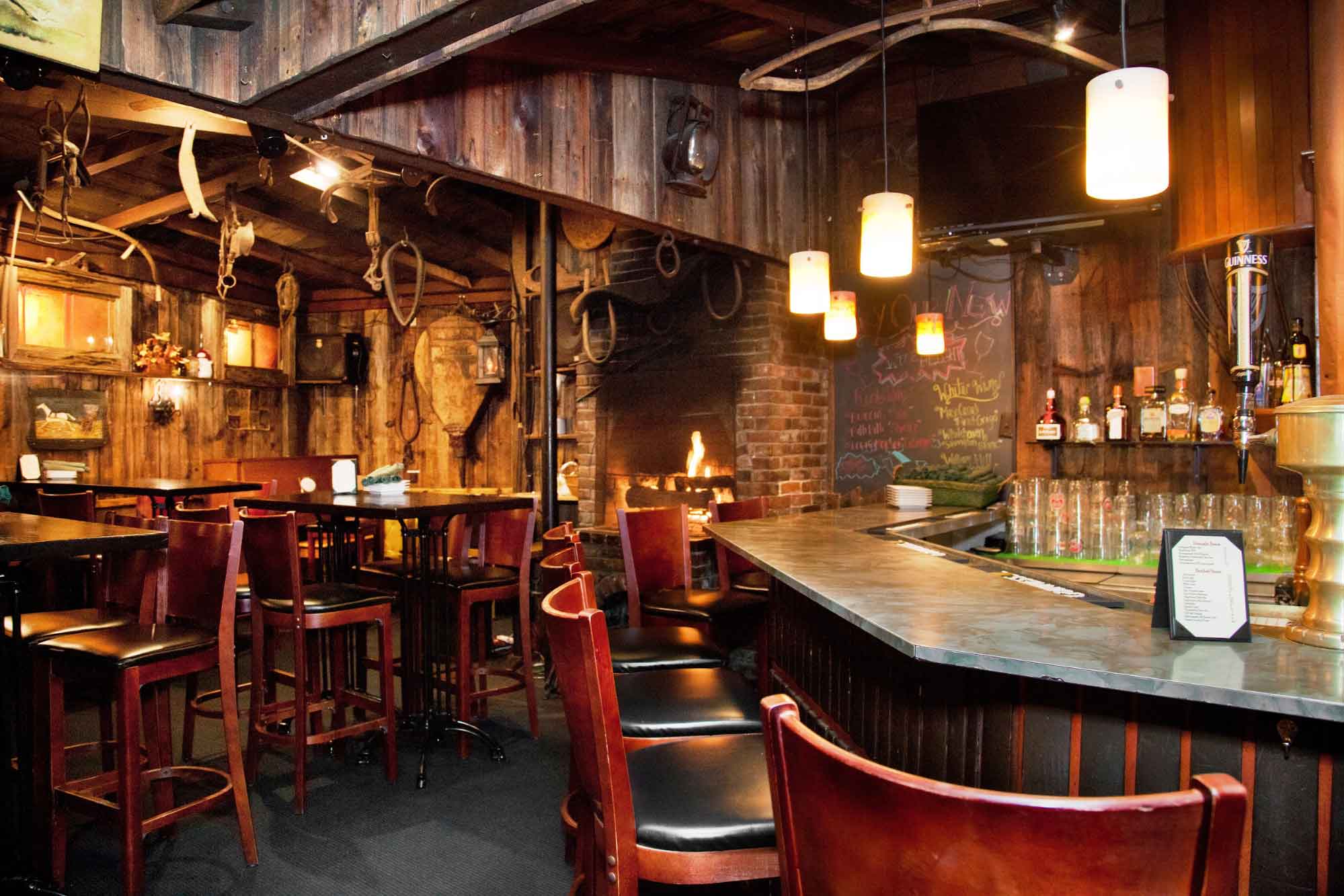
Village Forge Tavern at Concord’s Colonial Inn
| © Concord’s Colonial Inn
Concord’s Colonial Inn
48 Monument Square, Concord
Consisting of three connected buildings, the oldest part of the Inn was built in 1716. Throughout the 1800’s parts of the Inn were used as a store and a private residence. Just one of several buildings in Concord that the Thoreau family called home, they lived in the building to the right of the main entrance while Henry was attending Harvard from 1833 to 1837. Later in the Century that part of the building was a boarding house and small hotel called “Thoreau Girls”, named after his aunts who lived there at one time. The hotel as we know it today began operations in 1900 under the name The Colonial Inn.
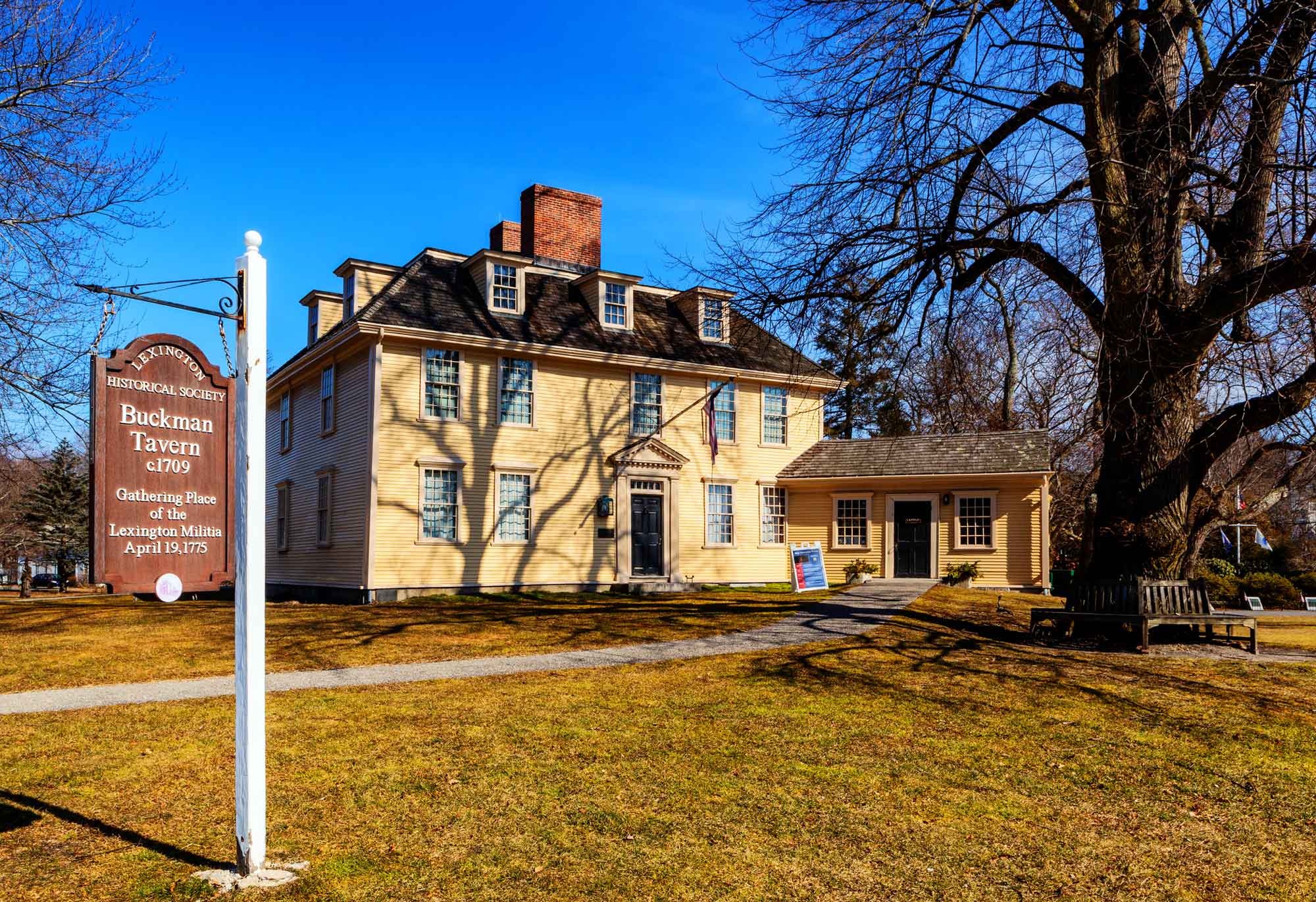
Buckman Tavern
| © istock.com/APCortizasJrBuckman Tavern
1 Bedford Street, Lexington
From its vantage point on the Lexington Battle Green, Buckman Tavern played a pivotal role in the first days of the American Revolution. The tavern was constructed circa 1710 by Benjamin Muzzey, who opened the building as the first public house in Lexington. By the time of the revolution, the property had passed to Muzzey’s great-grandson-in-law John Buckman. Buckman was a member of the Lexington militia, so his tavern became a natural gathering place for the Patriots who trained on Lexington Green. In the wee hours of April 19, 1775, the militia gathered at Buckman Tavern to await the arrival of British troops and what would result in the Battle of Lexington. Buckman Tavern remained a popular watering hole throughout the 18th century. It served as a store and a post office before it was ultimately purchased by the Lexington Historical Society. Today the tavern operates as a museum where guests can view the fully restored 18th century taproom.
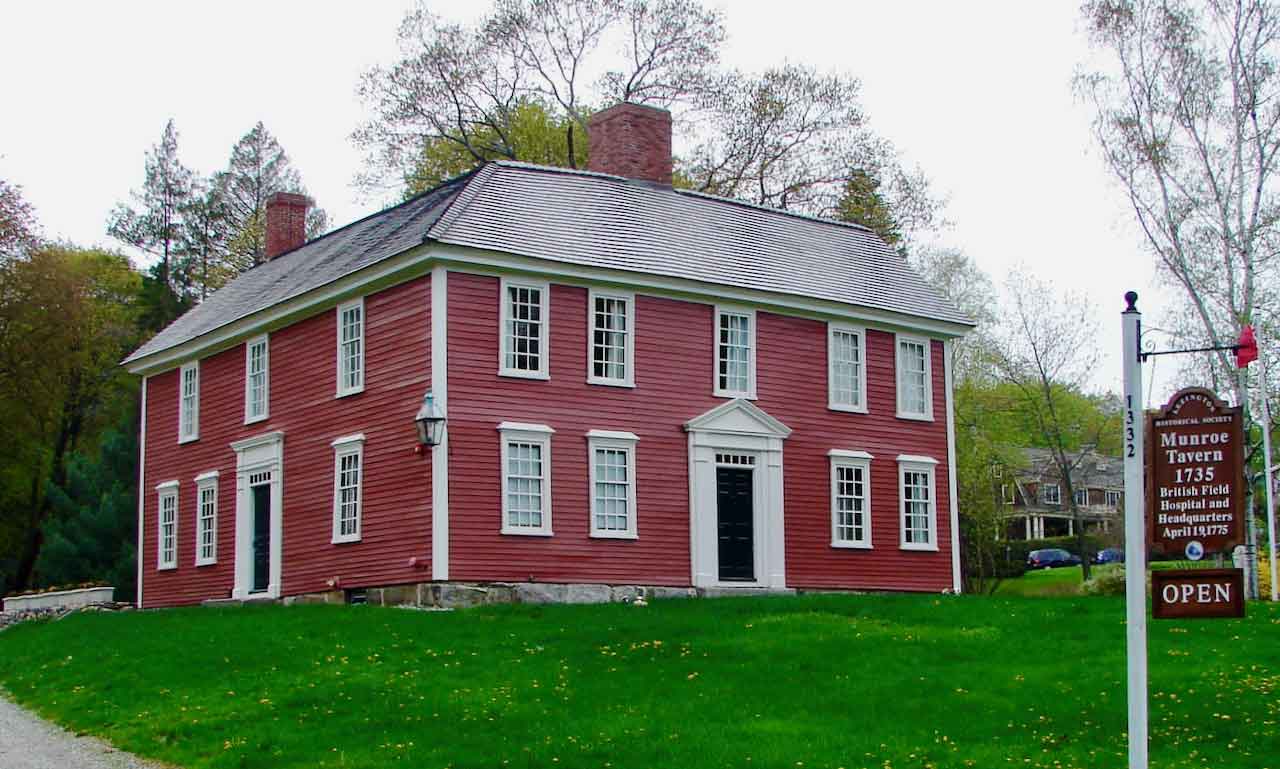
Munroe Tavern
| Courtesy of Freedom’s WayMunroe Tavern
1332 Massachusetts Avenue, Lexington
Munroe Tavern is one of the crown jewels of the Lexington History Museums. This barn-red clapboard home was built in 1735 and became a tavern in October of 1774, just as tensions between the Crown and the colonies were coming to a head. The tavern and its proprietors witnessed the conflict first-hand on April 19, 1775, when a group of British regulars commandeered the taproom. After a defeat at the Battles of Lexington and Concord, Brigadier General Hugh Percy and his troops converted the dining room of the tavern into a field hospital and helped themselves to the offerings at the bar. When Patriot militiaman John Raymond refused to cooperate with the British demands, perhaps defending the young family who lived at the tavern, he was shot and killed. The tavern is also known for hosting President George Washington after a 1789 visit to the Lexington Battle Green. Today, the renovated tavern is a museum, showcasing artifacts from those fateful events in the building’s storied past.
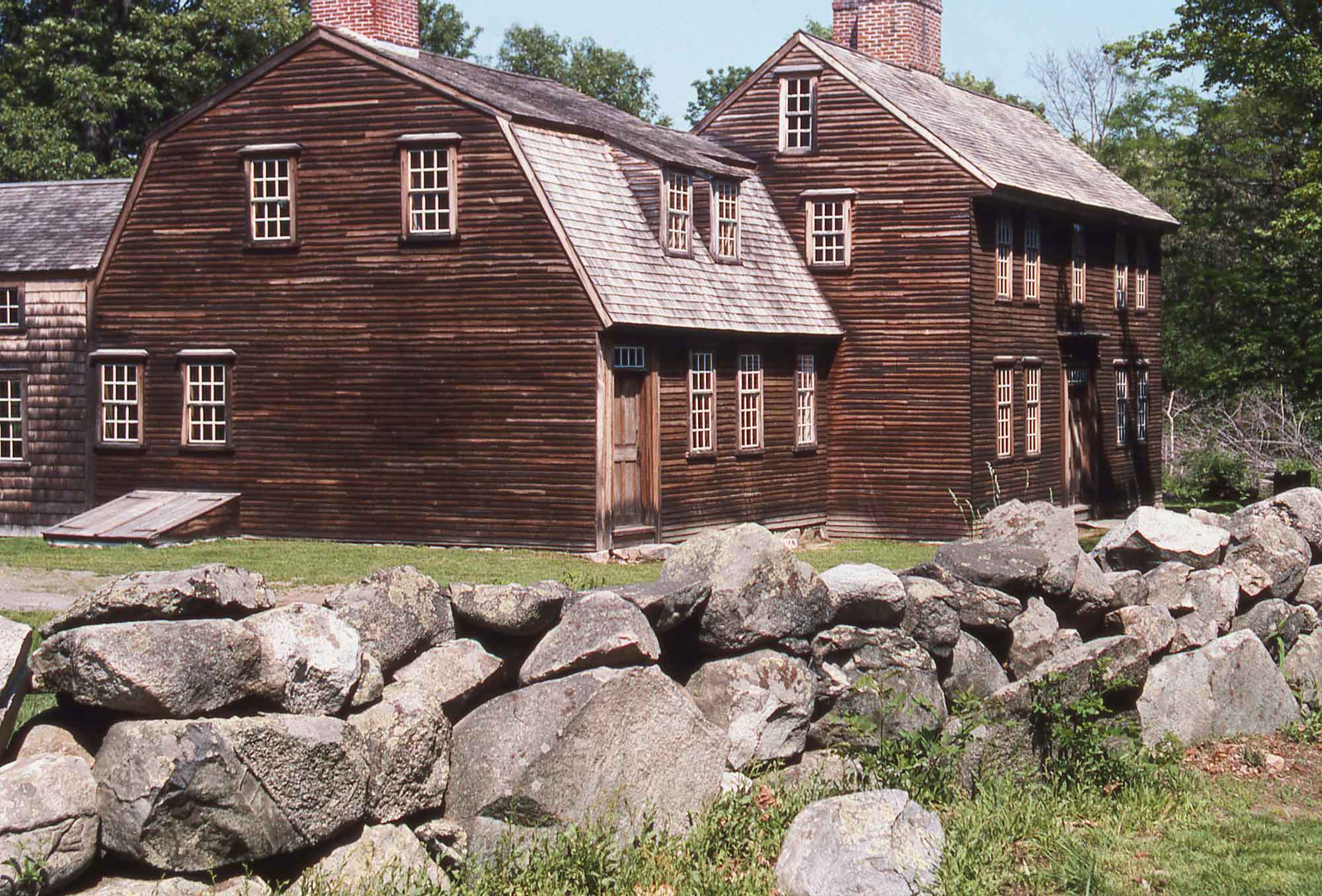
Hartwell Tavern
| © istock.com/Robert_FordHartwell Tavern
Minute Man National Historical Park, Lincoln
Hartwell Tavern, a witness house located along the Battle Road Trail in Minute Man National Historical Park, was built between 1732 and 1733. Ephraim and Elizabeth Hartwell operated a tavern here, out of their home, from 1756–1783. Their three sons fought with the Lincoln Minute Men on April 19, 1775.
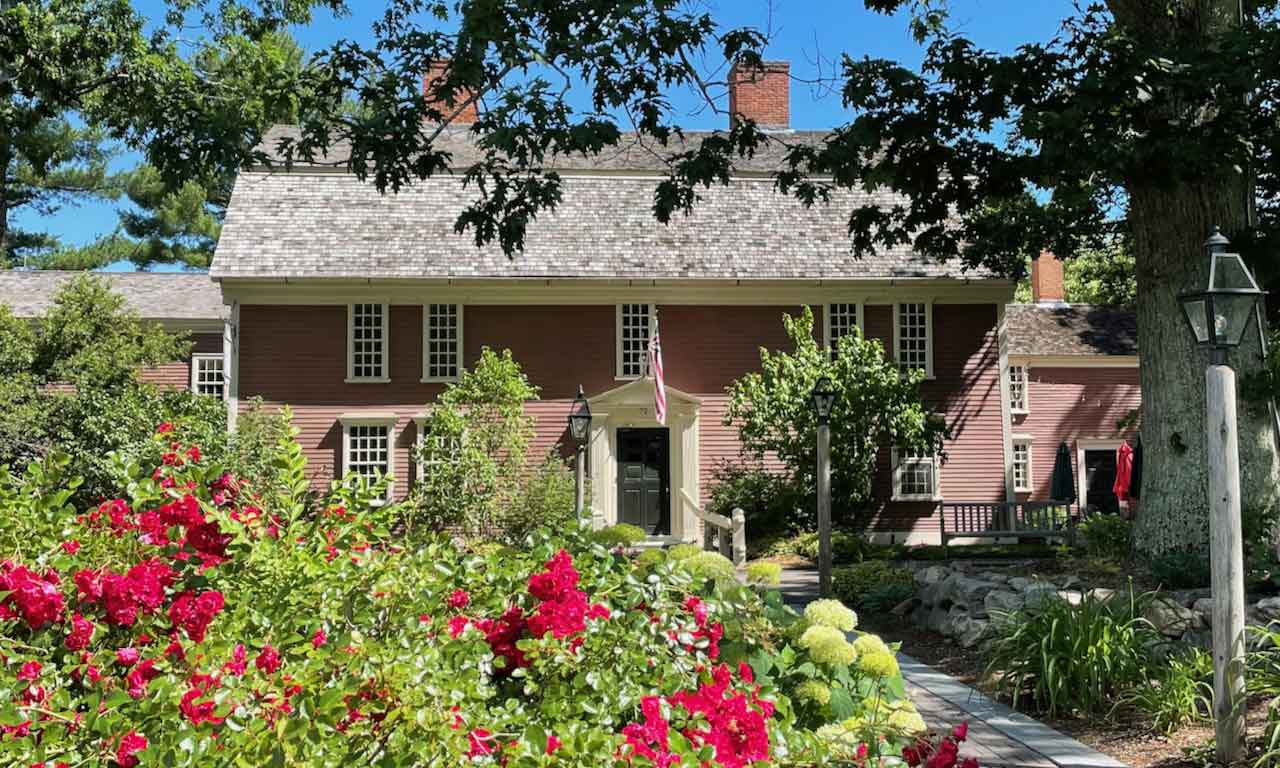
Wayside Inn
| Courtesy of Freedom’s WayWayside Inn
72 Wayside Inn Road, Sudbury
The Wayside Inn is one of the few colonial taverns where locals and travelers can still enjoy a pint of ale — although the food and beverage options have vastly expanded since the building’s construction in 1683. Longfellow’s Wayside Inn, as this popular restaurant is now known, borrows its name from Henry Wadsworth Longfellow’s 1863 poem “Tales of a Wayside Inn.” However, this historic establishment was a going concern at the time of the American Revolution.
From 1746 to 1796 it was owned by Lieutenant Colonel Ezekiel How, commander of the Sudbury militia, who joined the march to the North Bridge on April 19, 1775. In 1923, American mogul Henry Ford purchased the property in hopes of preserving it for future generations as a “living history museum.”
Cutler - Tufts Tavern
10 Prentiss Road, Arlington
Although this building at 10 Prentiss Road has been moved, rearranged, and repurposed as an auto parts shop, it played a significant role in the history of Menotomy. The tavern is estimated to have been built around 1770. On April 19, 1775, British troops entered the tavern, scattered the contents of a linen chest on the floor, and set the heap on fire. The building may have been lost if it weren’t for the actions of an enslaved person who had been hiding during the raid. They reportedly crept out and extinguished the blaze as soon as the troops left.
Captain Samuel
Stone Tavern
Wheeler Road, Ashby
This 1746 colonial home on Wheeler Road was built as a tavern and inn for Captain Samuel Stone, Esq. and was a popular stop along the Boston to Peterborough, New Hampshire stage line. On April 19, 1775, Stone and a contingent of Ashby militiamen responded to the Lexington Alarm. Arriving after the battles, they stayed on to begin the Siege of Boston and were at the Battle of Bunker Hill. Stone continued to operate the tavern until 1814, when he sold it to John Wheeler Jr. It has since served as a residence for the keepers of the surrounding farmland.
Jeremiah Fitch Tavern
12 Great Road, Bedford
Sometimes known as Stone Croft Farm or the Benjamin Kidder House, the property at 12 Great Road is one of Bedford’s earliest colonial homes, built in 1730. It was purchased by Jeremiah Fitch, a shoemaker and tavern proprietor, in the 1770s. As revolution became imminent in the colonies, Fitch was named a sergeant of the Bedford Militia company. On the morning of April 19, 1775, the Bedford Minutemen gathered for a cold breakfast at Fitch’s tavern before assembling at Wilson Park to begin their march to Concord. Fitch operated the tavern until his death in 1808, and the property passed to his son, Jeremiah Fitch III, who became a prominent citizen of Bedford. The Jenks family then owned the home from approximately 1884 to 1953. While some of the surrounding land was parceled out to build the Bedford High School and the Bedford Free Public Library, the home remains a private residence today.
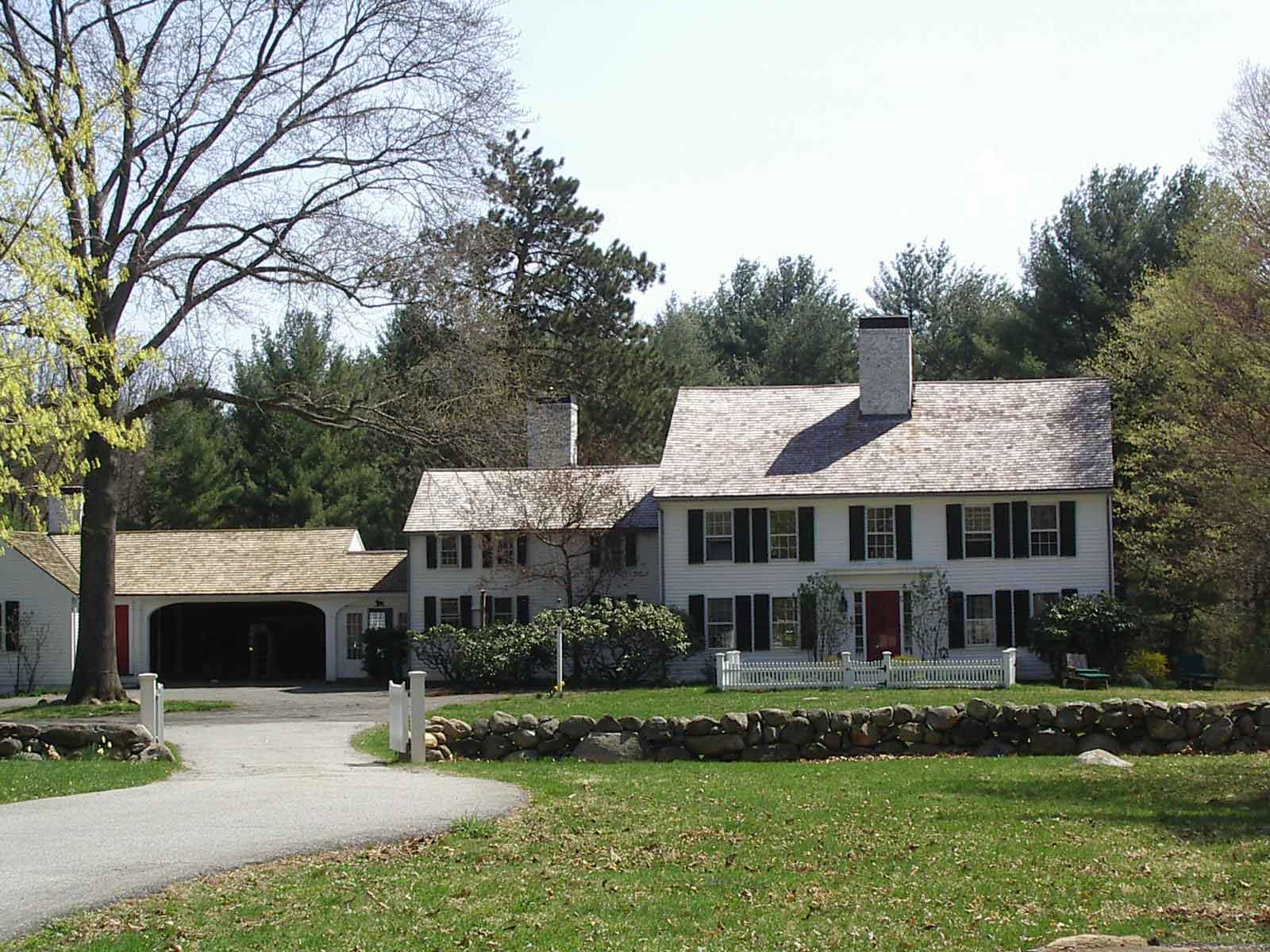
Captain John Heald House
| Courtesy of MACRISCaptain John Heald House
621 West Street, Carlisle
The Captain John Heald House on West Street tells a subtle but poignant story about the changing of colonial sentiment toward the British government. This 1771 tavern, once known as the “Red Lion,” greeted travelers with a sign featuring a lion wearing a crown as a nod to the Heald family’s British allegiances. As relations between the colonies and the British government soured, many of the Heald men joined the Patriot cause. Homeowner John Heald was a captain in the Concord militia while his father served as a lieutenant in Acton. At some point either before or during the American Revolution, the Red Lion was painted over and replaced with an image of a green elm tree. The tavern was henceforth known as the Heald Tavern and remained in the family until 1929.
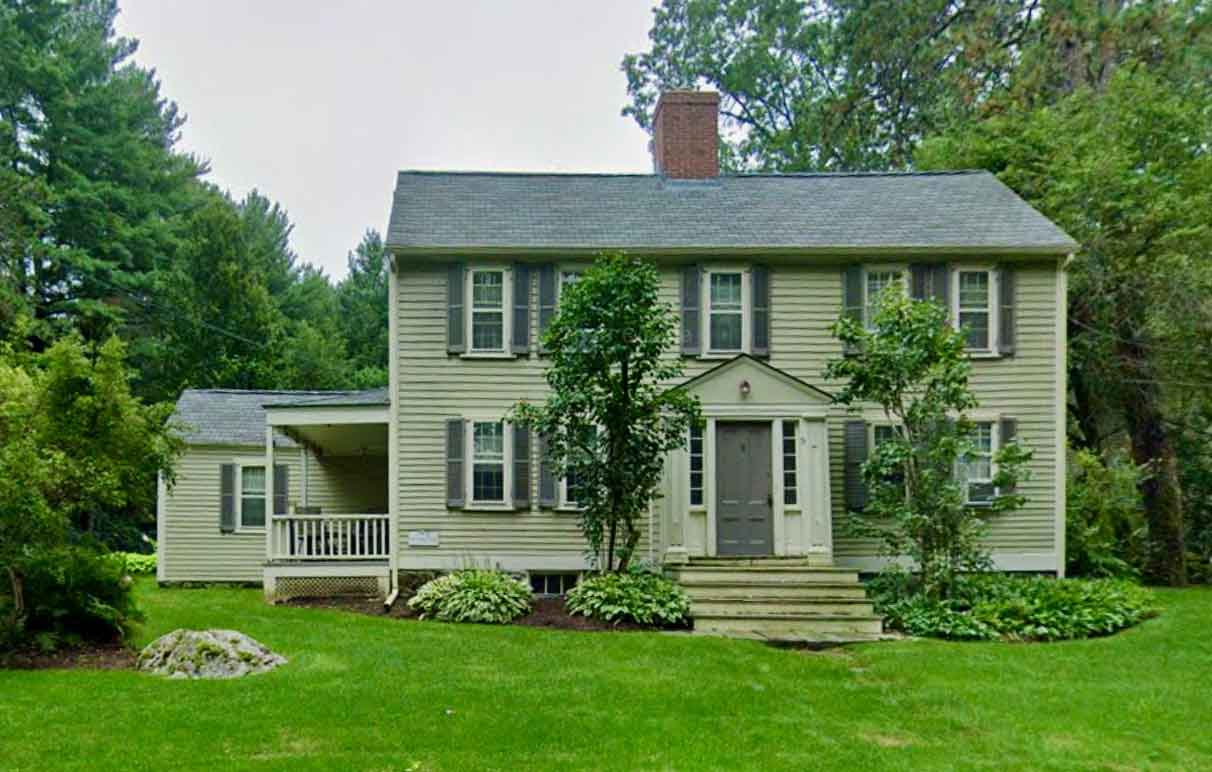
Abishai Brown House
| Courtesy of Google MapsAbishai Brown House
71 Barretts Mill Road, Concord
This Revolutionary War tavern was originally located on Lowell Road, where it was constructed by Eleazer Brown Jr. between 1719 and 1750. Brown left the property to his son, Abishai Brown. When Abishai passed away in 1764, his wife inherited the tavern, and the property gained the nickname “Widow Brown’s Tavern.” Mrs.Brown ran the tavern with the help of her son (also Abishai), who became a captain of a Concord militia company during the Revolution. Mrs. Brown was accompanied by 13-year-old Charles Handley on April 19, 1775, when a group of British soldiers, having failed to find any arms at the Barrett Farm, stopped into the tavern for refreshment. The house passed out of the Brown family in 1838 and became a farm and private residence.
John Fox Tavern
35 Foster Street, Littleton
The Fox Tavern was built in approximately 1700 by Captain John Fox. Fox was a captain in the French and Indian War who succumbed to smallpox in 1754. His wife, Sarah, petitioned the legislature for compensation and continued running the tavern with the funds. By 1770, the tavern fell into the hands of William Henry Prentice and became a meeting place for local Patriots. Shortly after the Revolution, the building returned to use as a private residence, housing some notable Littleton citizens like Reverend Edmund Foster and Reuben Houghton.
You can follow the Colonial Taverns & Inns Itinerary from Freedom’s Way National Heritage Area with an easy-to- use map at https://freedomsway.visitwidget.com/tours/colonial-taverns