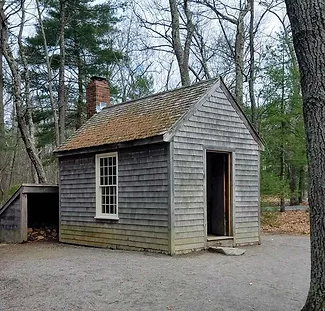
On September 6, 1847, Henry Thoreau left his small house at Walden Pond and moved back into the town of Concord. Having lived at Waldon Pond for over two years, he was, he would write, “a sojourner in civilized life again.”
In the early 1960’s a high school freshman watched a quiz show, “College Bowl.” Little did he know how that random act would change his life. Many years later, he tells the story: “The moderator asked what noted book began with the following words. Before he had said fifteen words, one of the college whiz kids gave the correct answer — Walden by Henry David Thoreau. Then the moderator read the complete sentence, which captivated me”
It was the first line in Thoreau’s iconic work: “When I wrote the following pages, or rather the bulk of them, I lived alone, in the woods, a mile from any neighbor, in a house which I have built myself, on the shore of Walden Pond, in Concord, Massachusetts, and earned my living by the labor of my hands only.”
Henry’s sunflowers greeted me as I walked the path to the old farmhouse. This is a peaceful place – this house where Henry David Thoreau was born in 1817. He lived here only eight months. The cold summer caused all the crops to fail and his family had to abandon the farm and move to Concord center where his father ran a store. It was difficult making ends meet in those days. Life was hard. The family moved around, to Chelmsford then on to Boston before returning to Concord for good when little Henry was five. So Henry David Thoreau grew up in Concord, though not on this farm where he was born.
In the mid-1830’s, a new word entered the American lexicon; Transcendentalism. It was a word that was vague and confusing, a word that seemed mystical, spiritual, and possibly even blasphemous. Even today, 170 years later, Transcendentalism is still misunderstood, and many people have a hard time explaining what it was and what it means.
Lexico.com defines Transcendentalism as
“an idealistic philosophical and social movement which developed in New England around 1836 in reaction to rationalism. Influenced by romanticism, Platonism, and Kantian philosophy, it taught that divinity pervades all nature and humanity, and its members held progressive views on feminism and communal living. Ralph Waldo Emerson and Henry David Thoreau were central figures.” Simply put, it is the idea that God is present in all things, that we are surrounded by divinity. All of nature is divine, and therefore, since man is a part of nature, we have the capability to be divine as well.
In 1855, Ralph Waldo Emerson wrote a letter that would become one of the most famous pieces of correspondence in American literary history.
That year was a difficult time for the adolescent country. Already sharply divided over the issue of slavery, “free soilers” and pro-slavery factions were quickly disintegrating into bloody violence. The ongoing gold rush and westward expansion was continuing to displace native populations, while the same year, and without irony, a white, anti-immigrant party in Cincinnati would attack a local German-American neighborhood for being foreigners.
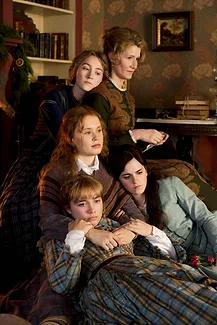
Each year, more than 100,000 people visit Louisa May Alcott’s Orchard House. This December 25th, millions more will have the chance to learn about Louisa May and her amazing family through the lens of Sony Picture’s newest presentation of the classic book Little Women.
“‘Christmas won’t be Christmas without any presents, grumbled Jo, lying on the rug.’” This opening line from Little Women has linked Louisa May Alcott with Christmas for the past 150 years. In keeping with the spirit of the novel, Alcott penned dozens of short stories about the true meaning of Christmas, loosely modeled after Charles Dickens’ A Christmas Carol. Like Dickens, Alcott sought to teach her young readers about the virtues of giving versus receiving.
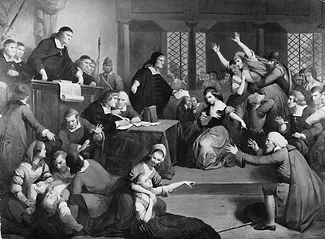
Ghoulies, ghosties, and Puritans. Now that’s a potentially horrifying combination. And who better to pen them loose on the page than Concord author Nathaniel Hawthorne? Born in Salem, Massachusetts on July 4, 1804, Hawthorne came from a family steeped in history, scandals, and a curse put upon them by a young woman about to die.
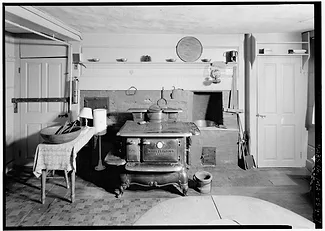
Just hours after their wedding on the 9th of July 1842, a honeymooning couple moved to Concord, MA and into the house they would rent for the next three years. Shortly after their arrival, the groom, who was also an aspiring author, noted the following, “Houses of antiquity in New England are so invariably possessed with spirits that the matter seems hardly worth alluding to.”
Have you ever felt a compelling need to be somewhere? More than a desire to visit a place and more, even, than a wish to learn. A need to experience and to understand? It was that kind of need that drew Kara Snyder of Pittsburgh, PA to Concord, MA this past summer.