
Discover Concord Logo
Toggle Mobile MenuToggle Mobile Menu
Subscribe
  • Home
  • Current Issue
  • Back Issues
    • Fall 2025
    • Spring 2025
    • Winter 2025
    • 2024 Back Issues
    • 2023 Back Issues
    • 2022 Back Issues
    • 2021 Back Issues
    • 2020 Back Issues
    • 2019 Back Issues
  • Browse Topics
    • Abolitionism in Concord
    • American Revolution
    • Arts & Culture
    • Celebrity Profiles
    • Civil War
    • Concord History
    • Concord Writers
    • First Nations People of Concord
    • Historic Sites in Concord
    • Parks & Nature
    • Patriots of Color
    • Things to See & Do
    • Transcendentalism
    • Trivia
    • Untold Stories of Concord
  • Plan Your Visit
  • Events
  • Purchase Subscriptions and Back Issues
  • Discover the Battle Road
  • 250 Collectibles
  • More
    • About Us
    • Advertise
    • Contact Us
Toggle Mobile MenuToggle Mobile Menu
Home » Authors » Laney Wilder

Laney Wilder

Laney Wilder is the executive director for the Concord Land Conservation Trust and an enthusiastic botanist. She holds a master’s degree in plant biology and conservation, with a focus on rare species and land stewardship. Laney is passionate about protecting and caring for natural and historical lands in light of our changing landscapes and connecting people with nature. 

Articles

ARTICLES

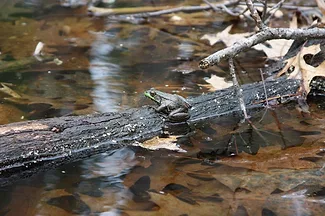
OFR-frog-at-vernal-pool.jpg

A Stroll Along Concord River: The Ecological and Historical Significance of October Farm Riverfront

May 15, 2021
Laney Wilder
No Comments

Concord’s October Farm Riverfront is a special place. Its 80 acres include more than a mile of river frontage, where the Concord River makes its great bend and turns to the north around Ball’s Hill. More than 100 years ago, noted ornithologist William Brewster purchased this land to save it from the developer’s axe, but it was not finally protected in perpetuity until 2016, when the Concord Land Conservation Trust and the Town of Concord teamed up to acquire the property with the generous support of many private donors and town and state funds. 


Read More

Featured Stories

  • insert-cover-image-from-Alamy.jpg

    TIMELESS TAVERNS: Exploring Colonial New England’s Earliest Community Gathering Spaces

    In colonial America, taverns were commonplace throughout Freedom’s Way National Heritage Area. But these early American taprooms were much more than just watering holes. They served an important purpose in the community as a place for townsfolk to gather and plan. This proved especially important in the years leading up to the Revolution. Taverns became Patriot refuges, where decisions were made about separation from the Crown and what a more democratic form of government would look like. As British-colonial relations finally boiled over, taverns became meeting spots for Patriot militias to assemble and prepare for battle. 
  • Concord-Town-Hall-1875-from-Concord-Library.jpg

    Established for Social & Mutual Improvement: The Concord Lyceum

    The Lyceum Movement started in New England in 1826, when educator and scientist Josiah Holbrook founded the first lyceum in Millbury, Massachusetts. Inspired by the classical Lykeios (Λύκειος) in Ancient Greece, where Aristotle taught, the movement was created to bring education to ordinary people through lectures, debates, and readings. Lyceums quickly spread across New England, fostering education, self-improvement, and civic engagement, and many towns soon formed lyceums of their own, including Boston in 1829 and Salem in 1830. By the 1830s, there were Lyceums across the country. 
©2026. All Rights Reserved. Content: Voyager Publishing LLC. Design, CMS, Hosting & Web Development: ePublishing
Facebook Instagram