
Discover Concord Logo
Toggle Mobile MenuToggle Mobile Menu
Subscribe
  • Home
  • Current Issue
  • Back Issues
    • Fall 2025
    • Spring 2025
    • Winter 2025
    • 2024 Back Issues
    • 2023 Back Issues
    • 2022 Back Issues
    • 2021 Back Issues
    • 2020 Back Issues
    • 2019 Back Issues
  • Browse Topics
    • Abolitionism in Concord
    • American Revolution
    • Arts & Culture
    • Celebrity Profiles
    • Civil War
    • Concord History
    • Concord Writers
    • First Nations People of Concord
    • Historic Sites in Concord
    • Parks & Nature
    • Patriots of Color
    • Things to See & Do
    • Transcendentalism
    • Trivia
    • Untold Stories of Concord
  • Plan Your Visit
  • Events
  • Purchase Subscriptions and Back Issues
  • Discover the Battle Road
  • 250 Collectibles
  • Trading Cards
  • More
    • About Us
    • Advertise
    • Contact Us
Toggle Mobile MenuToggle Mobile Menu
Home » Authors » Sarah McDonough

Sarah McDonough

Sarah McDonough, programs manager for Lexington History Museums (LHM), has been working in history education since 2008. She relishes combining her background in 18th century material culture and theater to bring the stories of the past to life at LHM, as well as at historical reenactments across New England, and as a volunteer at Minute Man National Historical Park. 

Articles

ARTICLES

Lex-tea-burning-Rick-Beyer.jpg

“An Enemy to This Town:” The Lexington Tea Burning

March 28, 2025
Sarah McDonough
No Comments

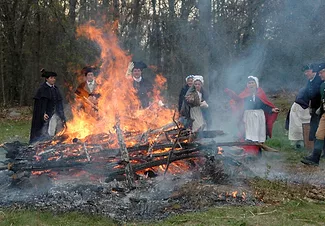
John Adams once stated that “the Revolution was in the minds and hearts of the people” long before the start of the Revolutionary War. Years before British soldiers fired on the townspeople in the first battle of the war, Lexington was fighting with economics rather than weapons.


Read More

Featured Stories

  • 100411_ConcordHarvard_007.jpg

    Harvard’s Year of Exile

    Lexington and Concord. April 19, 1775. Where and when the Revolutionary War started is well known. Not so well known is the fact that Harvard played an important, if odd, role afterward in the early days of the Revolution, turning its campus over to the nascent American army. On May 1, 1775, undergraduates were dismissed and given an early summer vacation. Classes resumed on Oct. 5 in Concord, 20 miles away — the beginning of a wartime academic sojourn.
  • Cover Spring26.jpg

    The Spring Issue is Here!

    Patriots' Day is almost here, and this issue of Discover Concord brings you a list of events, the parade route, and much more to make your celebration special.  Also in this issue is an in-depth look at the new PBS documentary "Henry David Thoreau," a fascinating piece on how the Concord Lyceum came to be, and a look at how Massachusetts civilians on the homefront managed the challenging months of January - May 1776. Freedom's Way National Heritage Area is launching an exciting program you won't want to miss called "Declaring Independence: Then & Now" in more than 20 towns across Massachusetts. With two special fold-out inserts,  maps, lists of shops, and so much more, you'll want to get your copy early!
  • 2025-09-21-Blessing-of-the-Animals-_DSC4700.jpg

    TriCon at 200: Faith in Action Since 1826

    This year, the Trinitarian Congregational Church (TriCon) on Walden Street is celebrating its 200th anniversary. However, from the early days of Concord’s founding in 1635, there was only one meeting house, and that was First Church in the center of town. In 1778, Reverend Ezra Ripley assumed the pastorate, a position he would hold for 63 years. By 1825, First Parish, like many Congregational churches in Massachusetts, had changed, adopting a Unitarian theology. But not all parishioners were happy with “Dr. Ripley’s church” or his unorthodox preaching. In March 1826, nine dissenters, joined by seven townspeople, left First Parish to form their own “religious conference.”
©2026. All Rights Reserved. Content: Voyager Publishing LLC. Design, CMS, Hosting & Web Development: ePublishing
Facebook Instagram