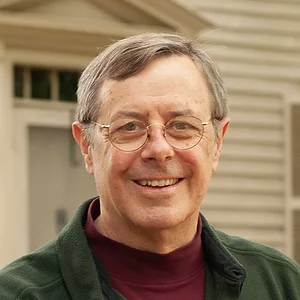
When the First Parish in Concord called Rev. Gary Smith as its senior minister in 1988, he came to town to find a home for himself and his family. A few parishioners quietly counseled him to confine his search to Concord Center, hinting that it would be unseemly for such a prominent citizen to live in West Concord. As it turned out, Rev. Smith and his family bought a house in West Concord, and he later preached a sermon against snobbery. He called it “The Other Side of Route 2.”
Concord Center takes justifiable pride in its history, but today great things are happening in West Concord. Innovation and self-reliance are nothing new on the west side of Route 2; they’ve defined the community for centuries.
The first people to live here were the ancestors of today’s Nipmuc and Wampanoag people, and they called the place Musketaquid (which translates roughly as “grassy river”). Their diet included freshwater mussels gathered from what is now the Sudbury River in such abundance that the discarded shells covered Clamshell Hill, the present site of Emerson Hospital.
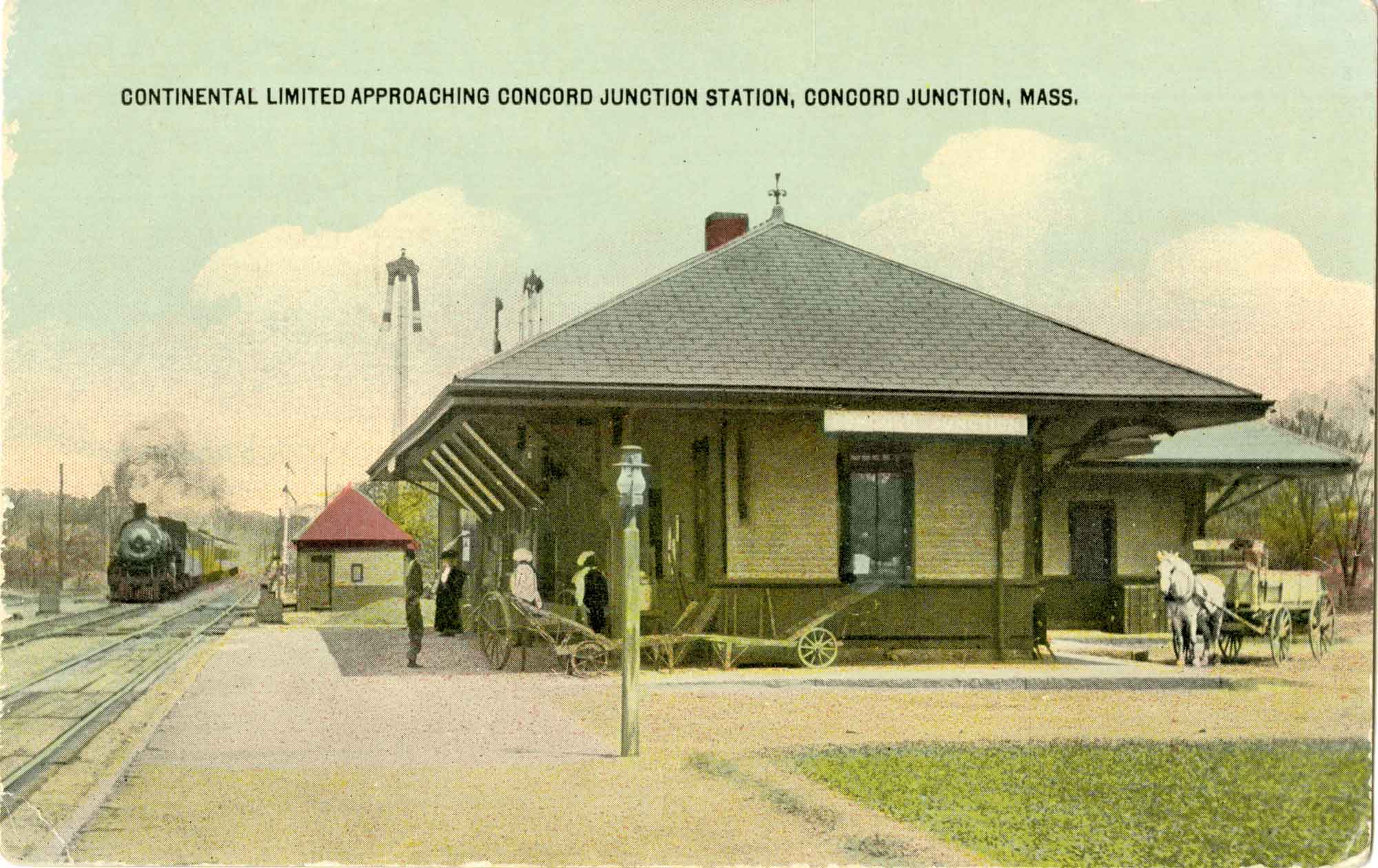
Continental Limited approaching Concord Junction Station, Concord Junction, Mass.; early 20th century postcard.
| Courtesy of William Munroe Special Collections, Concord Free Public LibraryEnglish colonizers arrived in the mid-1600s, and the principal English landowners in the west part of town were Simon Willard, one of the founders of the town; James Hosmer; and George Hayward, who built a sawmill in 1644 near present-day Harrington Avenue, and so set the stage for West Concord as a center of industry, harnessing the water power supplied by the Assabet River and its tributaries.1
More mills followed. In 1658, the Concord Ironworks was built near the present Damon Mill site. This was replaced by a textile mill, which the Conant family operated for more than 80 years. In 1834, Calvin Damon bought and expanded the mill to produce both cotton and wool. The Damon Mill was destroyed by a fire in 1862 and was replaced by the brick structure that is now the Damon Mill office complex. Damon built housing for his workers, giving the area the nickname “Factory Village.”
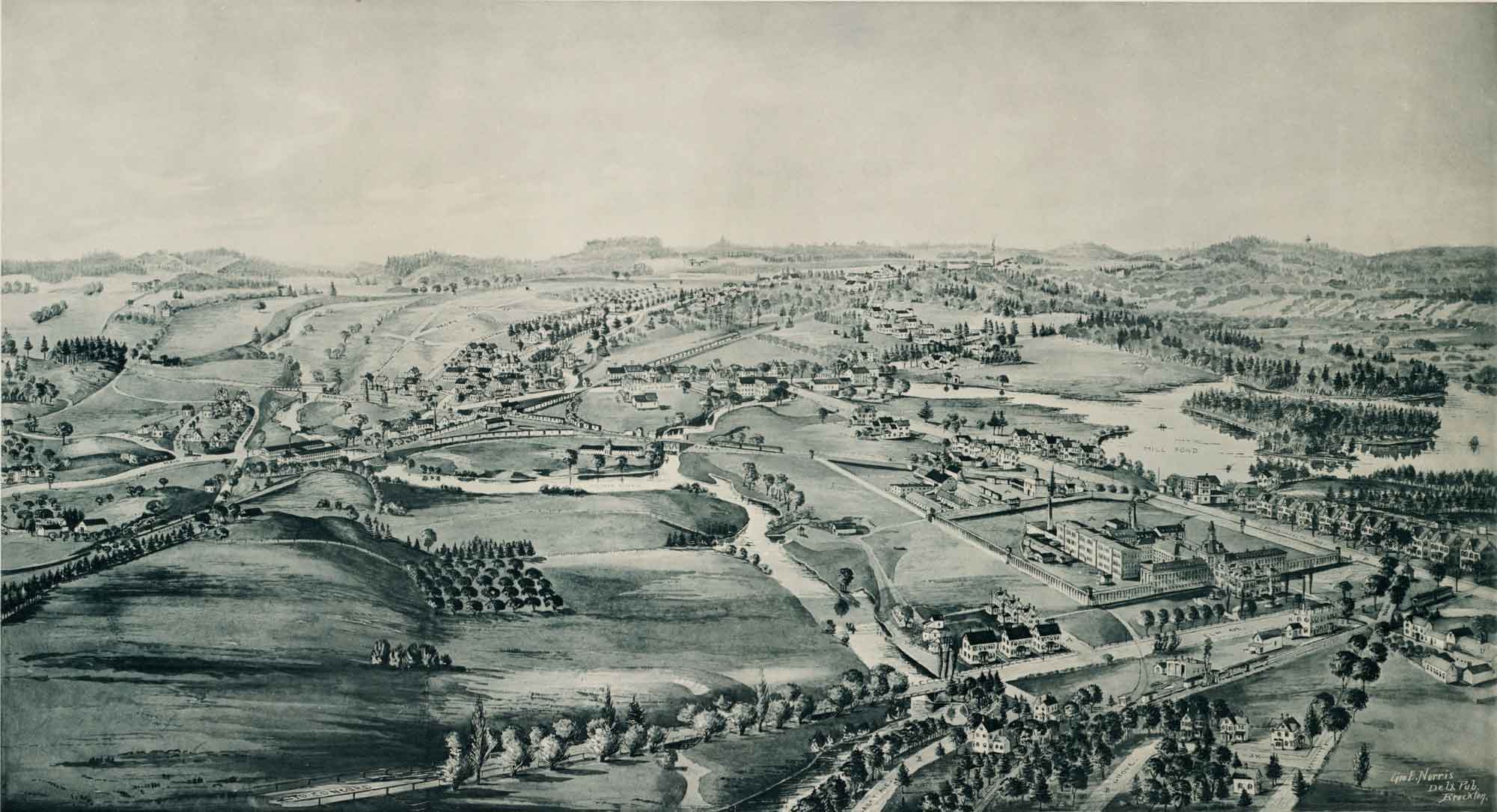
George E. Norris published this aerial view of Concord Junction (West Concord) in 1893. Warner’s Pond and the Massachusetts Reformatory are shown at right. The Assabet River is at center, and the railroad depot just left of center.
In the mid-1850s, Ralph Warner built a pail factory on Nashoba Brook, with a dam that created the body of water still known as Warner’s Pond. In 1877, the civic-minded Warner built the “Warner Block” on Commonwealth Avenue near the railroad. It was a complex that included shops, a post office, and a community hall.
The construction of the Fitchburg Railroad in 1844 connected Concord to the lucrative Boston market as well as points west. The railroad brought raw materials and shipped finished goods, dairy products, and produce, boosting industrial and agricultural growth. Concord became famous for its asparagus and strawberries.2
In the late 1800s, there were additional regional rail lines, and 125 trains passed through “Concord Junction” every day. The present depot was built in 1894 and now houses the Club Car Café. It’s on the National Register of Historic Buildings. The Framingham & Lowell line shut down in the early 20th century, and their old right of way is now used by hikers and cyclists as part of the Bruce Freeman Rail Trail.
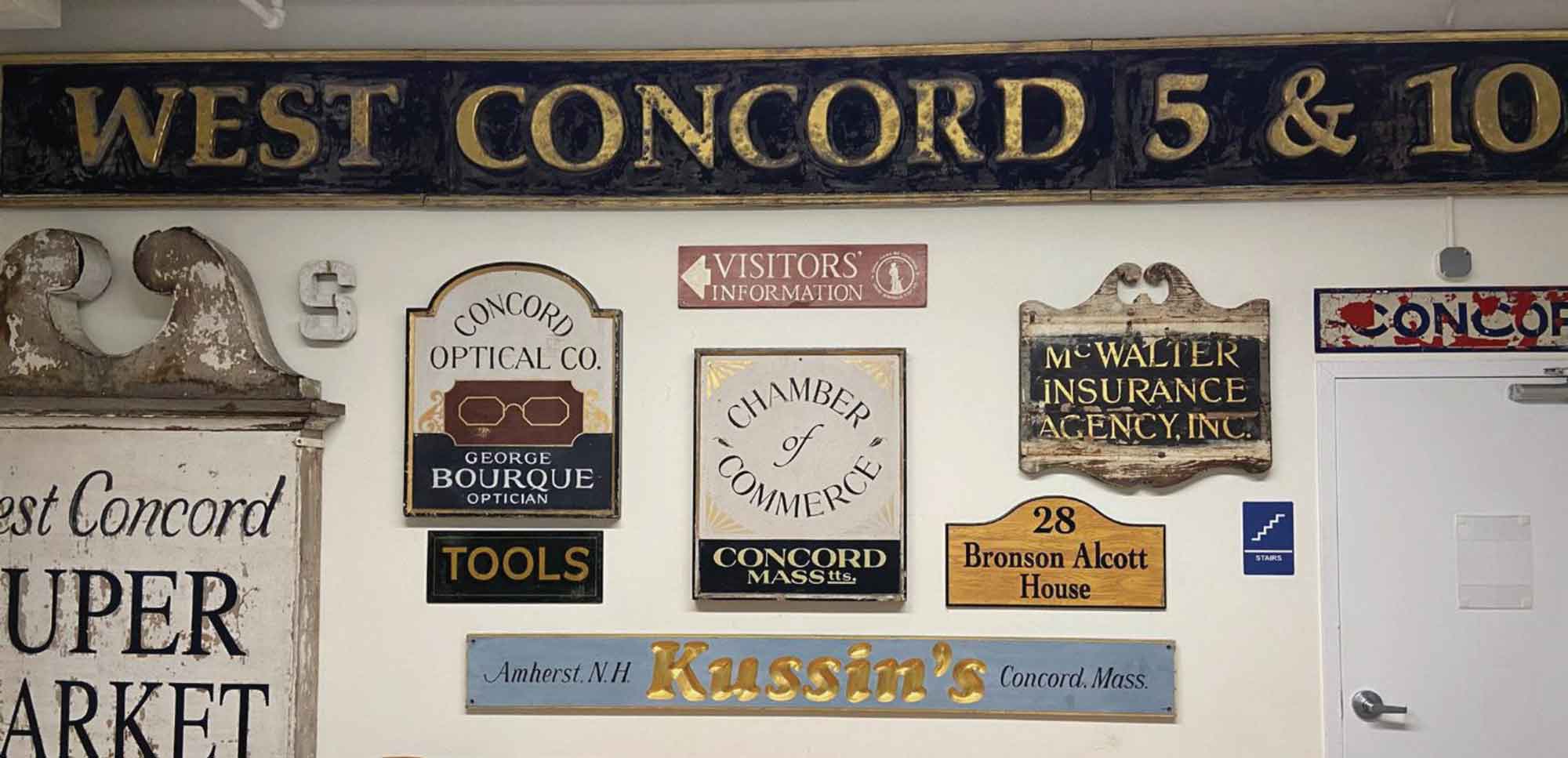
The Concord Sign Museum offers a visual history of Concord enterprises past and present.
| ©Tammy RoseThe coming of the railroads helped diversify Concord’s demographics. Immigrants from Ireland and Italy swelled the town’s Catholic population, prompting the construction of Our Lady Help of Christians Church in West Concord in 1904. In 2019, the church building became home to the Concord Youth Theatre, under the artistic direction of Lisa Evans (mother of actor Chris Evans, who credits CYT with setting him on the path to stardom).
Just a few steps from Concord Youth Theatre, the Concord Conservatory of Music operates in the West Concord Union Church. Children and adults can get professional instruction in genres from Beethoven to bluegrass. The Conservatory also hosts concerts and lectures.
The railroads attracted industries like the Allen Chair Company to West Concord. In their Bradford Street facility, built in 1906, they produced furniture for homes, offices, and schools until the 1980s. Concord businessman John Boynton renovated these buildings into the Bradford Mill complex of offices and studios.
Bradford Mill teems with cultural life. Barefoot Books, a local award-winning publisher of children’s books owned by Nancy Traversy, has its offices there. One of its neighbors is ArtScape, providing studios for local artists and gallery space to showcase their work. Nearby you can find the Concord Sign Museum, developed by Billy Crosby, a Concord graphic designer and sign maker. For decades he’s been collecting signs—many that he made himself—that offer visitors a colorful visual record of local businesses and institutions.
A common thread runs though all these enterprises: They were and are independent businesses, launched and shepherded to success by men and women with an unwavering commitment to Concord. No one embodied this spirit better than Debra Stark, who founded Debra’s Natural Gourmet in 1989 and worked tirelessly to grow it into a business named Best Health Food Store in the Country by Whole Foods Magazine.
Next door, the West Concord 5 & 10 was a beloved family business opened in 1934. Maynard Forbes ran the store from 1982 until it closed in 2020, when he sold the building to Debra Stark. In 2022, her son, Adam, continued the expansion of Debra’s Natural Gourmet into the old 5 & 10 space, ensuring that a local independent business would still operate there.
Around the corner, between Commonwealth Avenue and the Assabet River, there was once an open field that served as a training ground for the Massachusetts Volunteer Militia. In 1859, as civil war loomed, 6,000 men mustered at “Camp Massachusetts.” Later, in 1878, the State Prison was built there. Its name was changed to the Reformatory for Men, and later MCI-Concord. Malcolm X (then known as Malcolm Little) was an inmate there from January 1947 to March 1948. During that time, he was introduced to the Nation of Islam, and corresponded with its leader, Elijah Muhammad.
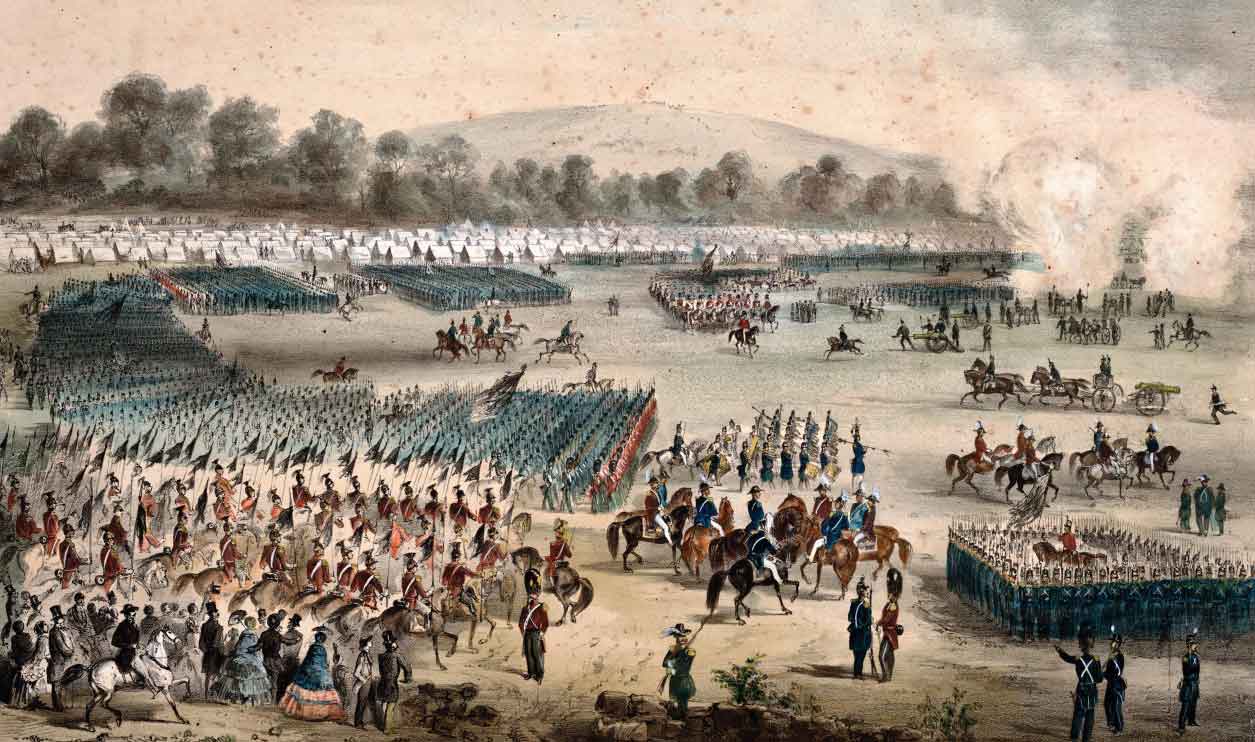
Camp Massachusetts at Concord Sept. 7, 8 & 9, 1859, lithograph by J.H. Bufford
| Commons.wikimedia.org. Public domain.In 2024, The Massachusetts Department of Corrections closed the facility.
On Department of Corrections property on the northeast side of the Route 2 rotary stands one of the oldest houses in West Concord. Built around 1750, it was the home of a prominent and respected citizen, Dr. John Cuming. He treated the wounded after the battle on April 19, 1775, and was a philanthropist who helped found Harvard Medical School.
But like many wealthy men in colonial New England, he was also an enslaver. A boy he called Bristol grew up enslaved in the Cuming household and later served as a soldier in the American Revolution. He won his freedom and returned to live under a new name, Brister Freeman. He built a house on land that he bought in Walden Woods, and in his memory that land is now called Brister’s Hill.
Two other Concord figures have their names attached to West Concord landmarks. Loring Nixon Fowler was a shopkeeper and postmaster in the early 20th century, and like many others around the Junction, he wished the town’s fine library weren’t so far away. West Concord petitioned for a branch library but only succeeded in getting a makeshift library installed in 1918 in a room of the old grammar school. (Fun fact: President Kennedy’s mother, Rose Fitzgerald, was a student from 1897 to 1903 at that grammar school on the corner now occupied by the Concord Children’s Center.)
Fowler thought his neighbors deserved better, and when he died in 1921, he bequeathed money to construct the library building that bears his name, designed by architect Harry B. Little (who also designed the original Concord Museum building) and opened in 1930.
Just east of the Fowler Library you can find the Harvey Wheeler Community Center. Its mission-style architecture and single-story floor plan must have raised eyebrows when it when it was built as a school in 1918. Its dedication was delayed until March 1919 by the influenza pandemic.
Harvey Wheeler’s family had owned and worked Concord farmland since the 1600s. He was the proprietor of the Boston Harness Company and built his factory in 1890 by Derby’s Bridge (near the present Chase Bank). He was also active in civic affairs, serving as a Concord Selectman and a member of the Massachusetts House of Representatives.
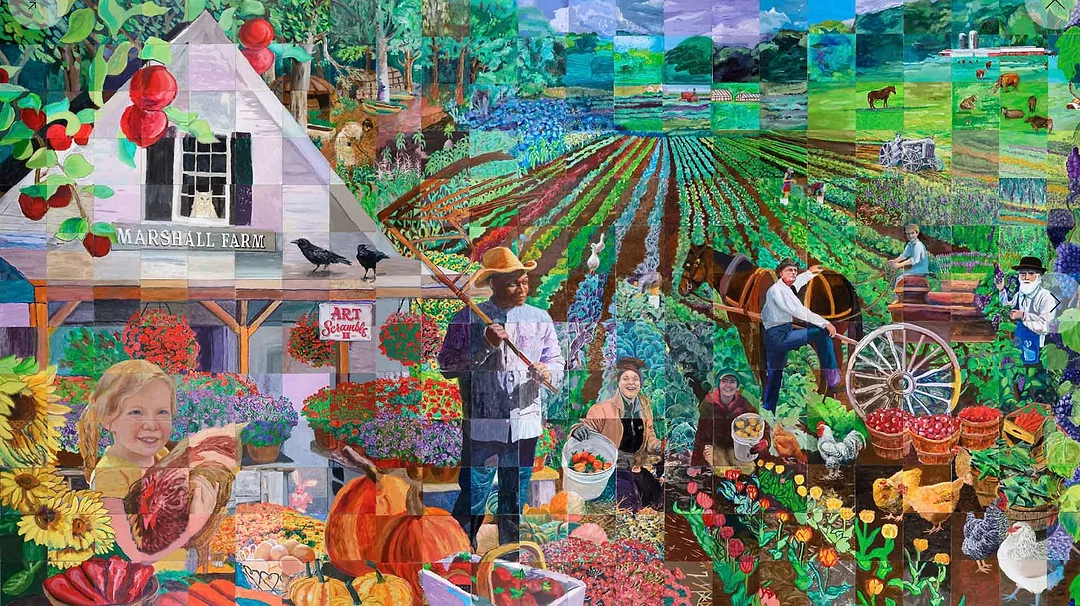
In the 21st century, the factories of West Concord have given way to a new generation of local independent businesses and institutions with an emphasis on quality of life: good food, unique shops, and especially the arts. In 2016, the Massachusetts Cultural Council designated the West Concord Cultural District to increase public engagement with cultural assets and boost cultural tourism. Local artists, many of them affiliated with Art for All Concord, have created colorful murals that depict scenes including the Bruce Freeman Rail Trail, West Concord’s past and present farmers, the neighborhood’s industrial heritage, and Music in the Village. The Concord Cultural Council has commissioned individual artists to adorn signal switch boxes at intersections.
Plans are underway for a flagship cultural attraction at 74 Commonwealth Avenue, where Wilson and Jennifer Schünemann (co-founder of this magazine) are working to build the Guitar Museum of New England, showcasing rare and custom-built instruments.
Much has changed over the centuries in West Concord, but what remains constant is that it is local people who supply the energy and imagination that give the neighborhood its vitality.
NOTES:
1. For more on this subject, see Renee Garrelick, Concord in the days of strawberries and streetcars. Mercantile/Image Press, 1999.
2. For more on this subject, see Anne McCarthy Forbes, Narrative Histories of Concord and West Concord. Concord Historical Commission, 1995.