
Discover Concord Logo
Toggle Mobile MenuToggle Mobile Menu
Subscribe
  • Home
  • Current Issue
  • Back Issues
    • Summer 2026
    • Spring 2026
    • Fall 2025
    • Spring 2025
    • Winter 2025
    • 2024 Back Issues
    • 2023 Back Issues
    • 2022 Back Issues
    • 2021 Back Issues
    • 2020 Back Issues
    • 2019 Back Issues
  • Browse Topics
    • Abolitionism in Concord
    • American Revolution
    • Arts & Culture
    • Celebrity Profiles
    • Civil War
    • Concord History
    • Concord Writers
    • First Nations People of Concord
    • Historic Sites in Concord
    • Parks & Nature
    • Patriots of Color
    • Things to See & Do
    • Transcendentalism
    • Trivia
    • Untold Stories of Concord
  • Plan Your Visit
  • Events
  • Purchase Subscriptions and Back Issues
  • Discover the Battle Road
  • 250 Collectibles
  • More
    • About Us
    • Advertise
    • Contact Us
Toggle Mobile MenuToggle Mobile Menu
Home » Authors » Victor Curran
Victor Curran

Victor Curran

Victor Curran writes and leads tours of historic Concord and is an interpreter at the Concord Museum and the Old Manse. He teaches courses and writes articles about the men and women who made Concord the home of American independence and imagination. 

Articles

ARTICLES

039_RuthWheeler1912_2931x6930pp.jpg

Ruth Robinson Wheeler: In Love with Concord

September 18, 2026
Victor Curran
No Comments

Like Ruth Robinson Wheeler, I moved to Concord from Watertown, Massachusetts, and became devoted to learning and sharing the history of my adopted town. Unlike Ruth Wheeler, I’ve never been attacked by a bull.

The bull attack occurred on her farm on Virginia Road in 1940, when she was fifty years old. Fortunately, she recovered from her injuries. Wrangling cattle was not an ordinary occupation for a Vassar graduate with a colonial Massachusetts pedigree, but Ruth was not an ordinary woman.


Read More
creativeTurtle0550.jpg

The People of Musketaquid: Concord’s First Residents

September 18, 2026
Victor Curran
No Comments

You see the names all over town: Musketaquid, Nashawtuc, Nashoba, Squaw Sachem. These words invite us to learn the stories of the people who lived in this place for thousands of years before English settlers arrived.

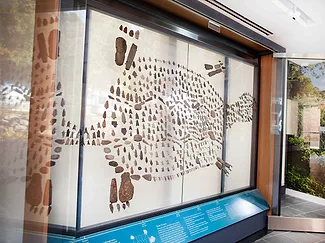
The English named this place Concord in 1635, but it had long been known by the region’s first peoples as Musketaquid. In the Algonquian language, the name means “grassy river” or “grassy island,” and the Sudbury, Assabet, and Concord Rivers have always been the lifeblood of the land. As Lemuel Shattuck recounts in his 1835 History of Concord, the local people lived “[by] planting, hunting, or fishing . . . and few places produced a supply more easily than Musketaquid.” 1


Read More
Hearse-Concord-Patch.jpg

A Hawthorne Homecoming

June 30, 2026
Victor Curran
No Comments

Two white horses pulled the hearse into Concord’s Sleepy Hollow Cemetery, a top-hatted driver at the reins. A band of mourners followed on foot as they made their way toward Authors’ Ridge.

Except for the bright sunshine, this scene wouldn’t seem out of place in a story by Nathaniel Hawthorne. But it happened a mere twenty years ago, on June 26, 2006. That was the day Hawthorne and his wife and daughter were reunited after his death separated them 142 years earlier. 


Read More
Mural.jpg

West Side Story

Farms and Factories to Cornucopia of Culture
April 3, 2026
Victor Curran
No Comments

Concord Center takes justifiable pride in its history, but today great things are happening in West Concord. Innovation and self-reliance are nothing new on the west side of Route 2; they’ve defined the community for centuries. 


Read More
NPG-NPG_2016_123Fuller_d1.jpg

Margaret Fuller: Asking the Right Questions

April 25, 2025
Victor Curran
3 Comments

In a world where men claimed to have all the answers, Margaret Fuller made it her mission to ask all the right questions. “How came I here?” she wrote as a young adult. “How is it that I seem to be this Margaret Fuller? What does it mean? What shall I do about it?” She was only a visitor in Concord, but this town was electrified by her presence.


Read More
Pi414-DETAIL-20200001-Concord-Museum-.jpg

A Turning Point at Wright’s Tavern

March 28, 2025
Victor Curran
No Comments

As hostilities grew between Massachusetts and the English government in the 1770s, popular opinion was divided. Concord’s “Patriot preacher,” Rev. William Emerson, spoke out for liberty and served as chaplain for Concord’s minutemen. Meanwhile, his brother-in-law, lawyer Daniel Bliss, remained loyal to the King, and would be forced to flee for his life to Canada when war erupted in 1775.


Read More
Jason-Copes,-The-Colonial-Williamsburg-Foundation..jpg

Radicalized Resistance: The Cascade of Events That Led to April 19, 1775

March 28, 2025
Victor Curran
No Comments

At the end of the Seven Years’ War (called the French and Indian War in America), England emerged as the big winner. It had gained control of eastern North America, from the Atlantic to the Mississippi, and from Labrador to Louisiana. 

This victory, sealed by the Treaty of Paris in 1763, came at a steep price. England’s national debt had swelled by an additional £59 million, equivalent to nearly £15 billion today. And the drain on the Treasury didn’t stop there. England had to deploy thousands of soldiers to keep the French and Spanish out and to keep the Indigenous population under control. 


Read More
Tory_Refugees_by_Howard_Pyle.jpg

Daniel Bliss and John Jack: Loyalty’s Cost, Freedom’s Price

August 29, 2024
Victor Curran
No Comments

Isabel Bliss hurried her three children, aged four through seven, off to bed on the night of March 20, 1775. The two men who had come to her door looked like local farmers seeking counsel from her husband, lawyer Daniel Bliss. They wore the homespun coats of plain country folk, but the muskets they carried told a different story. 

As the men huddled with Daniel in the parlor, talking in whispers, Isabel was startled by another knock at the door. She opened it cautiously and was relieved to see the familiar face of a neighbor. The woman was out of breath, and tears stained her cheeks. She begged Isabel to forgive her, because she had given the two strangers directions to the Bliss home without knowing who they were. 


Read More
Pi414-DETAIL-20200001-Concord-Museum-.jpg

A Turning Point at Wright’s Tavern

June 15, 2024
Victor Curran
No Comments

As hostilities grew between Massachusetts and the English government in the 1770s, popular opinion was divided. Concord’s “patriot preacher,” Rev. William Emerson, spoke out for liberty and served as chaplain for Concord’s Minutemen. Meanwhile, his brother-in-law, lawyer Daniel Bliss, remained loyal to the King, and would be forced to flee for his life to Canada when war erupted in 1775.


Read More
A View of the Town of Concord

Amos Doolittle: Picturing the Birth of America

March 15, 2024
Victor Curran
No Comments

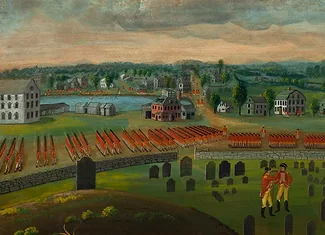
One May morning in 1775, two men set out from Cambridge, bound for Lexington and Concord. The older one, Ralph Earl, was just shy of his twenty-fourth birthday, but was already an artist of some note. He lived in New Haven, Connecticut, but he had come to Boston to paint portraits. 


Read More
View All Articles by Victor Curran

Featured Stories

  • Cover Fall26.jpg

    The Fall Issue is Here!

    It’s Fall - time to venture out and explore the places, people, and stories that make this region so special. Begin by planning a day out with our special insert, “An Apple Picking Road Trip.” Our second special guide invites you to spend a day exploring West Concord. Discover the fascinating lives Henry David Thoreau lived after leaving Walden Pond and encounter a possible Hawthorne family curse, a forgotten Yankee hero, and Ruth Robinson Wheeler. And of course, concerts, exhibitions, festivals, walks, talks, and family activities await you throughout the season. Turn to “Things to See & Do this Fall” and “Arts Around Town” for all the details. Happy fall.
  • Tumbledown-Hall-2.jpg

    When Thoreau Left Walden Pond: Several More Lives to Live

    I left the woods for as good a reason as I went there. Perhaps it seemed to me that I had several more lives to live and could not spare any more time for that one.On September 6, 1847, Henry David Thoreau left his one-room house at Walden Pond and returned to Concord. Living at Walden for over two years had been a life-changing experience for the thirty-year-old Thoreau. Wanting to be a writer, he went to the pond to write, and while there he did exactly that. He produced two drafts of A Week on the Concord and Merrimack Rivers. He wrote one lecture about Thomas Carlyle and another about living at the pond called “A History of Myself.” He also penned an essay titled “Ktaadn” about going to Maine in the summer of 1846. And he wrote in his journal almost daily. But what would he do once he was back in Concord?
  • Bird-Walk-Mass-Audubon-Red-tailed-Hawk-David-Morris.jpg

    19 Things to Do This Fall

    Autumn is filled with amazing things to do this year! Here are 19 of them that you won't want to miss.
©2026. All Rights Reserved. Content: Voyager Publishing LLC. Design, CMS, Hosting & Web Development: ePublishing
Facebook Instagram