Discover Concord Logo
Toggle Mobile MenuToggle Mobile Menu
Subscribe
  • Home
  • Current Issue
  • Back Issues
    • Fall 2025
    • Spring 2025
    • Winter 2025
    • 2024 Back Issues
    • 2023 Back Issues
    • 2022 Back Issues
    • 2021 Back Issues
    • 2020 Back Issues
    • 2019 Back Issues
  • Browse Topics
    • Abolitionism in Concord
    • American Revolution
    • Arts & Culture
    • Celebrity Profiles
    • Civil War
    • Concord History
    • Concord Writers
    • First Nations People of Concord
    • Historic Sites in Concord
    • Parks & Nature
    • Patriots of Color
    • Things to See & Do
    • Transcendentalism
    • Trivia
    • Untold Stories of Concord
  • Plan Your Visit
  • Events
  • Purchase Subscriptions and Back Issues
  • Discover the Battle Road
  • 250 Collectibles
  • Trading Cards
  • More
    • About Us
    • Advertise
    • Contact Us
Toggle Mobile MenuToggle Mobile Menu
Home » Topics » Untold Stories of Concord

Untold Stories of Concord

istock.com.jpg

Town Meeting: Concord’s Living Wonder

June 15, 2022
Sam Copeland
No Comments

Concord usually gets attention for its past. Even Louisa May Alcott worried that her town was “degenerating into a museum of revolutionary relics.” She, of course, belonged to an intellectual event that gave a second chapter to Concord’s celebrated history, but the Concordian of today is liable to feel that everything great belongs to the past.


Read More
IMG_1015-cropped-1.jpg

The Founding of Concord’s Robbins House and a Debt of Gratitude

June 15, 2022
Maria Madison
No Comments

In 1976, Concordians and school administrators Barbara Elliot and Janet Jones published the text Concord: Its Black History, 1636-1860 through the Concord Public Schools. The text included photos of Black and White children visiting places associated with 19th century [and earlier] Black residents. 


Read More
0028mumbet_trans_ref.jpg

Elizabeth Freeman: A Free Woman on God’s Earth

June 15, 2022
Victor Curran
No Comments

It was cold outside, but the glowing fire in the brick oven warmed the kitchen as Elizabeth busied herself baking the week’s bread for her enslavers, Col. John Ashley and his wife Hannah. Her younger sister Lizzie, also enslaved in the Ashley household, was too frail for heavy labor, so she watched as Elizabeth stirred the fire with an iron shovel. A


Read More
Old-Manse_garden_JumpingRocks.jpg

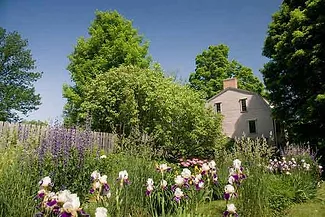
Flipping the Script: The Women of the Old Manse

March 15, 2022
Marybeth Kelly
No Comments

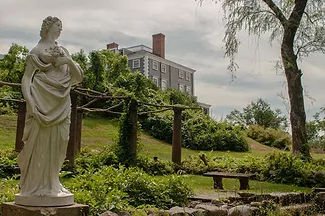
To visit The Old Manse – an elegant, thirteen-room colonial built on the banks of the Concord River in 1770 – is to experience pivotal moments in our nation’s history. 


Read More
Copy-of-Cedric-Vise1-Douglas-Caution-43689471890_6cfd7511bd_o.jpg

Series of Programs Offers Rich Explorations of Black Past, Present, and Future

March 15, 2022
Jennifer C. Schünemann
No Comments

The Umbrella Arts Center has set the stage for a bold season of artistic and cultural programs exploring the experience of being Black in America, yesterday, today, and tomorrow.


Read More
William_Still_abolitionist.jpg

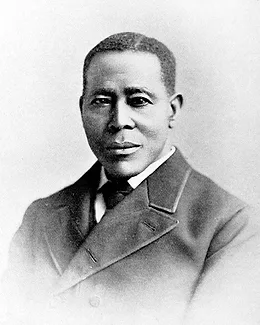
The Underground Railroad: Black Heroes at The Wayside

September 15, 2021
Maria Madison
No Comments

It remains a moral, political, and economic necessity to understand America’s underground railroad’s origin and legacy.1 The Wayside in Concord, Massachusetts provides us with an inside view into this history. The Wayside is part of the National Park Service’s National Underground Railroad Network to Freedom program. The NPS program “commemorates and preserves the historical significance of the Underground Railroad which sought to address the injustices of slavery and make freedom a reality in the United States and is a crucial element in the evolution of our national civil rights movement. Inhabitants of The Wayside house have witnessed a dramatic spectrum of American history including the ongoing struggle for freedom and equality.”2


Read More
WomenSewingforBelgianRefugees1915.jpg

Charting New Paths: Women of Concord

June 15, 2021
Erica Lome
No Comments

In her pioneering book Woman in the Nineteenth Century (1845), writer and thinker Margaret Fuller articulated the goal of women’s progress in America: “We would have every arbitrary barrier thrown down. We would have every path laid open to Woman as freely as to Man.” Spoken seventy-five years before women had the legal right to vote, Fuller’s words served as a rallying cry for generations of people who fought to live and work as they pleased. 


Read More
RobbinsHouse.jpg

Mapping Concord’s African American History: What’s in a Name?

May 15, 2021
Liz Clayton
No Comments

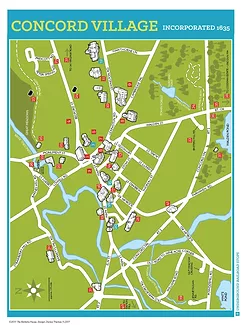
The Robbins House – Concord’s African American History started with a map. Local resident Maria Madison, PhD, who would go on to co-found the the nonprofit organization, The Robbins House Inc., noticed streets in Concord named after early Black residents such as Bristers Hill (33), Peter Spring (27), and Jennie Dugan (39) Roads. Who were these people? Dr. Madison and a few other Concord METCO (Metropolitan Council for Educational Opportunity) family friends created a map of Concord’s African American history so that students of color from Boston and Concord could see their own history reflected in this storied town. When the Robbins House, a residence which occupied two locations (23 & 24) from 1823-2007, was threatened with demolition, The Robbins House nonprofit was formed to save, move, and restore the building as a center for telling Concord’s lesser-known Black history.


Read More
Nick-Johnson-096.jpg

The Unheard Voices of April 19, 1775

March 15, 2021
Erica Lome
No Comments

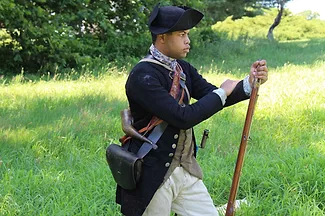
On the morning of April 19, 1775, 71-year-old Martha Moulton witnessed a terrifying scene: hundreds of red-coated British Regulars marching into the town of Concord. These men were on orders from British General Thomas Gage to seize and destroy contraband military supplies stockpiled by the Provincial Congress. The ensuing conflict between the Regulars and Provincials sparked the American Revolution. 


Read More
Brister-Freeman---Codman-Estate--Grotto-1286.jpg

At the Frontier of Hope: Brister Freeman

September 15, 2020
Alida Vienna Orzechowski
No Comments

When you hear the words ‘Walden Pond’ you probably think of Henry David Thoreau and his cabin in the woods. If you’ve been here, you might also think of the many hiking trails and sandy little coves surrounding the gin-clear water of the pond where tens of thousands of people enjoy swimming and walking each season.

What you might not think about is the community of formerly enslaved people who once lived near Walden. Not because it was the beautiful, tranquil scene we flock to today, but because it was considered an infertile, out of the way, undesirable piece of land to Concord’s white population.

As Elise Lemire writes in her excellent book Black Walden, as many as fifteen formerly enslaved people ‘made a life for themselves in Walden Woods, enough that Henry David Thoreau could describe their community as a “small village.”’ 


Read More
Previous 1 2 3 4 Next

Featured Stories

  • Cover Spring26.jpg

    The Spring Issue is Here!

    Patriots' Day is almost here, and this issue of Discover Concord brings you a list of events, the parade route, and much more to make your celebration special.  Also in this issue is an in-depth look at the new PBS documentary "Henry David Thoreau," a fascinating piece on how the Concord Lyceum came to be, and a look at how Massachusetts civilians on the homefront managed the challenging months of January - May 1776. Freedom's Way National Heritage Area is launching an exciting program you won't want to miss called "Declaring Independence: Then & Now" in more than 20 towns across Massachusetts. With two special fold-out inserts,  maps, lists of shops, and so much more, you'll want to get your copy early!
  • Sons-of-American-Revolution-parade-photo.jpg

    Sons of the American Revolution: Honoring the Past, Inspiring the Future

    As the nation prepares for the America 250 celebrations in 2026, the meaning of patriotism feels especially resonant. Few organizations embody that spirit more fully than the Sons of the American Revolution (SAR), whose members work to preserve the legacy of those who fought for American independence.  Members of the SAR are all direct descendants of someone who fought in the Revolutionary War.
  • Reading-the-Declaration-courtesy-of-NPS.jpg

    Declaring Independence: Then & Now

    Then...By the spring of 1776, the question of independence was on the minds of those living in the thirteen American colonies. The Patriots were winning the hearts and minds of many; however, for various reasons, not every colonist was in favor of breaking ties with Great Britain.  Now...The spring and summer of 2026, when the United States celebrates the 250th anniversary of the signing of the Declaration of Independence, is a fitting moment to commit to refamiliarizing ourselves as a nation with the complexities surrounding this historical document and the process through which it was created, as well as the ideals it espouses the American people—and its government—to live up to. The Freedom’s Way National Heritage Area’s award-winning program, Declaring Independence: Then & Now provides the opportunity to do so.
©2026. All Rights Reserved. Content: Voyager Publishing LLC. Design, CMS, Hosting & Web Development: ePublishing
Facebook Instagram