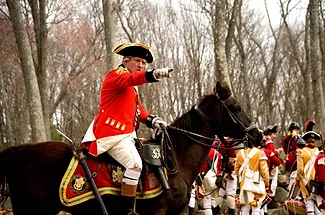
The American Revolution, a new six-part, 12-hour series directed by Ken Burns, Sarah Botstein, and David Schmidt and written by Geoffrey Ward will premiere on PBS on November 16, 2025. The series examines how America’s creation turned the world upside-down. Thirteen British colonies on the Atlantic Coast rose in rebellion, won their independence, and established a new form of government that radically reshaped the continent and inspired centuries of democratic movements around the globe.
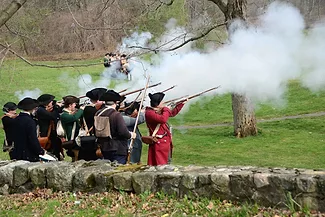
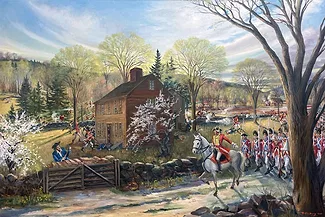
The Battle at the North Bridge on April 19, 1775, was well documented, but the running battle of the minutemen and militia companies chasing the Regular Army out of Concord back to Charlestown along what we now call Battle Road is lesser-known. Records are incomplete and make the first five miles of the retreat impossible to reconstruct accurately. Nevertheless, the National Park Service has hunted down slender clues to provide a more complete history to the forgotten families who experienced fighting on their front lawns. Minute Man National Historical Park Ranger Jim Hollister was able to share some stories about families that lived on the Battle Road.
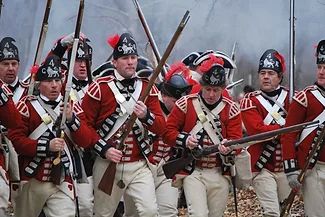
On the morning of April 19, 1775, 71-year-old Martha Moulton witnessed a terrifying scene: hundreds of red-coated British Regulars marching into the town of Concord. These men were on orders from British General Thomas Gage to seize and destroy contraband military supplies stockpiled by the Provincial Congress. The ensuing conflict between the Regulars and Provincials sparked the American Revolution.
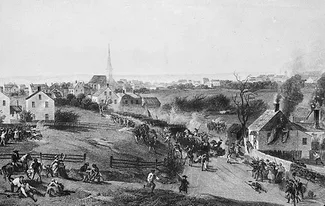
On April 19, 1775, as the British Regulars retreated from Lexington back toward Boston, they passed through the village of Menotomy, facing fierce resistance from the Provincial forces of surrounding towns. Of the approximately 73 British Regulars and 49 Provincials killed on April 19, 1775, 40 Regulars and 25 Provincials lost their lives along the 1.5-mile stretch between the Foot of the Rocks and Cooper’s Tavern, which is now Arlington’s city center. This village witnessed the largest engagements of the day, with many families caught in the turmoil of battle right in their own homes.
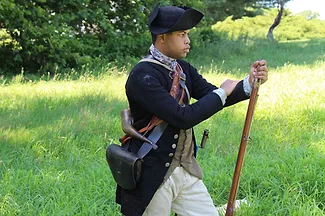
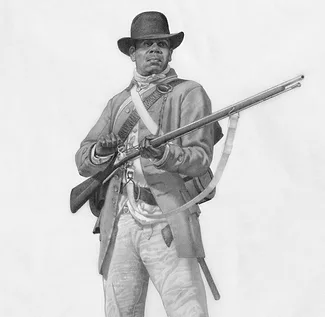
On April 19, 1775, an estimated twenty to forty colonists of African or Native American descent fought in the first battle of the American Revolution. On that historic day, those men, often termed “Patriots of Color,” joined approximately 4,000 other men fighting British Regular soldiers along the “Battle Road” from Concord to Boston. Over the last 250 years, racism and historical bias have effectively ignored or trivialized the contributions of those men and many other people of color in the historic struggle that produced the United States. To understand who the Patriots of Color were, how they contributed to the American Revolution, and why they chose to do so, we must examine their social context.
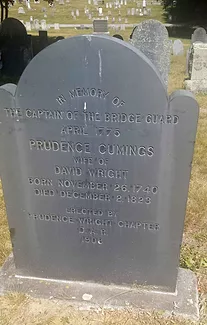
Prudence Cummings, born in 1740 in Hollis, New Hampshire, did chores, learned household skills, and played much like any other colonial girl. But unlike many, she attended school, hunted and fished with her father, and participated in family discussions about the future of the colonies. By the time she married David Wright and moved to Pepperell, Massachusetts, colonial resistance to British rule had increased. Soon, Prudence led the women of Pepperell to burn tea on the town common and boycott English goods. When the townspeople raised a liberty flag, Prudence joined in, boldly defying the king.
In 1775, Menotomy was a village of about 400 farmers, millers, tavern keepers, and their families. Located in today’s Town of Arlington, Menotomy stretched along Massachusetts Avenue from “the foot of the rocks” near Lexington to Alewife Brook. On April 19, 1775, the Battle of Menotomy would be the largest, longest, and bloodiest engagement of the day.
In war, there are many ways to define victory. So, who won the Battles of Lexington and Concord? On the surface this may seem simple. The colonists were able to keep most of their military supplies safely out of British hands. The British soldiers then suffered heavy casualties during their retreat to Boston where they were trapped and besieged. However, though things certainly did not go the way they wanted, did the British Army actually lose on April 19, 1775? The answer depends upon how you define victory.
Have you ever tried to quickly clean up the house before last minute guests come over? Heart pounding down the seconds until their obnoxiously presumptuous fists knock on the door, you do a little frantic shoving, maybe commit a little bit of treason, and hope the house looks presentable.
In 1774 when Parliament passed the Boston Port Act in an attempt to break the Massachusetts colonists of their resistance to Crown policy, it also authorized English General and acting Massachusetts Governor Thomas Gage to undertake any military measures necessary to help bring the colony under control. In late winter and early spring of 1775, Gage received a series of dispatches from London ordering him to not only arrest the leaders of Massachusetts’ opposition party but to launch a major strike against the apparently growing provincial stockpiles of weapons and munitions located throughout eastern Massachusetts. As he contemplated these orders, Gage considered a variety of military options, including a long-range strike against the large store of weapons located in the shire town of Worcester, forty miles west of Boston.