
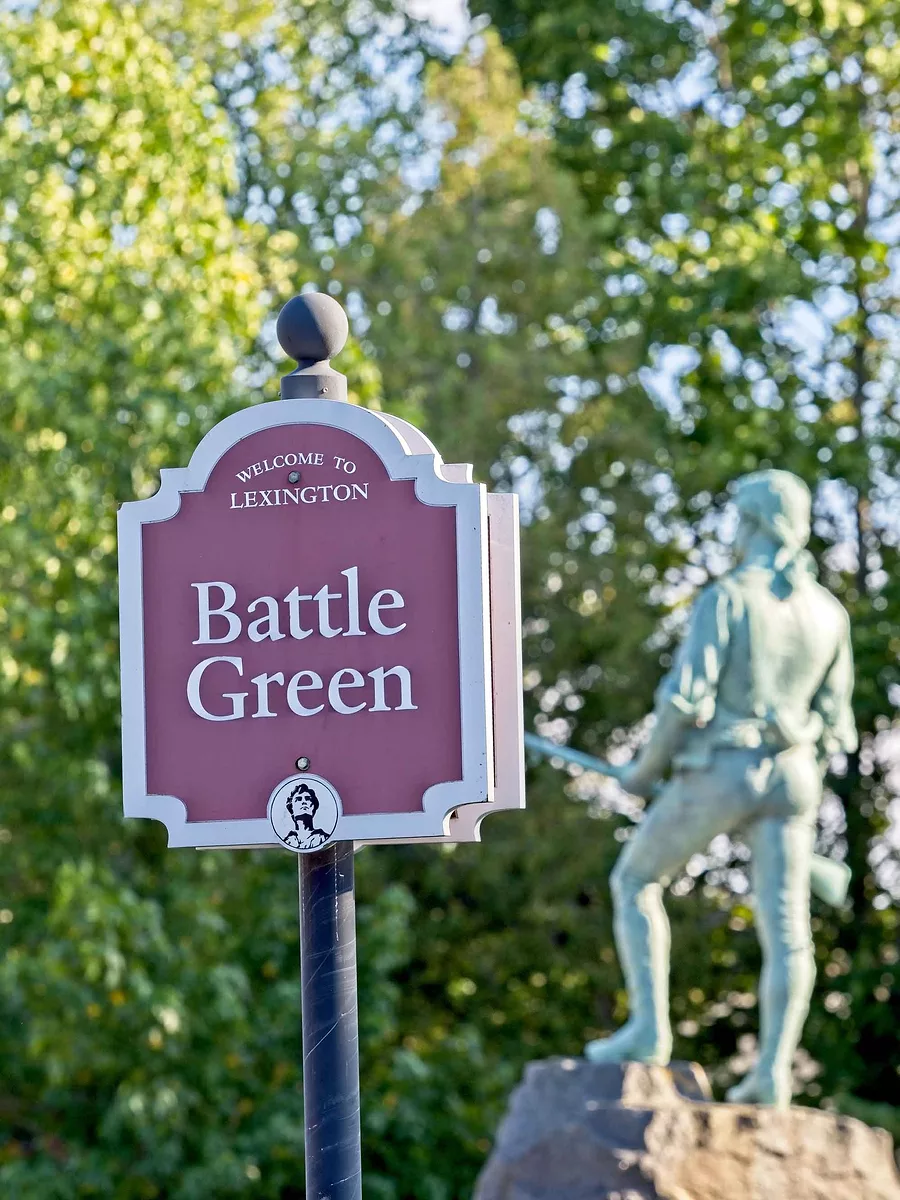
In 1775, Lexington, MA, was a quiet community of farmers, dairymen, and craftsmen with a total population of just 700-800. Lexington was fated to play a pivotal role in American history, though, as tensions between colonists and the Crown rose to the point of rebellion.
On the morning of April 19, 1775, Captain John Parker’s militia company numbered 144 men, 77 of whom stood boldly on the Town Common and faced 100 British Regulars – some of the best-trained soldiers in the world.
The Battle of Lexington was a pivotal moment in American history. It was a powerful act of defiance that set the stage for the Revolutionary War. As the day unfolded with the Battle of Concord and a running battle as the British retreated to Boston, simmering unrest became full-scale resistance and open warfare.
The Battle Green
It was here, on the morning of April 19, 1775, that “the first blood was spilt in the dispute with Great Britain,” as George Washington wrote in his diary. In this first skirmish, 77 Lexington militia men faced 100 members of Major John Pitcairn’s advanced company of British Regulars. Although both sides had been ordered not to fire, the first casualties of the day took place on this hallowed ground. Eight militiamen lost their lives and 10 were wounded. Two British soldiers were also injured. After the battle, Samuel Adams exclaimed to John Hancock, “What a glorious morning for America!”
The Battle Green is a National Historic Landmark, and is considered consecrated ground, both for the blood shed on it and for the militiamen who are buried here. It is one of only seven places in the United States where the U.S. flag is authorized by Congress to fly 24 hours a day.
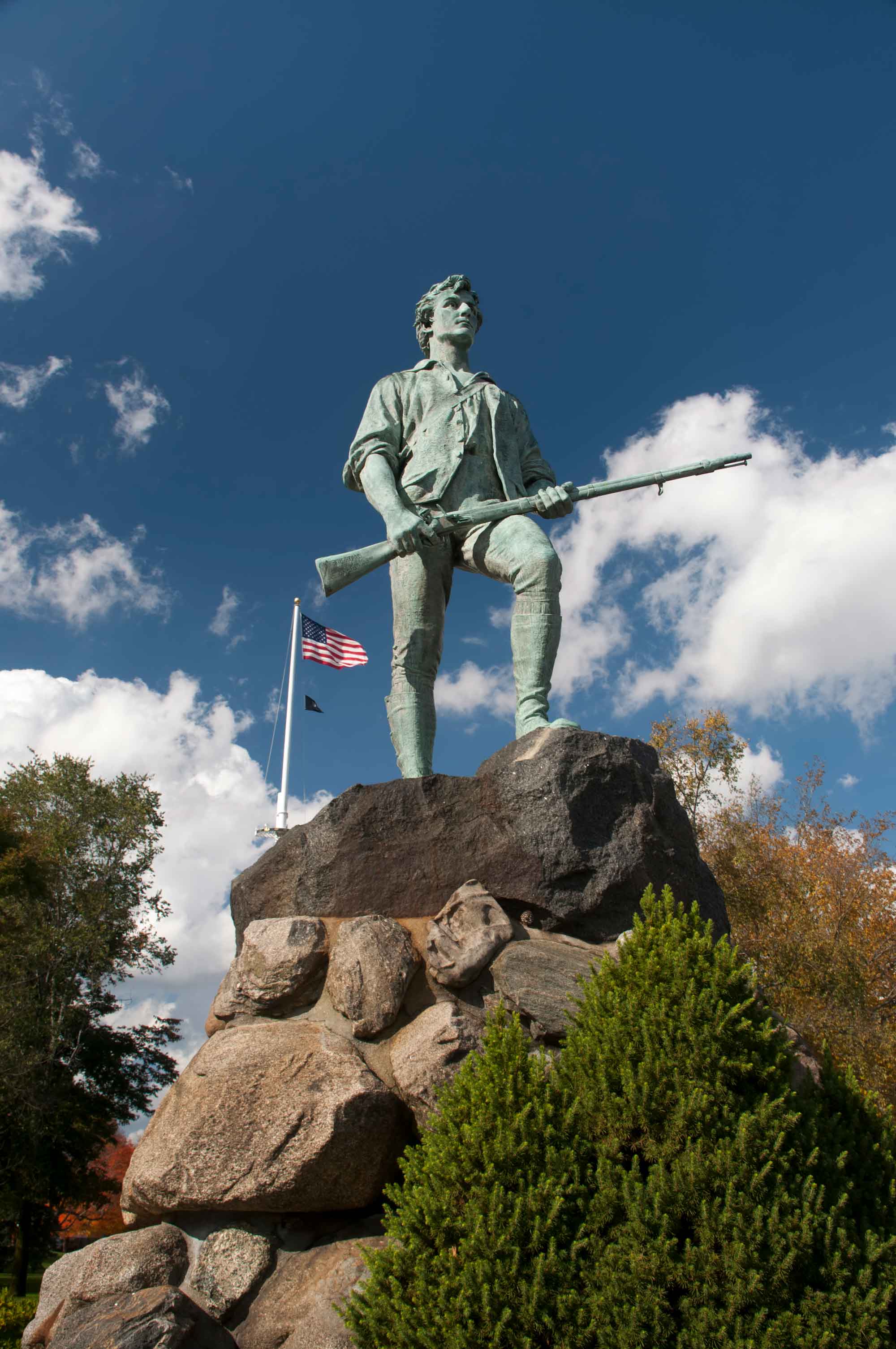
Here you’ll find the iconic statue, The Lexington Minuteman. Created by Henry H. Kitson, the statue represents Captain John Parker who led the Lexington militia on April 19, 1775.
Also on the Green you’ll find the monument to Captain John Parker, who urged his men as they faced British soldiers across the green, “Stand your ground. Don’t fire unless fired upon, but if they mean to have a war, let it begin here.”
Lexington’s Revolutionary War Monument, dedicated on July 4, 1799, holds the distinction of being the oldest war memorial in the United States. The granite obelisk marks the approximate area where the Lexington militia bravely drew their line to face British Regulars on April 19, 1775. Seven of the eight men who died on Lexington Green on April 19, 1775, are interred beneath the monument.
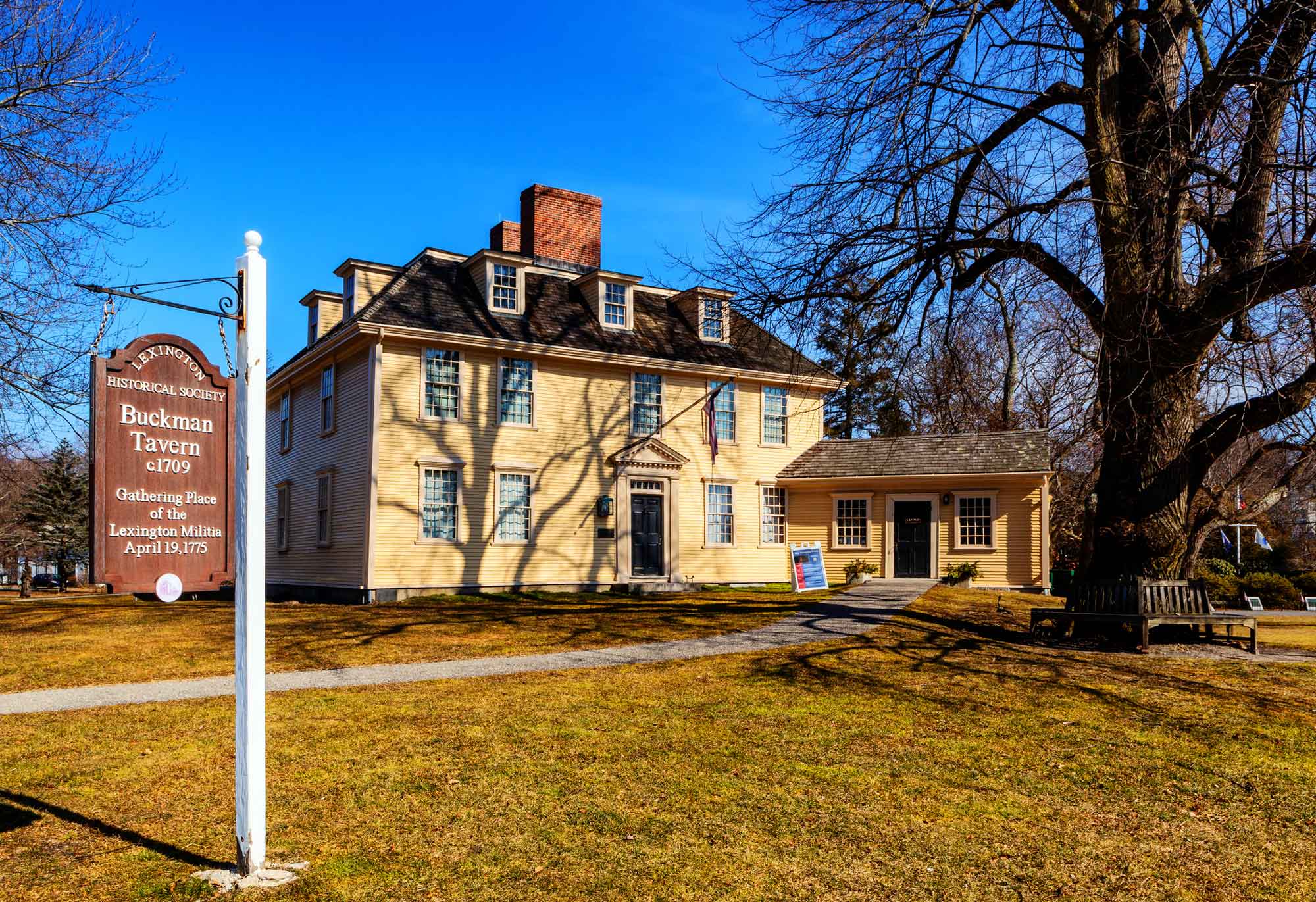
Buckman Tavern
| ©istock.com/APCortizasJrBuckman Tavern
Buckman Tavern first opened its doors in 1713, offering a warm hearth, food, and drink to local citizens and those journeying through colonial Massachusetts. Taverns and inns were an essential part of colonial life, serving as much more than just places for rest and refreshment. They acted as vibrant social hubs where locals and travelers could exchange news, discuss politics, and make plans. In these communal spaces friendships were forged, business deals struck, and occasionally, history was made.
As the oldest tavern in Lexington, Buckman Tavern occupies a special place in American history. Sixty years after its establishment, it became the backdrop for one of the pivotal moments leading to the American Revolution. In the early hours of April 19, 1775, as tensions between the colonies and Britain reached a boiling point, Buckman Tavern played host to a group of determined local militiamen.
Under the leadership of Captain John Parker, Lexington’s militia gathered at the tavern to prepare for what lay ahead. The news of the British advance had already spread, and the men anxiously awaited further developments. At around 5:00 a.m., the moment of reckoning arrived.
A contingent of approximately 100 British Regulars marched into Lexington and found Parker’s militia assembled on the Green, just steps away from Buckman Tavern. Both sides had orders to hold fire, but in the confusion, a shot rang out (no one knows which side fired first). The skirmish was brief but deadly, leaving eight militiamen dead and several others wounded. This bloody encounter on Lexington Green marked the beginning of armed hostilities and foreshadowed the broader conflict that unfolded later that day in Concord and beyond.
Buckman Tavern’s connection to this historic event has cemented its legacy as a key site in the story of American independence. In 1913, the town of Lexington acquired the property, ensuring its preservation for future generations. Today, the tavern operates as a museum, offering visitors a window into colonial-era life. Its interior has been meticulously restored to reflect its 18th century appearance. Highlights include the beautifully restored taproom with its large fireplace and original furnishings that evoke the tavern’s bustling past.
Among the many artifacts on display is a reminder of the tavern’s role in the events of 1775: its old front door, complete with a bullet hole from that historic day.
Buckman Tavern was designated a National Historic Landmark in 1961. Location: 1 Bedford Street.
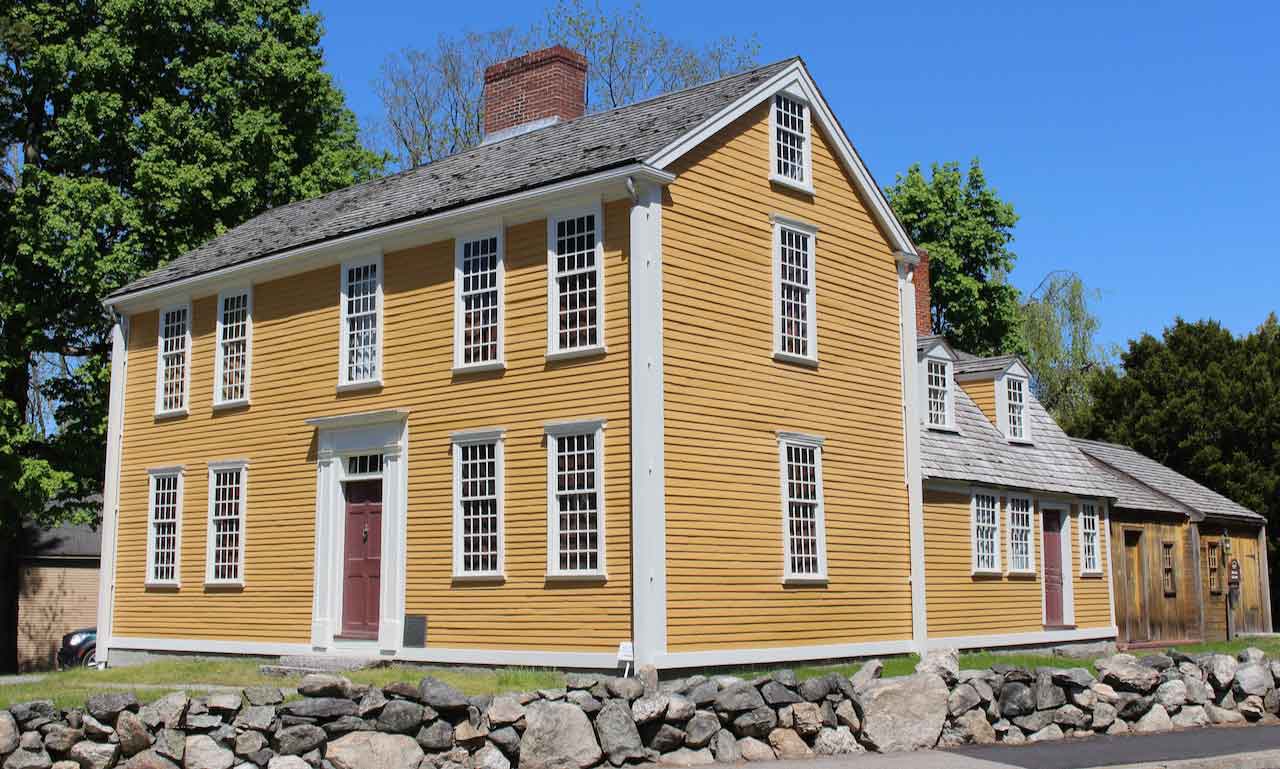
Hancock-Clarke House
| Courtesy of Freedom’s Way National Heritage AreaHancock-Clarke House
For 77 years, the Hancock-Clarke House stood quietly in Lexington, MA, as the home of two respected clergymen. Built in 1698 by the Reverend John Hancock, the house witnessed generations of thoughtful contemplation and devotion. Reverend Hancock, the grandfather of John Hancock—famed for being the first to sign the Declaration of Independence—lived in the home for 55 years. After him, the Reverend Jonas Clarke resided there for half a century. This modest house, steeped in history, was also the boyhood home of John Hancock and remains the only surviving structure associated with him.
The thoughtful quietude of the manse was dramatically interrupted on the night of April 18th, 1775. That night, the Hancock-Clarke House hosted two of the most influential figures in the colonial resistance: Samuel Adams and John Hancock. Suddenly, Paul Revere and William Dawes arrived from Boston with urgent news: British troops were on the move. The famous midnight riders sounded the alarm, warning of imminent danger. Adams and Hancock fled Lexington to avoid capture.
The structure of the Hancock-Clarke House evolved over time. Initially a modest, one-and-a-half-story home with four rooms, it was expanded in 1734 by Thomas Hancock, Reverend John Hancock’s second son. Thomas, a prosperous Boston merchant, added a two-and-a-half-story frame structure with a central chimney, giving the house its current appearance.
Today, the Hancock-Clarke House is more than a historical artifact; it is a living museum, showcasing period furnishings, portraits, and relics from the Revolutionary War. Among its treasures are William Diamond’s drum, which called the Lexington militia to arms, and the pistols of British Major John Pitcairn, a key figure in the American Revolution. It also contains new research and exhibitions related to the enslaved and indentured Black populations of Lexington in the eighteenth and nineteenth centuries.
The Hancock-Clarke House was designated a National Historic Landmark in 1971. Location: 36 Hancock Street
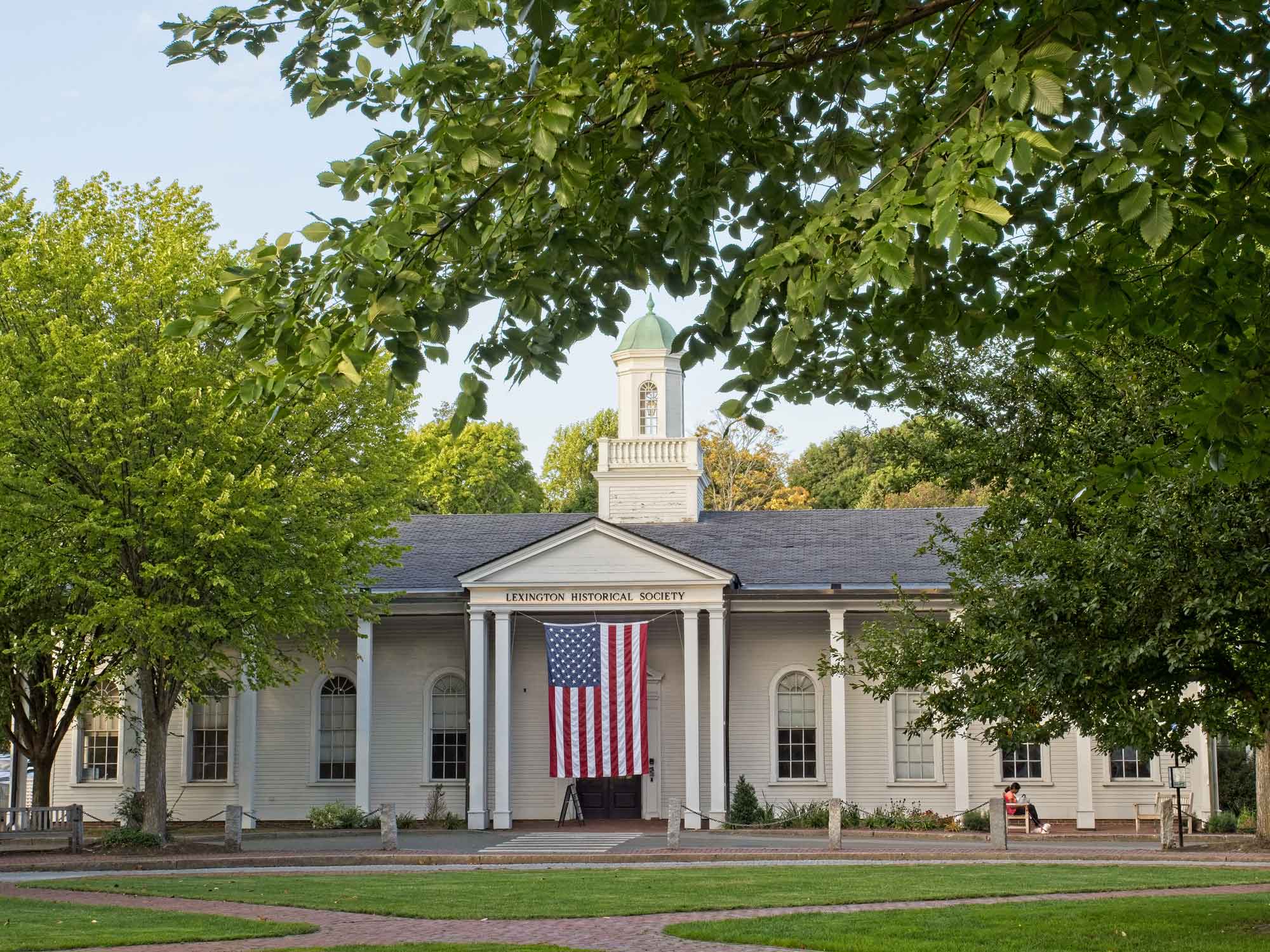
Lexington Depot
| ©istock.com/Peter BlottmanLexington Depot
In its heyday, Lexington Depot handled as many as nineteen trains daily as people made the trip between Lexington and Concord. The Depot was built in 1847 and operated as a train station from 1847 to 1977. While trains no longer arrive daily, you’ll find the headquarters of the Lexington Historical Society here.
In 2024/2025, the Depot building was transformed into an exhibition and education space for all of Lexington’s history, from pre-colonial times to the present day. Exhibitions display the richness of the area’s history, from First Peoples to today’s Lexingtonians, from art, architecture, and expression, to activists, innovators, and ordinary people whose stories, when woven together, create history.
Location: Lexington Center at Depot Square
 ©istock.com/Peter Blottman
Minuteman Statue
The Minuteman Statue stands on Lexington Battle Green—a powerful symbol of courage and resolve. This life-size bronze figure, crafted by sculptor Henry H. Kitson and dedicated on April 19, 1900, honors the brave men of the Lexington militia who stood against British Regulars on the fateful morning of April 19, 1775.
Facing the path of the British advance, the statue portrays a colonial farmer gripping a musket, embodying the spirit of ordinary citizens rising to extraordinary challenges. While initially meant to represent the anonymous minute men—volunteers ready to defend their homes at a moment’s notice—the statue is now widely associated with Captain John Parker, who led the Lexington militia that day.
Parker’s legendary command, “Stand your ground. Don’t fire unless fired upon, but if they mean to have a war, let it begin here,” echoes through history and is etched on a plaque near the statue. These words capture the essence of the militia’s stand: disciplined, determined, and unshaken in their pursuit of liberty.
Location: Intersection of Bedford Street and Massachusetts Avenue
Munroe Tavern
| ©istock.com/flysnowMunroe Tavern
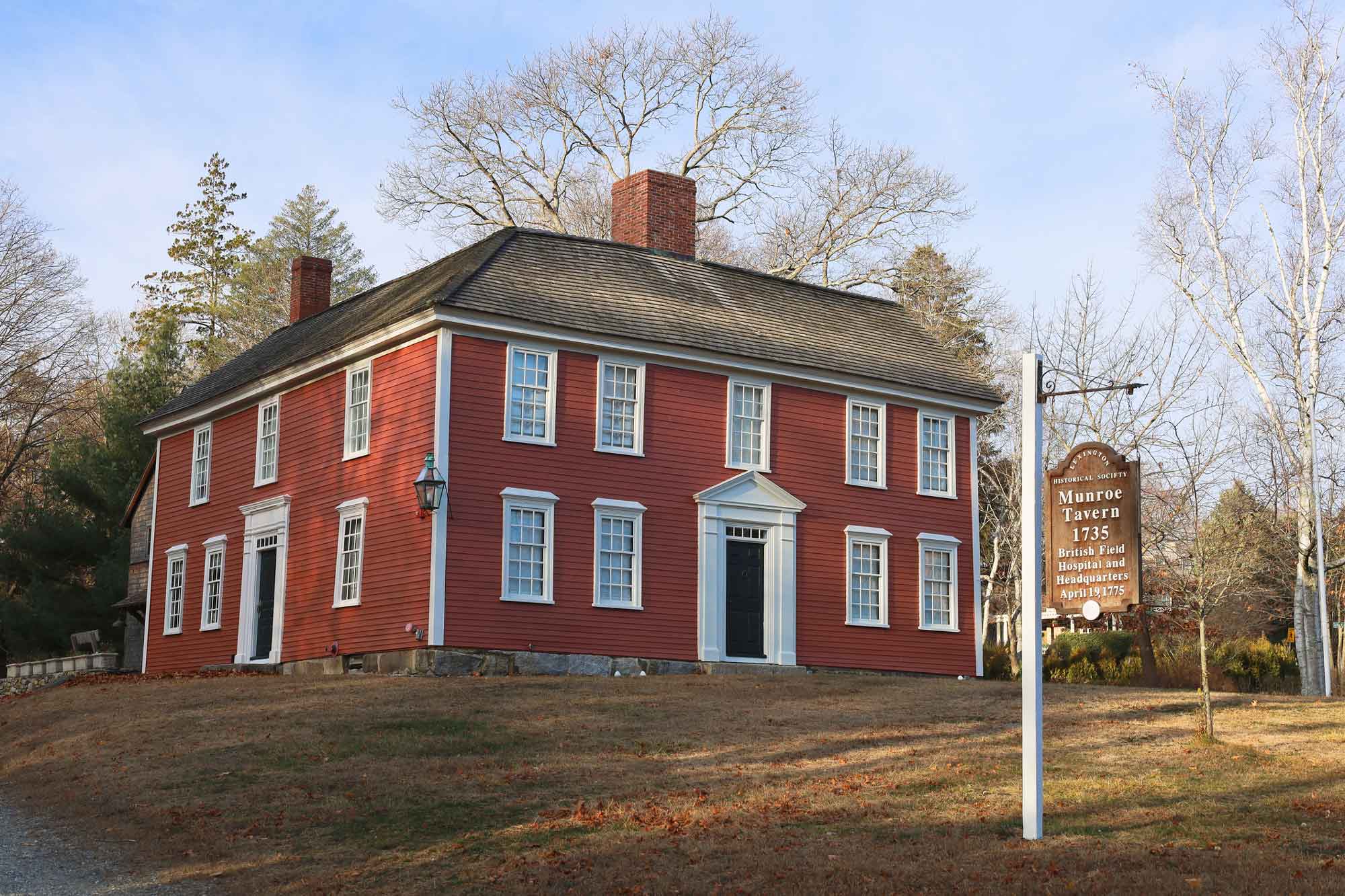
Originally built by David Comee in 1735, the tavern passed to William Munroe in 1770. Like most taverns and inns of the day, Munroe Tavern was a vital part of community life and a waystation for travelers in the area. But its role changed dramatically on April 19, 1775, when British Brigadier General Earl Percy and his 1,000 reinforcements made it their temporary headquarters and field hospital. The dining room became a site of grim urgency as wounded soldiers were treated, while the bar offered a brief reprieve for weary troops. Tragically, Patriot militiaman John Raymond lost his life here, defending the home and its residents.
Downstairs, the museum brings the British perspective to life, illustrating the events of that fateful day through the eyes of Redcoat soldiers. Upstairs, visitors step into the emotional heart of the story, discovering what it was like for the Munroe family to have their home taken over by enemy troops. One of the tavern’s most fascinating highlights is the dining room where President George Washington dined during his visit to the Lexington battlefield in 1789.
Now owned and operated by the Lexington Historical Society, Munroe Tavern has been restored to showcase its layered history. Visitors can explore artifacts from Washington’s visit, original furnishings, and the poignant relics of a family and community caught in the crossfire of revolution.
Location: 1332 Massachusetts Avenue
The Old Belfry
| ©istock.com/Peter BlottmanThe Old Belfry
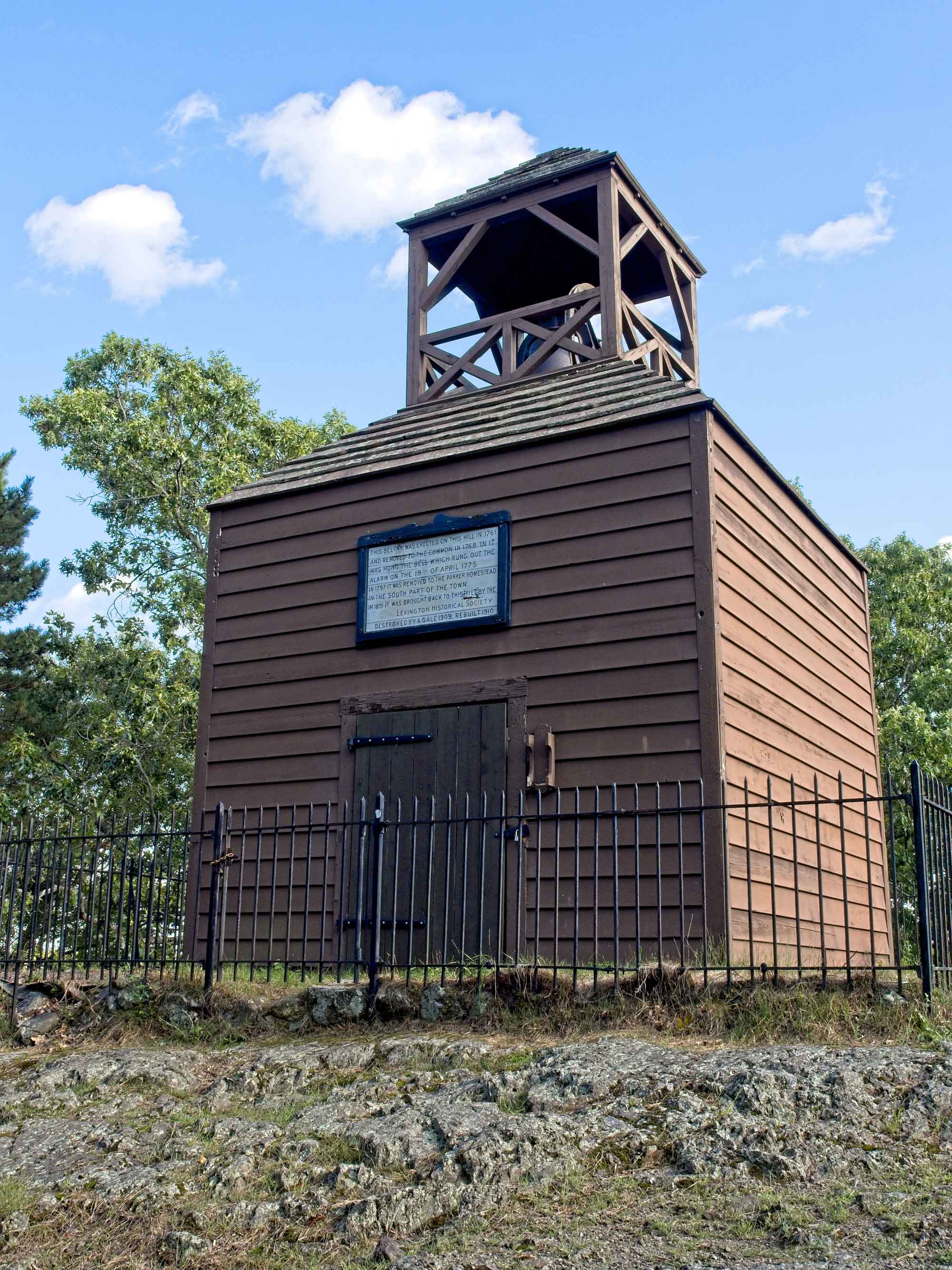
The Belfry, also known as the Old Belfry, holds a unique place in Lexington’s revolutionary history. Originally built in 1762 atop Belfry Hill, this unassuming structure served as the town’s voice, its bell calling the community to worship, warning of approaching danger, and tolling to mark life’s end. In 1768, it was moved to Lexington Battle Green.
In the predawn hours of April 19, 1775, the Belfry’s bell rang out, summoning the local militia to the Common as British troops advanced—a sound that marked the start of America’s fight for independence. While the original structure was tragically lost to a hurricane in 1909, the Lexington Historical Society rebuilt an exact replica the following year on its original hilltop site.
Today, this faithful reproduction keeps history alive. Every Patriots’ Day morning, its bell echoes once more, recreating the spirit of that pivotal day. Meanwhile, the original bell, preserved at the nearby Hancock-Clarke House, serves as a tangible link to the past.
Standing on Belfry Hill, visitors can imagine the tension, resolve, and courage that filled the air as the bell’s peal summoned ordinary citizens to an extraordinary moment in history.
Location: The Belfry is located atop the hill at Massachusetts Avenue and Clarke Street
The Old Burying Ground
| ©istock.com/DanLoganThe Old Burying Ground
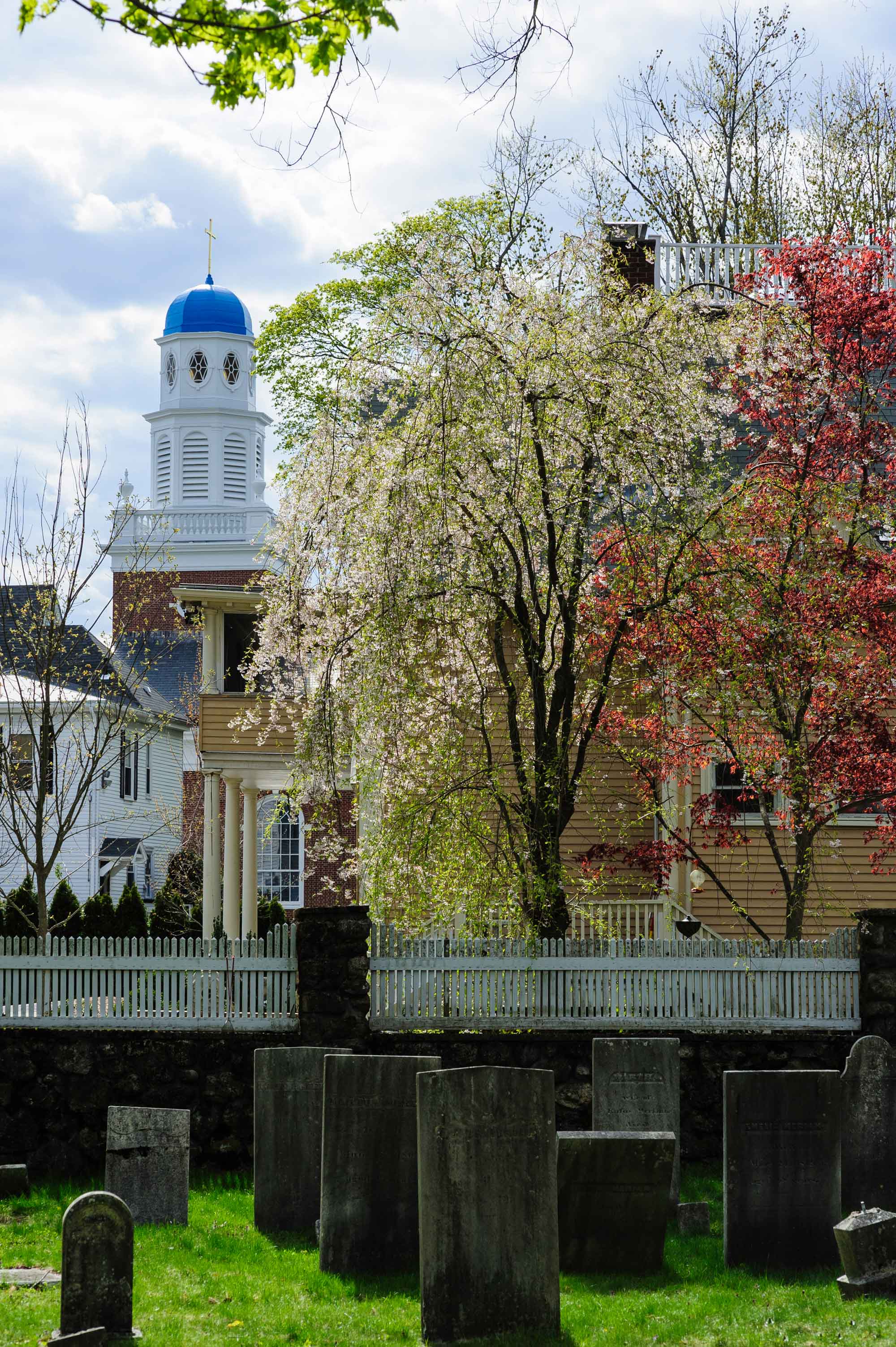
The Old Burying Ground in Lexington offers a solemn and evocative connection to the past. Dating back to 1690, it contains the oldest gravestones in Lexington and serves as the final resting place for more than 50 men who gave their lives during the American Revolution. Among them were militiamen killed at the Battle of Lexington, though their remains were later moved to the Battle Green. Many believe Captain John Parker, leader of the Lexington militia, was laid to rest here after his death from tuberculosis in September 1775. Two memorials in the cemetery pay tribute to Parker’s courage and leadership.
A particularly poignant marker stands out among the weathered stones—a granite gravestone flanked by British flags. It commemorates an unknown British soldier wounded during the battles of April 19, 1775. Left behind as his regiment retreated to Boston, he was treated by Lexington’s town doctor, Joseph Fiske, at Buckman Tavern but succumbed to his wounds three days later. The Lexington Historical Society erected this modest but powerful memorial in 1905, a reminder that even amidst the birth of a new nation, lives were lost on both sides.
As you wander through the Old Burying Ground, the inscriptions and memorials whisper stories of sacrifice, resilience, and humanity. It’s a place where the echoes of April 19, 1775, linger—a quiet yet profound testament to those who shaped the course of history.
Location: The Old Burying Ground is located off Massachusetts Avenue, west of Lexington Battle Green. Enter from Harrington Road at the stone marker next to the church.
Sources:
FreedomsWay.org and TourLexington.us