I left the woods for as good a reason as I went there. Perhaps it seemed to me that I had several more lives to live and could not spare any more time for that one.
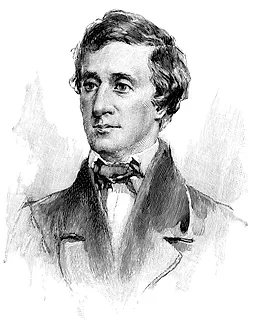
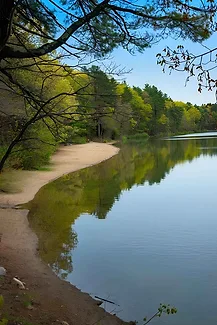
On September 6, 1847, Henry David Thoreau left his one-room house at Walden Pond and returned to Concord. Living at Walden for over two years had been a life-changing experience for the thirty-year-old Thoreau. Wanting to be a writer, he went to the pond to write, and while there he did exactly that. He produced two drafts of A Week on the Concord and Merrimack Rivers. He wrote one lecture about Thomas Carlyle and another about living at the pond called “A History of Myself.” He also penned an essay titled “Ktaadn” about going to Maine in the summer of 1846. And he wrote in his journal almost daily. But what would he do once he was back in Concord?
Your palm is crossed by unique flowing lines that fortune tellers link to your fate. But what if that fate passed through your hand to someone else? In a poem he wrote in childhood, Nathaniel Hawthorne mused, “Oh could I raise the darken’d veil, which hides my future life from me. Could unborn ages slowly sail, before my view—and I could see my every action painted there, to cast one look I would not dare.”
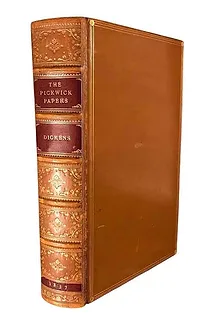
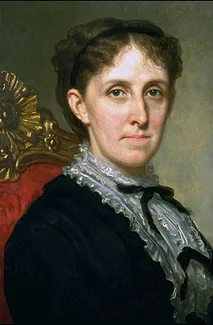
Imagine admiring an author while you are growing up and then ending up in the same stratosphere of success as them. That is what happened to Louisa May Alcott, who was described by contemporaries as an ardent and enthusiastic admirer of Charles Dickens—a writer two decades her senior. Both Dickens and Alcott wrote novels, short stories, and essays; both loved the stage and pursued amateur acting; both integrated social issues into their writings; both went from using pen names to real names; and both became household names. By 1893, only Dickens’ novels were more circulated than Alcott’s in United States public libraries.
At the library’s public unveiling of the collections on March 28, 2026, renowned Alcott scholar Daniel Shealy observed that the new holdings encompass “numerous unpublished letters, hundreds of books, complete manuscripts, important presentation copies of books—most of them first editions—ephemera, photographs, first appearances of tales in periodicals, obscure and rare printings of books, and even unpublished journals.” According to Professor Shealy, the collections as a whole are “almost breathtaking in [their] scope and importance.”
Two white horses pulled the hearse into Concord’s Sleepy Hollow Cemetery, a top-hatted driver at the reins. A band of mourners followed on foot as they made their way toward Authors’ Ridge.
Except for the bright sunshine, this scene wouldn’t seem out of place in a story by Nathaniel Hawthorne. But it happened a mere twenty years ago, on June 26, 2006. That was the day Hawthorne and his wife and daughter were reunited after his death separated them 142 years earlier.
More than 160 years after his death, Henry David Thoreau remains one of Concord’s most influential voices. His writings on nature, conscience, simplicity, and social responsibility continue to inspire readers around the world. Helping to preserve and share that
legacy is the Thoreau Alliance, an organization dedicated to
ensuring that Thoreau’s ideas remain accessible, relevant, and
alive for future generations.
The Alliance brings together two organizations with deep roots
in Thoreau’s story: Thoreau Farm, his birthplace in Concord, and
the Thoreau Society, the oldest and largest organization dedicated to the study of a single American author. Together, they serve as a hub
for scholarship, education, public programming, and community engagement centered on one of America’s most influential thinkers.
Few American writers are as closely connected to a place as Henry David Thoreau (1817–1862). The landscapes of Concord and the surrounding towns—today part of Freedom’s Way National Heritage Area—shaped his ideas, inspired his writing, and helped define a philosophy that continues to influence readers around the world.
This itinerary follows Thoreau’s journey through the places that mattered most to him. From his birthplace at Thoreau Farm to his final resting place in Sleepy Hollow Cemetery, these homes, buildings, fields, forests, and waterways reveal the people and topography that helped form one of America’s most influential thinkers.
The William Munroe Special Collections at the Concord Free Public Library has recently expanded one of the nation’s most significant archives devoted to Louisa May Alcott and her remarkable family. With the acquisition of several newly discovered letters by Alcott and two important collections assembled over decades, the Library has added new layers of insight into the life, work, and legacy of the author of Little Women.
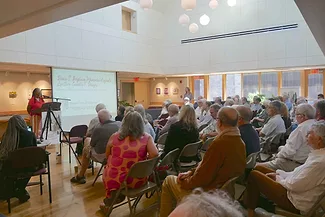
This year marks the 85th Annual Gathering of the Thoreau Society—the oldest and largest community devoted to an American author. Founded in 1941 by Walter Harding, the Society began with a simple invitation to a “Thoreau Birthday Mecca”: meet at Walden Pond, share lunch at Concord’s Colonial Inn, and talk about forming a group devoted to Henry David Thoreau.
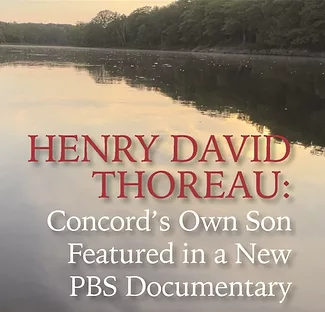
HENRY DAVID THOREAU, a new, three-part, three-hour film examines the life and work of Concord’s 19th-century writer in the context of antebellum New England and the larger United States, as well as through the universal themes he focused on in his writings: an individual’s relationship to the state, how to live an authentic life, our connection to nature, and the impact of race on American life. Ultimately, HENRY DAVID THOREAU presents a portrait of a man both rooted in his time and speaking far beyond it. By placing his life and writings within the great moral struggles of the 19th century, the film underscores why Thoreau endures as a guide to the tensions and possibilities of American democracy—offering wisdom and provocation as the nation approaches its 250th anniversary.