The people of Massachusetts were slow to anger, but when they got mad, there was hell to pay. They protested the Stamp Act in 1765, but they remained British subjects. They denounced the killing of five civilians in the Boston Massacre in 1770, but they didn’t strike back against the soldiers who patrolled their streets.
What finally provoked them to take up arms was a play by the English government to disenfranchise them—in effect, to suppress their voting rights. The Massachusetts Government Act, passed by the British Parliament in May 1774, was the most intolerable of the so-called Intolerable Acts.
In the early spring of 1862, as the first buds began to appear, two men made their way along Main Street. Concord knew this pair well; over the last twenty years, these “knights of the umbrella and bundle”1 had rambled together from the Walden Woods to Montreal, from Cape Cod to the Catskills.
Henry Thoreau had been the more vigorous of the two, but today the poet Ellery Channing offered Henry an arm to lean on as he paused to catch his breath. His tuberculosis was growing worse, and his faithful friend Ellery had come to walk this familiar path with him for what might be the last time.
The Marquis de Lafayette visited Portland, Maine during a grand tour of the United States in 1825. When Mary Moody Emerson—fifty years old at the time—was introduced to the aging hero of the American Revolution, she told him she was “‘in arms’ at the Concord Fight.”1
It was a joke, but as always, her wit had an edge of truth. She was indeed present for the “shot heard ’round the world,” but the “arms” she was in were her those of her mother, clutching eight-month-old Mary as the battle raged 150 yards from her window at the Old Manse.
Travel books love to include tips on how to experience a place “like a local.” But if you’re lucky enough to be a local, how often do you actually experience the fun that’s right in front of you?
When family or friends come from out of town, we show them the North Bridge, Author’s Ridge, and Walden Pond. We take them to our favorite restaurants and shops, and maybe go canoeing on the river. But why wait for visitors? Even if you’re a townie, Concord’s Visitor Center might surprise you with some of the experiences you can enjoy here.
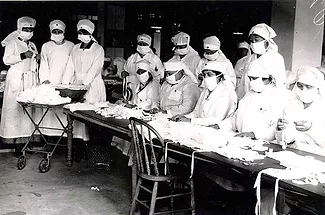
A week before Thanksgiving 1917, the Concord Enterprise printed a letter from a young Maynard man named Hugh Connors. The United States had entered the First World War seven months earlier, and Connors had shipped out with New England Sawmill Unit No. 3, a team of American lumbermen stationed in Scotland.1 “I am writing this letter in bed,” he wrote, “as I have been laid up for a week with the grippe. Over here they call it influenza,” he added, as if translating a foreign word. “I am not at the hospital, but have engaged a room about five minutes’ ride by bicycle, from our camp.”2
Concord is a favorite destination for visitors from all over the world: literary pilgrims, Revolutionary War buffs, and nature lovers crowd our streets all summer long, right through foliage season.
But in 2020, many travelers want to steer clear of crowds, so we Concord-area residents have the place pretty much to ourselves. There was never a better time to enjoy the local attractions. In the words of our favorite townie,1 Henry David Thoreau, “It is worth the while to see your native village . . . as if you were a traveler passing through it.”2 The summer has brought ideal weather for fresh-air fun, and outdoor spaces are now welcoming visitors.
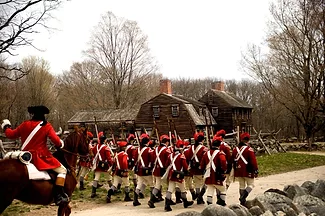
Imagine regiments of heavily armed men marching past your front door with grim determination—almost 800 of them, half the population of Concord in 1775. That was the scene that greeted the residents of the town on the morning of April 19th of that year.
If you weren’t one of the well-trained Minutemen loading your musket at the North Bridge, what was it like to be in Concord on the morning of that historic day?
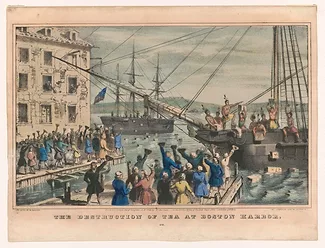
It’s that time of year, when Concord bids farewell to pumpkin spice as our homes fill with the aroma of pine boughs and gingerbread. These smells evoke images of the distant past, but our colonial forbearers might be surprised—if not downright scandalized—to see the “profane and superstitious customs” that we enjoy at midwinter.
.webp?height=325&t=1727737362&width=325 "PastedGraphic-4-(3).jpg")