The road to American independence took time to complete, and Massachusetts, despite its reputation as a vanguard state, was not always in the lead. In 1775, even after the battles of Lexington and Concord and Bunker Hill, most Patriot leaders were still seeking restoration of colonial rights within the British empire. Thomas Paine broke the logjam with the publication of Common Sense early the next year. The instant best-seller argued the case for separation by appealing to economic and political self-interest, emotional resentment of a brutal and oppressive king, and a utopian vision of America as “an asylum for mankind.”
Lucy Worsley, a historian and television presenter, is recognized for presenting complex historical topics in an accessible manner while maintaining their nuances. In the series Lucy Worsley Investigates, she undertakes the challenging task of explaining the ideological, political, and human dimensions of the American Revolution to a general audience. The series also addresses the significant chronological and military complexities of the conflict. This documentary is ambitious and frequently engaging, particularly in its examination
of the intellectual and cultural origins of
the Revolution.
By the spring of 1776, the question of independence was on the minds of those living in the thirteen American colonies. The Patriots were winning the hearts and minds of many; however, for various reasons, not every colonist was in favor of breaking ties with Great Britain.
Now...
The spring and summer of 2026, when the United States celebrates the 250th anniversary of the signing of the Declaration of Independence, is a fitting moment to commit to refamiliarizing ourselves as a nation with the complexities surrounding this historical document and the process through which it was created, as well as the ideals it espouses the American people—and its government—to live up to. The Freedom’s Way National Heritage Area’s award-winning program, Declaring Independence: Then & Now provides the opportunity to do so.
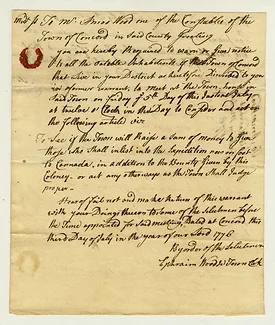
Between January and May 1776, Massachusetts occupied a critical juncture between rebellion and the emergence of a new nation. The final phase of the Siege of Boston coincided with the rapid dissemination of revolutionary ideology across local towns and communities, compelling residents to confront the extraordinary pressures of war. The experiences of Massachusetts residents during this period demonstrate that the pursuit of independence was shaped as much by hardship and sacrifice on the home front as by military developments on the battlefield.
The road to revolution continues. In September 1774, leaders in Suffolk County adopted a sweeping plan of resistance that called for boycotts, militia organization, and defiance of British authority. Learn more in "The Suffolk Resolves of 1774: A Comprehensive Plan of Defiance." Speaking of roads, spring is a great time to visit nearby towns. Map out your journey with "A Monumental Road Trip in the Freedom's Way National Heritage Area."
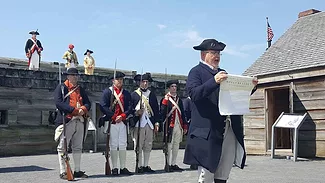
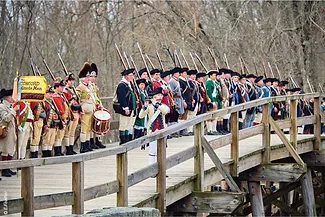
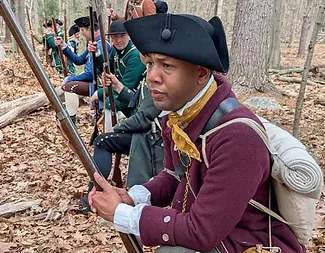
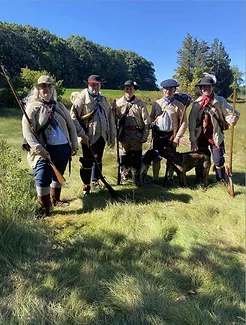
This year's Patriots' Day honored the 250th anniversary of the first battles of the American Revolution with great fanfare, historic reenactments, commemorations, and somber remembrance of those who gave their lives to help give rise to the United States of America. As we make our way towards July 4, 2026, and the America250 celebrations, we hope you will enjoy a look back at the events of April 19, 2025.
Stand in the middle of Concord’s North Bridge with the Minute Man statue on your right and the British soldiers’ grave on your left. Place your hands on the rough wooden handrail in front of you; slightly to the left, you will see The Old Manse through the trees. Peer down into the Concord River that Ralph Waldo called “the dark stream which seaward creeps” and brace yourself: this tale is about to get rough.
In the early morning hours of December 9, 1775, the peaceful marshland near the village of Great Bridge, Virginia, was abruptly interrupted by the booming sound of British cannons and the crack of musket fire. This marked the beginning of a swift but significant Patriot victory that not only expelled British authority from Virginia but also fueled the growing movement for American independence.
In the shadow of Lexington and Concord, away from Boston’s protests and the assembled New England militiamen, the American Revolution initially took hold in the Southern backcountry at Savage’s Old Fields. Situated near the township of Ninety-Six, South Carolina, this site witnessed a brief yet pivotal siege that underscored the fragile nature of political restraint in a divided colony and foreshadowed the brutal civil conflict that would soon engulf the region.
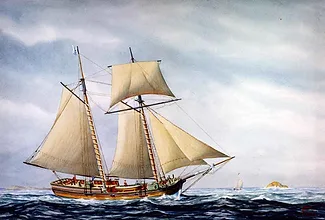
On the morning of October 18, 1775, the coastal town of Falmouth—now known as Portland, Maine—awoke to the ominous sound of British naval cannon fire. For over nine hours, incendiary shells, bombs, and grapeshot rained down upon the bustling seaport, igniting more than 400 buildings and leaving over 1,000 residents homeless on the brink of a harsh New England winter.
Visit the exhibition Revolutionary Legacies at Concord Museum. How have we remembered April 19, 1775, and the American Revolution over the past 250 years? Featuring commemorative ephemera, unique relics, artworks, personal objects, and contemporary works that respond to the Revolution’s legacy, this special exhibition asks what we choose to remember—and what has been left out—as the public looks back to the founding of our nation.