
-(1).webp?height=1200&t=1782928944&width=1080)
On May 5, 1866, two teachers from the American Missionary Association—one originally from Concord—walked into a train station in downtown Baltimore. These women put the 1866 Civil Rights Act—passed a month before by Congress—to the test and entered a segregated waiting room in the train station. After being forcibly thrown out of the depot, Ellen Garrison decided to take the white man who had assaulted her and her colleague to court with the knowledge that the attention brought to the case “will not benefit us merely as individuals, but . . . will be a standpoint for others.”1
Ninety years before Rosa Parks ignited the Montgomery Bus Boycott, Ellen Garrison’s court case made her one of the first African Americans in the United States to challenge segregation laws during Reconstruction in the American South.
For the last fifteen years, The Robbins House has proudly told the stories of Black Concord through the lens of the Robbins and Garrison families. Originally located on an isolated farm overlooking the Great Meadows along the Concord River, the house is one of the only known historic sites commemorating the legacy of a previously enslaved Revolutionary War veteran named Caesar Robbins.
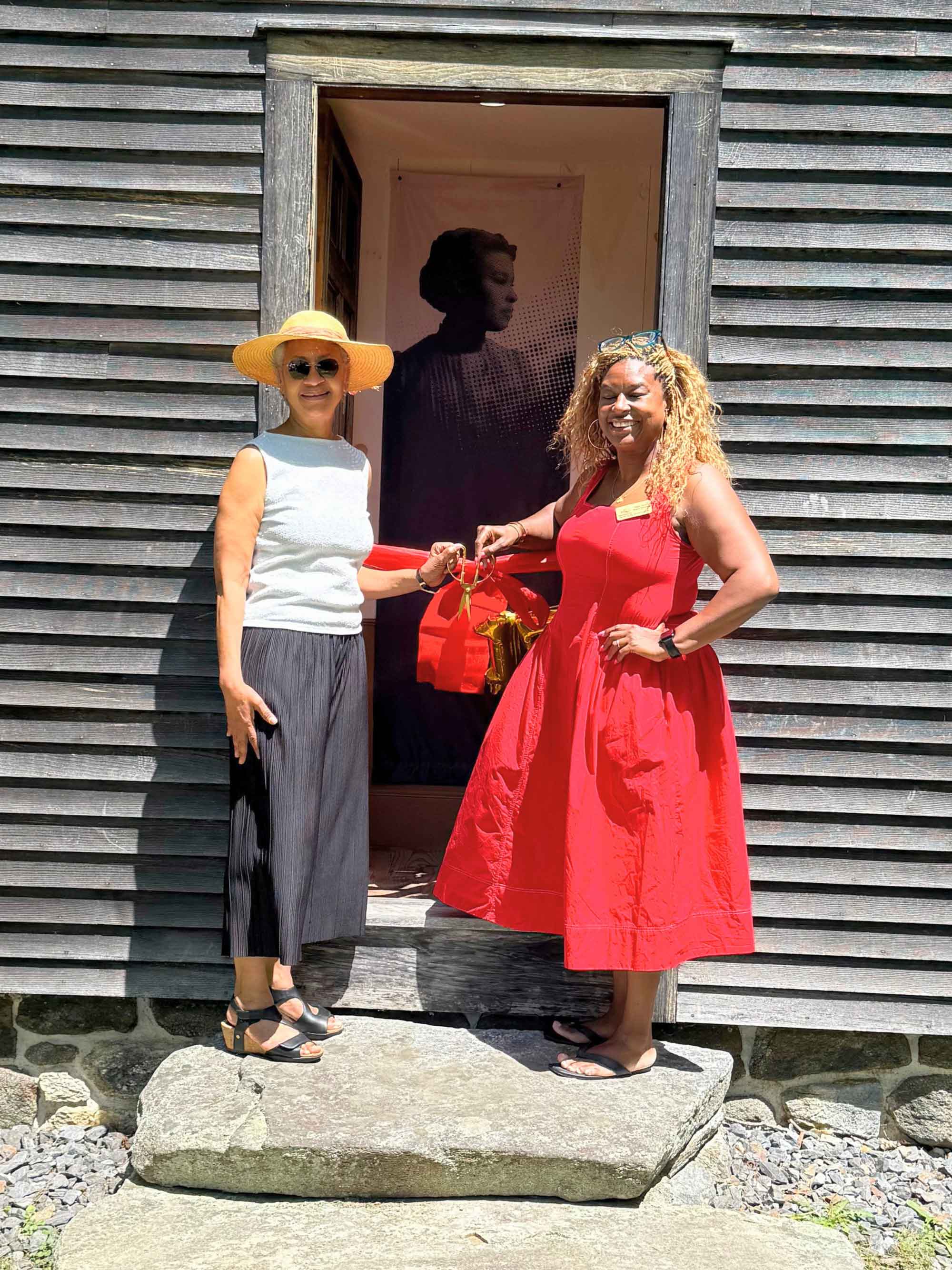
Former Robbins House Board President Maria Madison and current Co-President Nikki Turpin cutting the ribbon to launch the next fifteen years at the museum
| Courtesy of The Robbins HouseThe first two families to inhabit the house were descendants of Robbins. In 1823, Caesar’s son Peter purchased the new two-room house and over thirteen acres of land for $260. The west side of the house was originally occupied by Peter and his wife, Fatima. The property deed reserved the east side for Peter’s sister Susan and her husband, Jack Garrison, also a formerly enslaved, self-emancipated man who came from New Jersey.
Ellen Garrison was raised from birth in the house until she left Concord in 1841 for Boston, where she began a teaching career that would take her to Rhode Island, Virginia, Maryland, North Carolina, and Kansas. While African American residents continuously lived in the home from 1823 to 1870, a local land speculator eventually bought the little farm and moved the house to Bedford Street in the winter of 1871.
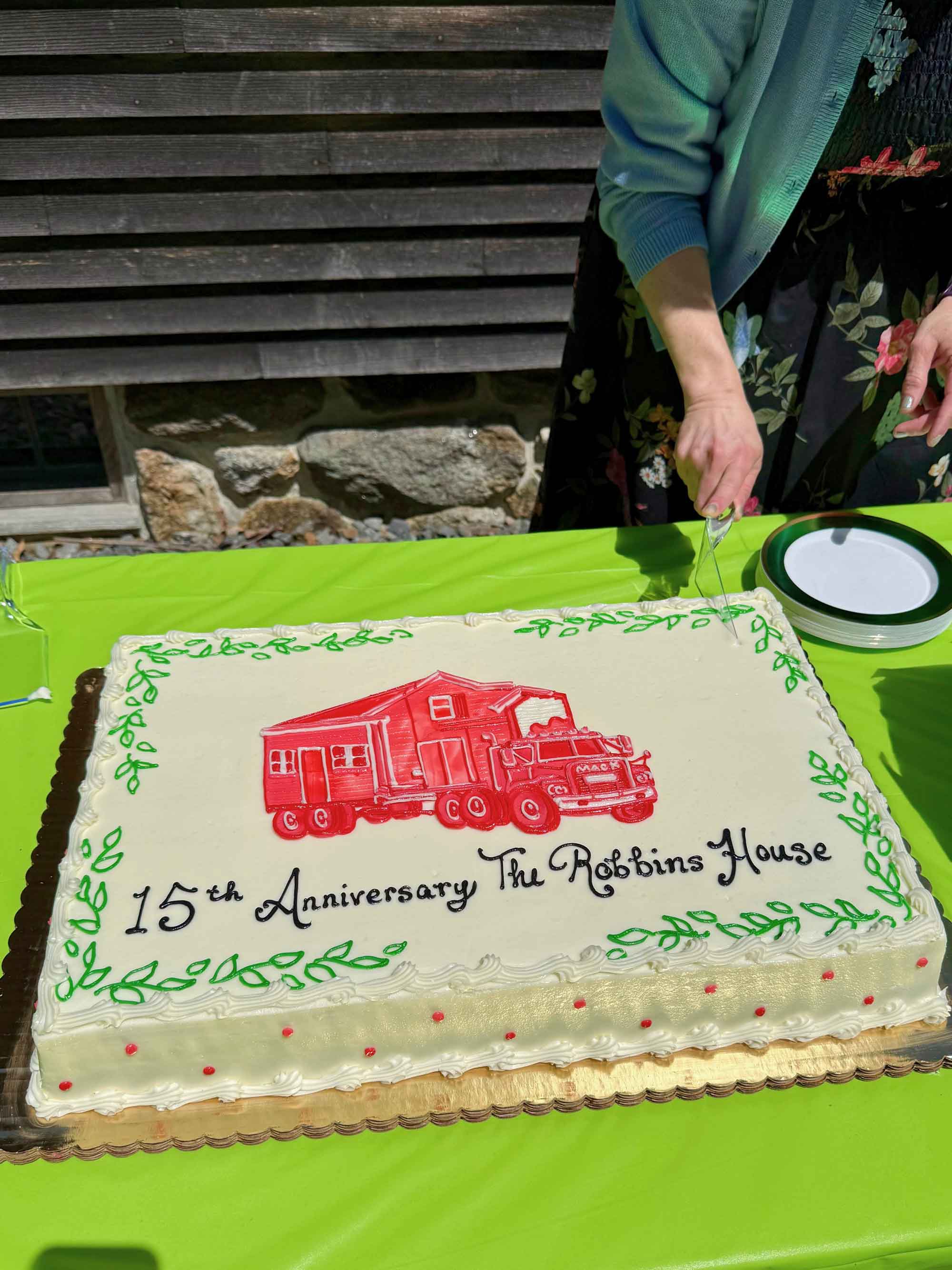
Celebrating the fifteenth anniversary with cake
| Courtesy of The Robbins HouseFifteen years ago this spring, the house was saved from demolition by local historians and community members who formed the Drinking Gourd Project (now The Robbins House, Inc.). Their efforts led to the move, preservation, and restoration of the house-turned-museum at its current location at 320 Monument Street.
Today, The Robbins House embodies the determination of Patriot Caesar Robbins and his family to support themselves on the land of the Great Field and to shape their own destinies as free men and women. It also serves to inspire conversations about the continued expansion of freedom over the first 250 years of the nation’s existence.
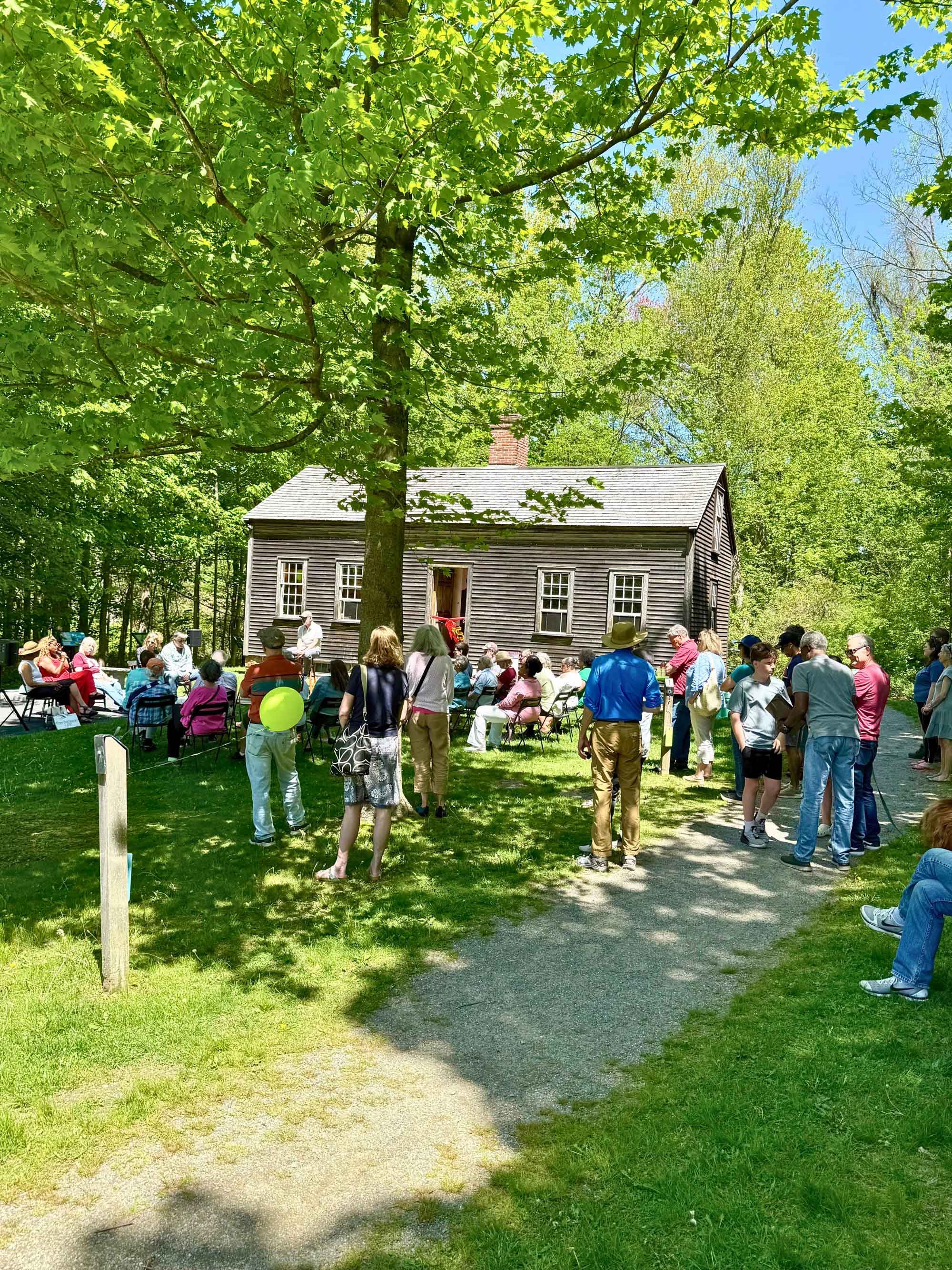
Visitors to the museum listening to a panel discussion
| Courtesy of The Robbins HouseIn conjunction with the town of Concord and other partners, The Robbins House has sponsored the creation of a Black Heritage Trail that will make visible the foundational stories of Black Concordians and their contributions to local, regional, and national history. In honor of America’s 250th celebration, the museum is also highlighting Caesar Robbins’ legacy with a new exhibition on his military service during the American Revolution. An online exhibition about Ellen Garrison’s time as a teacher during Reconstruction in the South will launch next year during Black History Month.
It brings us immense joy and pride to ensure the story of Ellen Garrison and her ancestors’ fight for civil rights and freedom for all continues to be told here at The Robbins House.
The Robbins House is open seven days a week, from mid-April through the end of October, from 10:30 a.m. through 4:30 p.m. Admission is free and donations are gratefully accepted. To request a private tour for large groups, please email info@robbinshouse.org. For more information, visit RobbinsHouse.org.
NOTE: 1. Ellen Garrison Jackson to S. Hunt, May 9, 1866, Port Deposit, MD, Amistad Collection, Tulane University, New Orleans, LA.