
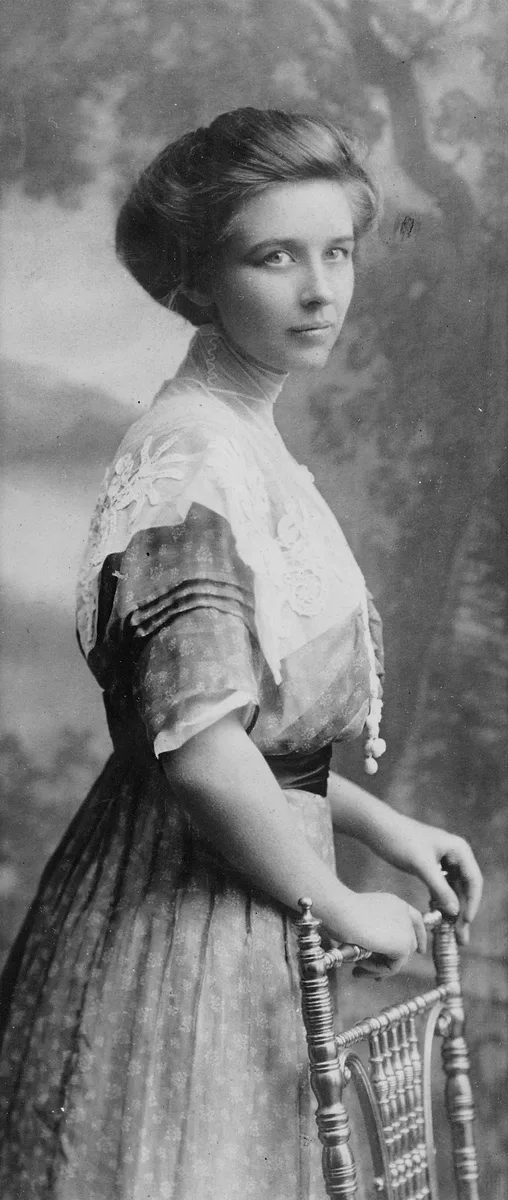
Like Ruth Robinson Wheeler, I moved to Concord from Watertown, Massachusetts, and became devoted to learning and sharing the history of my adopted town. Unlike Ruth Wheeler, I’ve never been attacked by a bull.
The bull attack occurred on her farm on Virginia Road in 1940, when she was fifty years old. Fortunately, she recovered from her injuries. Wrangling cattle was not an ordinary occupation for a Vassar graduate with a colonial Massachusetts pedigree, but Ruth was not an ordinary woman.
Ruth Robinson was born with history in her blood. She was a descendant of Lewis Jones (1605–84), who was also the third great-grandfather of Henry David Thoreau. Her Robinson ancestors had been active in Watertown politics for nearly a century. Her father, George Frederick Robinson, was born in 1860 in a historic house where Joseph Warren stayed when presiding over Massachusetts’ Provincial Congress in 1775. G. Fred, as he was known, devoted much of his life to historic preservation and the beautification of his hometown.
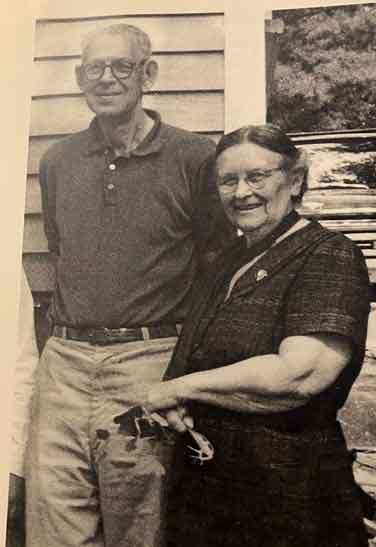
Caleb (Jim) and Ruth Wheeler, about 1960
Early in her childhood, Ruth developed a passion for reading. She was encouraged by her father, who used to improvise sound effects to her favorite stories. She enjoyed card games, theater, movies, and recorded music—though the last two didn’t come along until she was an adult.
Her son Joe remembered her as a political activist and feminist noted for her “intellectual curiosity and a retentive memory.”1 Her activist leanings emerged when she was a student at Vassar College. She became a Unitarian, joined the debating society, and secretly attended a women’s suffrage meeting in a graveyard.
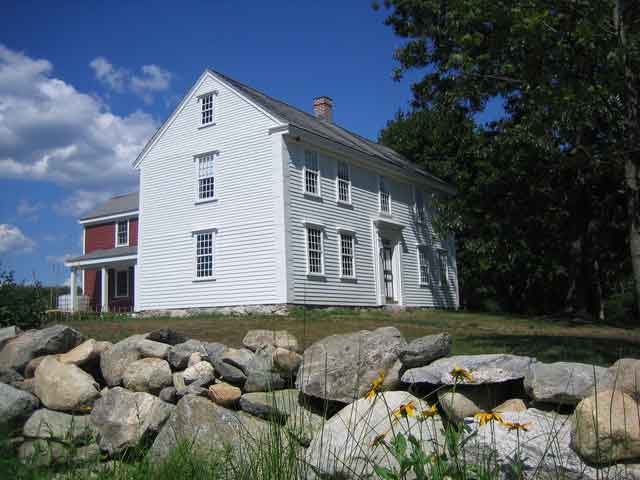
Jim and Ruth Wheeler lived in this Virginia Road farmhouse where Henry David Thoreau was born in 1817.
Her Concord connection began when her father bought land on Fairhaven Bay from Caleb Wheeler, scion of a family with Concord roots going back to the 1600s. Caleb’s son Caleb Jr. (known as Jim) took an interest in Ruth and sent her roses for her birthday and Valentine’s Day.
After graduating from Vassar in 1912, Ruth went to Germany to further her studies and returned in 1913 to work as a German teacher. She and Jim married in 1916, and his family bought them a farmhouse on Virginia Road—the same house where, almost a century earlier, Henry David Thoreau had been born.
Their farm was a working farm, and life wasn’t easy. Crops failed, and disease and predators took their toll on livestock. Along with running the farm, Ruth and Jim were raising four sons. Busy as his wife was, Jim continued to encourage “Ruth’s growing interest in things beyond the farm.” In 1930, she collaborated with her father to write a 300th anniversary history of her birthplace, Great Little Watertown, foreshadowing the books and articles she would later publish on Concord history.
Ruth became a leader in the community. The PTA elected her vice president in 1927 and president in 1928. She served as president of the Concord Woman’s Club from 1935 to 1937. In 1935, she invited Congresswoman Edith Nourse Rogers to give a lecture. (A decade later, Rogers would lead an unsuccessful campaign to have the United Nations build its headquarters in Concord. Ruth Wheeler supported this idea, arguing that the town would benefit from welcoming “the intellectual cream of the countries of the world.”)
Also in 1935, Ruth was a key organizer of Concord’s 300th anniversary celebration. The parade featured a Woman’s Club float “representative of an intelligent Concord woman,” depicting Old Manse resident Sarah Bradford Ripley “teaching Greek to George Frisbie Hoar and at the same time rocking the cradle and shelling peas.”
Ruth served on the board of public welfare from 1937 to 1945 and opposed Massachusetts’ ban on the sale of contraceptives. She was a founding member of the Thoreau Society in 1941 and also served on the School Committee from 1945 to 1948.
Ruth wrote 200 articles in the Concord Enterprise and Concord Journal and gave lectures on historical subjects. She was the news editor of the Concord Journal from 1953 to 1963, in which role she campaigned to “end the feeling of separation of West Concord from the rest of the town.”
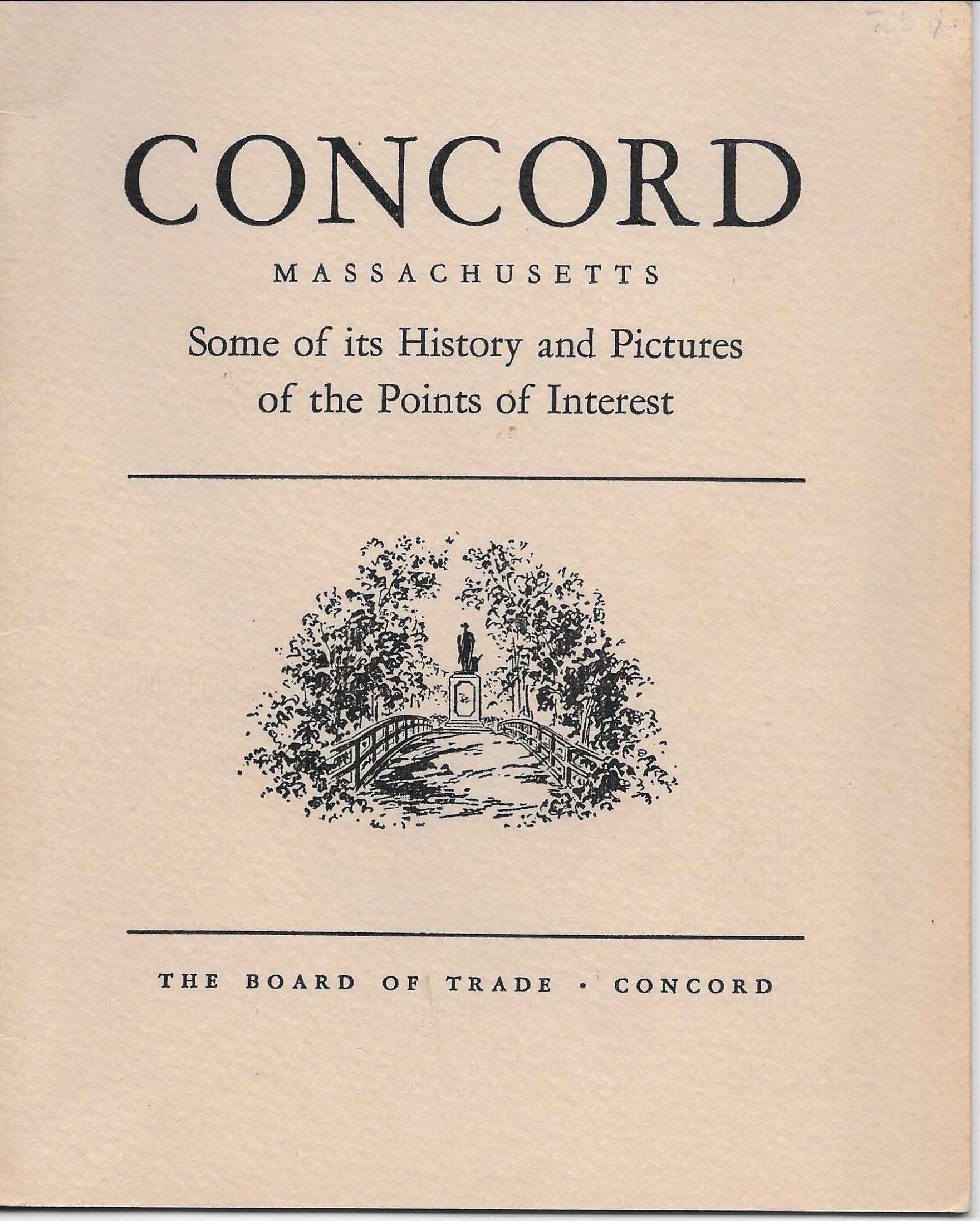
In 1947, she wrote a booklet published by the Board of Trade (forerunner of the Chamber of Commerce) called Concord Massachusetts: Some of Its History and Pictures of Points of Interest. This slim volume would be followed by more substantial works. In 1957, she wrote One American Mile: Concord’s Battle Road, published by the Concord Antiquarian Society (now known as the Concord Museum), and that book was used as documentation for the establishment of Minute Man National Historical Park in 1959.
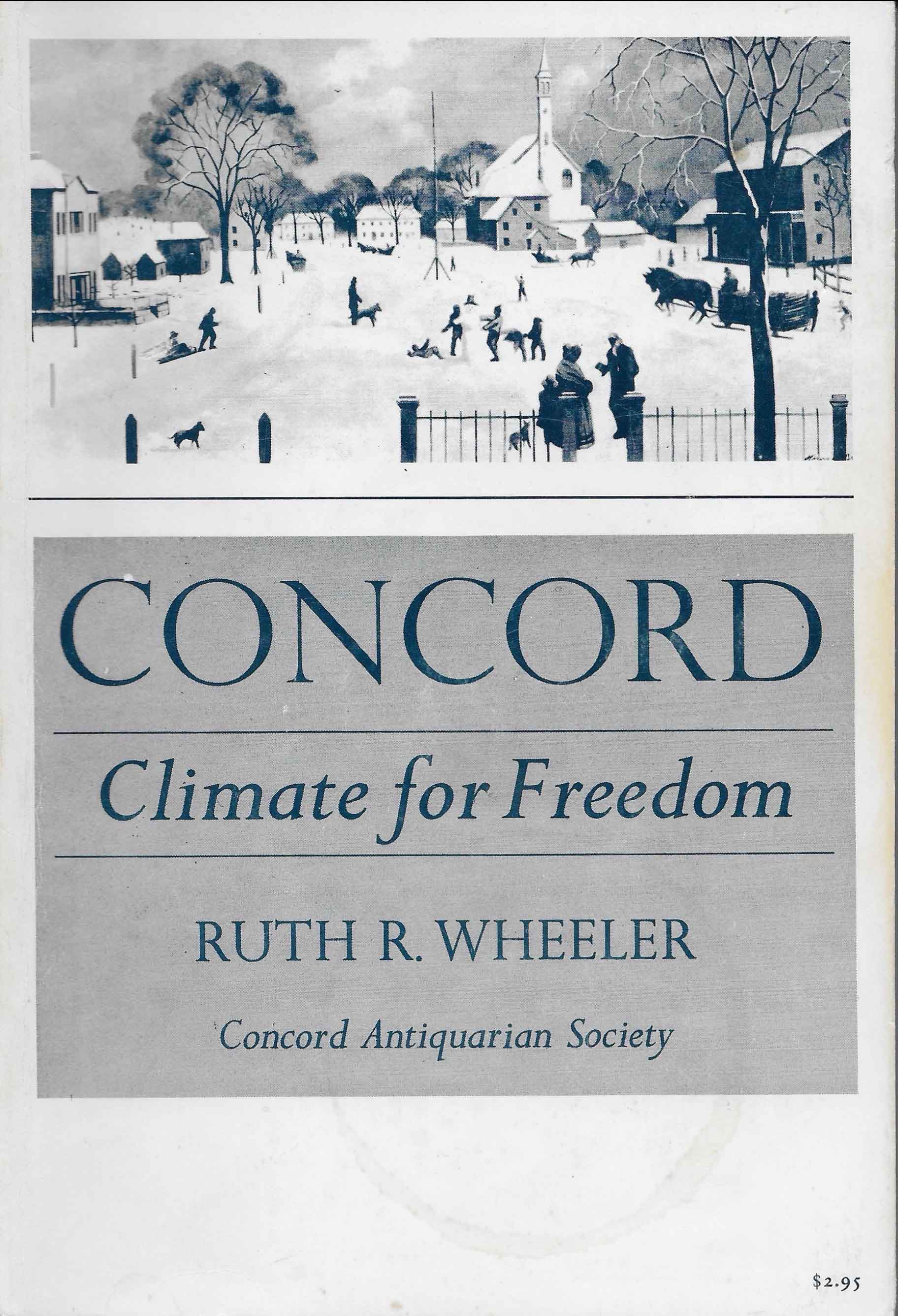
In the 1960s, she undertook the work for which she is best known today: Concord: Climate for Freedom, a 200-page survey of the town’s history from its Native origins until the Civil War. The Concord Museum published it in 1967. With customary thoroughness, she included nine appendices, two indexes, and a bibliography. Nearly sixty years later, students of Concord history still depend on Climate for Freedom as a resource.
Ruth proposed to the Concord Free Public Library that she document the town’s old houses with a folder for each house containing a picture and record of research. She expected it to take a year or two, and she worked on it until 1967. The four-volume Survey of Historical and Architectural Resources was finally completed in 2002, twenty-nine years after her death.
She was a founding member of the town’s Historic Districts Commission—a role she apparently took quite seriously. In 1970, at the age of eighty, she was involved in car accident at Fairhaven Road and Route 2. The police offered to take her to the hospital, but she told them, “No, thank you, but if you could please drive me to my Historic Districts Committee meeting at the Town House.”
When she died in 1973, she was remembered as “a woman of talent . . . of vast and true charity, a romantic who early fell in love with and continued her love for her community to her last evening on earth.”
NOTES 1 This and other quotes are from Ruth Robinson Wheeler: A Concord Life by Joseph C. Wheeler, published by the Concord Free Public Library in 2008.