“Little Womensaved my life…twice.” The woman who uttered these amazing words as I was leaving Orchard House late one summer evening had just landed at Logan Airport from Korea and drove directly here.
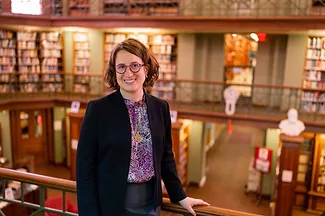
Victor Curran: On the Concord Free Public Library website, you wrote, “It is a very exciting time to get to know the staff, to serve this wonderful community and all those who support the library.”
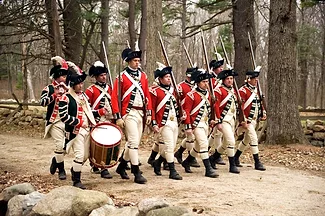
Events surrounding the observance of Patriots’ Day are once again being presented live and you won’t want to miss them! After two years of honoring this special time virtually, we once again welcome people from around the world as we remember and celebrate the events that lead to the birth of our nation.
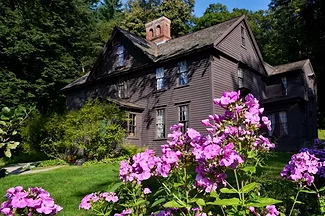
In Concord’s center, there stands an iconic red building. Known as the Wright Tavern, the building is 275 years old and has been closed to the public for more than 30 years (except for a brief time when operated by Concord Museum). That is about to change.
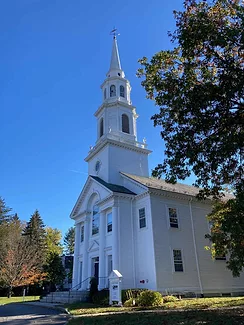
Concord Center is a remarkable setting where our lives are comforted by continuity to a past of early patriotism, radical thinking, and stories of remarkable local residents. That continuity was intentionally reinforced by one local architect whose vision and talent placed unusually well-designed buildings in locations where Colonial Revival architecture informs the image of Concord as a place built on its mythic past.
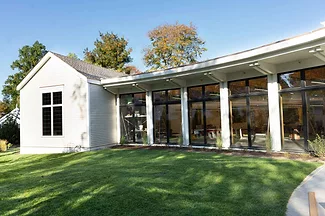
By early next year, the renovation and expansion of the Concord Free Public Library will be complete. This transformative project, eight years in the making, broke ground during the pandemic, but remained on-time and on-budget in spite of the challenges. Showcasing the designs of architects from Johnson Roberts and Associates, the newly renovated Library has something to offer everyone in our community, and as always, it’s free and open to all.
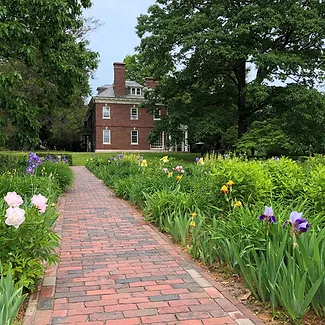
It remains a moral, political, and economic necessity to understand America’s underground railroad’s origin and legacy.1 The Wayside in Concord, Massachusetts provides us with an inside view into this history. The Wayside is part of the National Park Service’s National Underground Railroad Network to Freedom program. The NPS program “commemorates and preserves the historical significance of the Underground Railroad which sought to address the injustices of slavery and make freedom a reality in the United States and is a crucial element in the evolution of our national civil rights movement. Inhabitants of The Wayside house have witnessed a dramatic spectrum of American history including the ongoing struggle for freedom and equality.”2
The expression “dead men tell no tales” may not quite ring true. The men, women, and even small children buried in Concord’s three burying grounds have much to teach us about the town’s early colonial history, its revolutionary chapter, and even our literary legacy. Take a stroll, enjoy the stunning fall foliage, and take a trip back in time to learn more about Concord’s British and American history.
Artists, transcendentalists, abolitionists, civil rights advocates, and revolutionaries have been drawn to Concord from its very earliest days. There’s something in the air here…or perhaps it’s the ancient waters of places like Walden Pond…that moves a person to take action to protect this place. We sat down with musician and passionate conservationist Don Henley, a founding member of the legendary band The Eagles, to learn more about what moved a native Texan to save a place that was precious to one of his own role models – Concord’s Henry David Thoreau.
.webp?height=325&t=1721830913&width=325 "Munroe_WrightTavern2-(1).jpg")