Discover Concord Logo
Toggle Mobile MenuToggle Mobile Menu
Subscribe
  • Home
  • Current Issue
  • Back Issues
    • Summer 2026
    • Spring 2026
    • Fall 2025
    • Spring 2025
    • Winter 2025
    • 2024 Back Issues
    • 2023 Back Issues
    • 2022 Back Issues
    • 2021 Back Issues
    • 2020 Back Issues
    • 2019 Back Issues
  • Browse Topics
    • Abolitionism in Concord
    • American Revolution
    • Arts & Culture
    • Celebrity Profiles
    • Civil War
    • Concord History
    • Concord Writers
    • First Nations People of Concord
    • Historic Sites in Concord
    • Parks & Nature
    • Patriots of Color
    • Things to See & Do
    • Transcendentalism
    • Trivia
    • Untold Stories of Concord
  • Plan Your Visit
  • Events
  • Purchase Subscriptions and Back Issues
  • Discover the Battle Road
  • 250 Collectibles
  • More
    • About Us
    • Advertise
    • Contact Us
Toggle Mobile MenuToggle Mobile Menu
Home » Topics » Abolitionism in Concord

Abolitionism in Concord

Senator-Charles-Sumner.jpg

What I Have Done for the Good Cause

June 30, 2026
Jaimee Joroff
One Comment

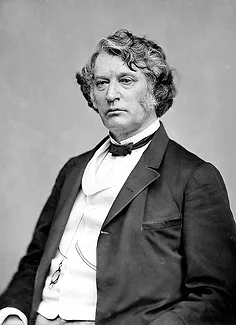
This is the story of a letter that survived time to link together a centuries-long quest for liberty, a group of red-hot abolitionists, a British woman cloaked in scandal, and a Concord house tied to the Underground Railroad. Written by Senator Charles Sumner in 1860 and making its way to Concord via Barrow Bookstore, the letter leads one to ask, “What would you do for a cause in which you believed?”


Read More
gc72-sampler-of-negro-slave-625x598.jpg

Agents of Change: The Concord Female Anti-Slavery Society

August 29, 2024
Julie Dobrow
2 Comments

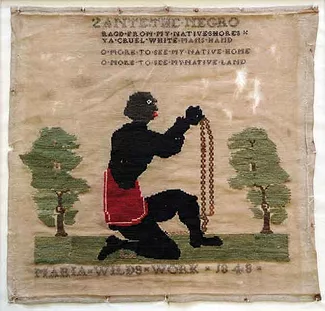
When we think of Concord’s history, images of Walden Pond, the Old North Bridge, Transcendentalists, and Little Women might come to mind. We don’t always think about a remarkable, diverse group of women from Concord’s past dedicated to eradicating slavery. We might not even know their fascinating story. The Concord Female Anti-Slavery Society worked diligently across three decades, becoming important players in the abolitionist cause, and helping to more widely promote its messages.


Read More
ellen-garrison-1.jpg

Ellen Garrison: Educator, Civil Rights Activist, Daughter of Concord

March 15, 2023
Jennifer C. Schünemann
No Comments

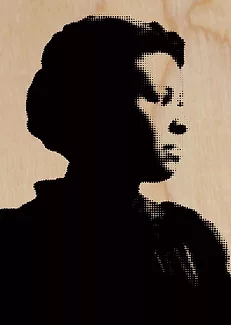
For the first time in 200 years, Concord will publicly honor and celebrate the birth of one of its most inspirational daughters, Ellen Garrison. 


Read More
XXXX__Salem_Peter__gravesite.jpg

Emancipation: Abridged excerpt from Patriots of Color at Battle Road

September 15, 2022
George Quintal Jr.
No Comments

How could an enslaved man or woman ever find a path out of bondage? The Emancipation Proclamation, issued in 1862 by President Abraham Lincoln and formally signed and put into effect on January 1, 1863, is well-known throughout the country. Much less well-known are the thousands of emancipations that occurred in New England long prior to 1862, many happening one at a time.


Read More
i9lrVmXVRgCOjAisHpDfNQ_thumb_4120.jpg

From Concord to California: Ellen Garrison and Her Fight for Freedom

September 15, 2022
Camille Johnson
No Comments

Concord has a reputation for producing people of radical ideas, justice, and bravery. From the minutemen of the American Revolution to transcendentalist writers like Henry David Thoreau and Ralph Waldo Emerson, the town of Concord has an ability to grow a sense of social justice in all its citizens. The story of Ellen Garrison Jackson Clark, an African American woman born and raised here in Concord who went on to fight for freedom at a national level, is a less well-known example—an injustice that The Robbins House and the Concord Museum are seeking to rectify.


Read More
IMG_1015-cropped-1.jpg

The Founding of Concord’s Robbins House and a Debt of Gratitude

June 15, 2022
Maria Madison
No Comments

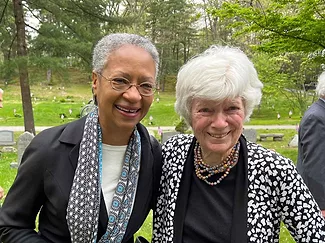
In 1976, Concordians and school administrators Barbara Elliot and Janet Jones published the text Concord: Its Black History, 1636-1860 through the Concord Public Schools. The text included photos of Black and White children visiting places associated with 19th century [and earlier] Black residents. 


Read More
0028mumbet_trans_ref.jpg

Elizabeth Freeman: A Free Woman on God’s Earth

June 15, 2022
Victor Curran
No Comments

It was cold outside, but the glowing fire in the brick oven warmed the kitchen as Elizabeth busied herself baking the week’s bread for her enslavers, Col. John Ashley and his wife Hannah. Her younger sister Lizzie, also enslaved in the Ashley household, was too frail for heavy labor, so she watched as Elizabeth stirred the fire with an iron shovel. A


Read More
Concord-Trinitarian-Church-circa-1850.jpg

Friend of the Poor and Needy: The Life of Reverend Daniel Foster

March 15, 2022
Richard Smith
No Comments

The list of Concord abolitionists is long, and the names of Thoreau, Alcott, Bigelow, and Brooks are assured in the town’s history. But for every famous name involved in abolitionism, many more remain forgotten. One of Concord’s heroes, while not exactly lost to history, is certainly not a household name: he was the Reverend Daniel Foster. 


Read More
William_Still_abolitionist.jpg

The Underground Railroad: Black Heroes at The Wayside

September 15, 2021
Maria Madison
No Comments

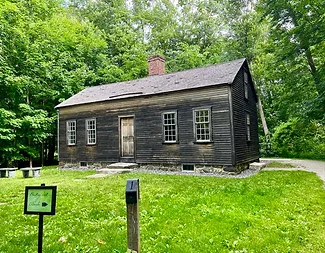
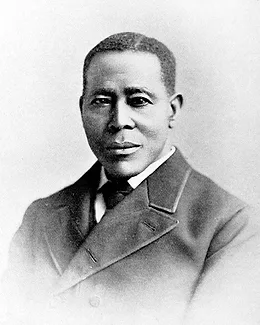
It remains a moral, political, and economic necessity to understand America’s underground railroad’s origin and legacy.1 The Wayside in Concord, Massachusetts provides us with an inside view into this history. The Wayside is part of the National Park Service’s National Underground Railroad Network to Freedom program. The NPS program “commemorates and preserves the historical significance of the Underground Railroad which sought to address the injustices of slavery and make freedom a reality in the United States and is a crucial element in the evolution of our national civil rights movement. Inhabitants of The Wayside house have witnessed a dramatic spectrum of American history including the ongoing struggle for freedom and equality.”2


Read More
PastedGraphic-2-(1).jpg

The Bell: A Resounding Symbol Comes to The Robbins House

September 15, 2021
Robert Munro
No Comments

For the past decade, The Robbins House has committed to telling the story of Concord’s African American history and culture through the narratives of the inhabitants of the house and their participation in Concord’s rich history of independence, civil rights, and activism. Enmeshed throughout this narrative is the concept of “the long Civil Rights movement,” a conceptual framework that recognizes that the struggle for black and indigenous civil rights began the moment the first African was enslaved on US soil and continues today; it spans both time and place, enslaved and free, White and Black. 

Read More
Previous 1 2 Next

Featured Stories

  • Cover Fall26.jpg

    The Fall Issue is Here!

    It’s Fall - time to venture out and explore the places, people, and stories that make this region so special. Begin by planning a day out with our special insert, “An Apple Picking Road Trip.” Our second special guide invites you to spend a day exploring West Concord. Discover the fascinating lives Henry David Thoreau lived after leaving Walden Pond and encounter a possible Hawthorne family curse, a forgotten Yankee hero, and Ruth Robinson Wheeler. And of course, concerts, exhibitions, festivals, walks, talks, and family activities await you throughout the season. Turn to “Things to See & Do this Fall” and “Arts Around Town” for all the details. Happy fall.
  • Tumbledown-Hall-2.jpg

    When Thoreau Left Walden Pond: Several More Lives to Live

    I left the woods for as good a reason as I went there. Perhaps it seemed to me that I had several more lives to live and could not spare any more time for that one.On September 6, 1847, Henry David Thoreau left his one-room house at Walden Pond and returned to Concord. Living at Walden for over two years had been a life-changing experience for the thirty-year-old Thoreau. Wanting to be a writer, he went to the pond to write, and while there he did exactly that. He produced two drafts of A Week on the Concord and Merrimack Rivers. He wrote one lecture about Thomas Carlyle and another about living at the pond called “A History of Myself.” He also penned an essay titled “Ktaadn” about going to Maine in the summer of 1846. And he wrote in his journal almost daily. But what would he do once he was back in Concord?
  • Bird-Walk-Mass-Audubon-Red-tailed-Hawk-David-Morris.jpg

    19 Things to Do This Fall

    Autumn is filled with amazing things to do this year! Here are 19 of them that you won't want to miss.
©2026. All Rights Reserved. Content: Voyager Publishing LLC. Design, CMS, Hosting & Web Development: ePublishing
Facebook Instagram