We asked seven of
Discover Concord’s writers and historians to imagine
a holiday shopping list
with a twist: If you could give a gift to one person from Concord’s past, whom
would you choose and
what would you give?
Their answers range
from the practical to
the poignant to the
wonderfully unexpected.
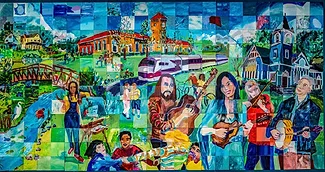
West Concord has never been a place that stood still. Its identity has been shaped and reshaped by the Assabet River, mills and factories, railroads, a prison, farms, shopkeepers, artists, and entrepreneurs. Buildings have repeatedly found new purposes; new arrivals have affixed their
own layers, adding to what came before.
Few people have watched that process longer than Maynard Forbes. He arrived in West Concord in 1951 at fourteen and, nearly seventy-five years later, still describes the village in terms of three forces that preceded him: “The railroad, the prison, and industry. Those are the entities that developed West Concord as we know it today.”
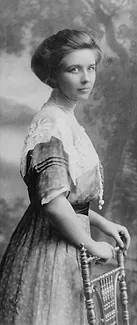
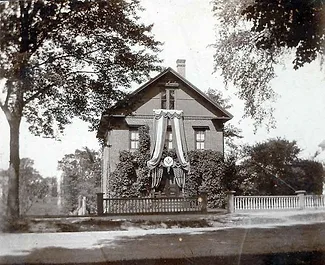
Like Ruth Robinson Wheeler, I moved to Concord from Watertown, Massachusetts, and became devoted to learning and sharing the history of my adopted town. Unlike Ruth Wheeler, I’ve never been attacked by a bull.
The bull attack occurred on her farm on Virginia Road in 1940, when she was fifty years old. Fortunately, she recovered from her injuries. Wrangling cattle was not an ordinary occupation for a Vassar graduate with a colonial Massachusetts pedigree, but Ruth was not an ordinary woman.
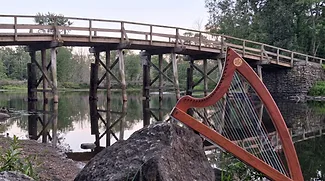
Many years ago, I studied the ancient bardic tradition in Scotland with one of the last living bards. To be a true bard would have meant a lifetime of study, and my time with this bard was just a glimpse into the Celtic tradition of history keeping.
The traditional opening line of a bardic tale, “In the times before history,” indicated a story from before the written word existed. The bards were among the Celtic world’s early historians, learning verbatim from other bards the passed-down histories of their regions, memorizing the genealogies of kings and noble houses (establishing the rights of succession), and preserving current events by composing their own tales of honor, treachery, and all that occurred in between. Many bards were harp players and would accompany their tales with strains from metal or gut harp strings.
So revered is the Baldwin apple that Massachusetts has not one but two monuments to the bright-red winter fruit.
For many years, the Baldwin apple was the most popular fruit in New England and New York. A small, hard apple remarkably free of blight and blemishes, people prized it for
making hard cider and pie. Commercial
growers loved it because it produced huge
crops every other year and shipped easily.
In 1885, an article in the New England Farmer praised the apple: “What the Concord is among grapes, what the Bartlett has been among pears, the Baldwin is among apples.”
The abolitionists of the 19th century valued, revered, and lived by the words of the Declaration of Independence. The proclamation “We hold these truths to be self-evident, that all men are created equal, that they are endowed by their Creator with certain unalienable Rights, that among these are Life, Liberty and the pursuit of Happiness” affirmed that all individuals possess equal human dignity. The abolitionists lived in one era when our country was not living up to those words, and as we celebrate the 250th anniversary of the Declaration of Independence, like them, we find the promise of those words again in peril.
Have you ever wondered about the stately brick building across from the Colonial Inn at 58 Monument Square? This landmark, standing since 1820, is more than a daily sight—it’s a testament to Concord’s rich history and the enduring legacy of Freemasonry.
To truly appreciate this building, let’s journey back to a pivotal moment in history.
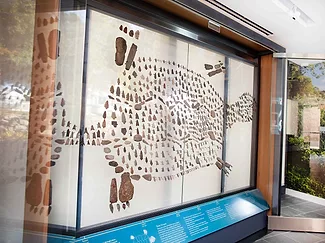
You see the names all over town: Musketaquid, Nashawtuc, Nashoba, Squaw Sachem. These words invite us to learn the stories of the people who lived in this place for thousands of years before English settlers arrived.
The English named this place Concord in 1635, but it had long been known by the region’s first peoples as Musketaquid. In the Algonquian language, the name means “grassy river” or “grassy island,” and the Sudbury, Assabet, and Concord Rivers have always been the lifeblood of the land. As Lemuel Shattuck recounts in his 1835 History of Concord, the local people lived “[by] planting, hunting, or fishing . . . and few places produced a supply more easily than Musketaquid.” 1
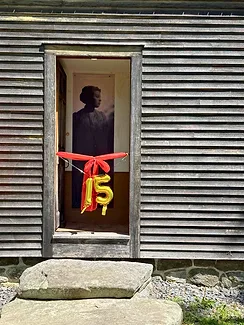
For the last fifteen years, The Robbins House has proudly told the stories of Black Concord through the lens of the Robbins and Garrison families. Originally located on an isolated farm overlooking the Great Meadows along the Concord River, the house is one of the only known historic sites commemorating the legacy of a previously enslaved Revolutionary War veteran named Caesar Robbins.
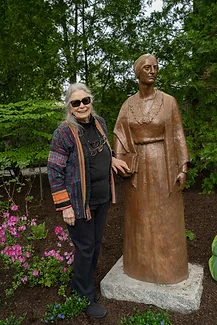
Transcendentalist and feminist writer Margaret Fuller—Emerson’s friend and collaborator, Bronson Alcott’s colleague, Thoreau’s first editor, and Ellery Channing’s sister-in-law—was central to Concord’s literary and intellectual life. She first came to Concord in the summer of 1836, when she met Emerson and stayed with his family for three weeks.