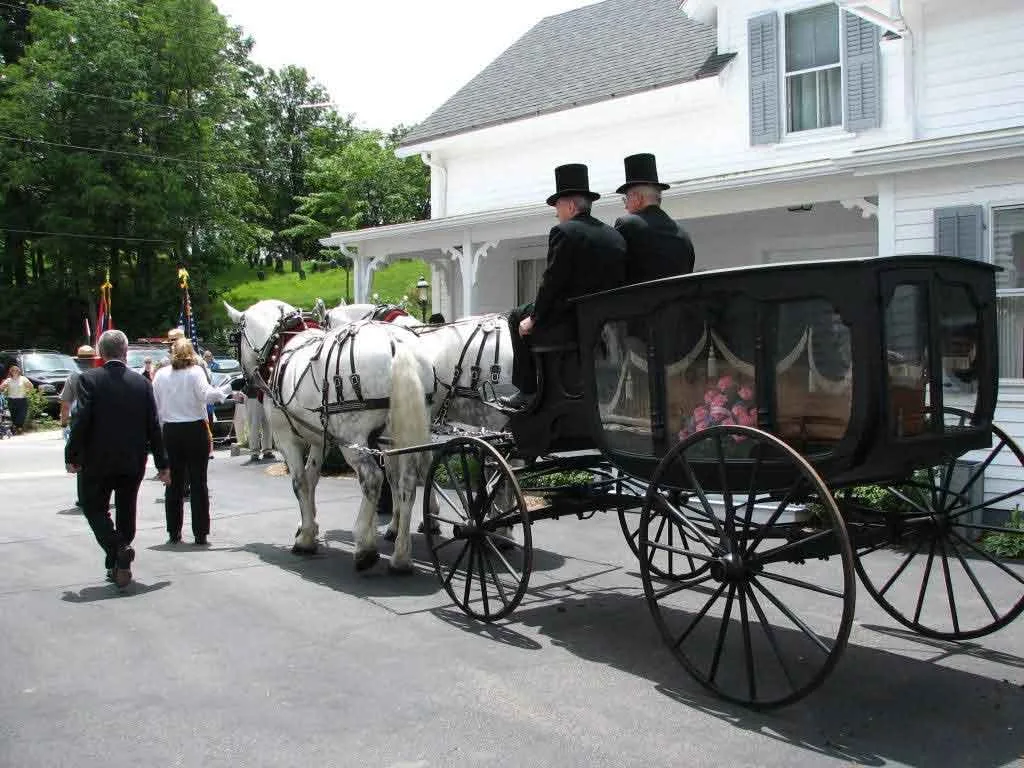
Two white horses pulled the hearse into Concord’s Sleepy Hollow Cemetery, a top-hatted driver at the reins. A band of mourners followed on foot as they made their way toward Authors’ Ridge.
Except for the bright sunshine, this scene wouldn’t seem out of place in a story by Nathaniel Hawthorne. But it happened a mere twenty years ago, on June 26, 2006. That was the day Hawthorne and his wife and daughter were reunited after his death separated them 142 years earlier.
Nathaniel’s life ended in 1864. He was only fifty-nine years old, but his healthiest and most productive years were behind him. He had been complaining of stomach pains, and his wife, the artist Sophia Peabody Hawthorne, urged him to take a vacation, hoping it would improve his condition. He set out for the White Mountains of New Hampshire accompanied by his college friend, former U.S. President Franklin Pierce, but on May 19, Pierce awoke to discover that Nathaniel had died in his sleep. His funeral was held at First Parish in Concord on May 23 (another sunny day), and he was laid to rest at Authors’ Ridge in Sleepy Hollow.
Sophia scarcely had time to mourn. Nathaniel had been a best-selling author in his prime, but money flowed out of the Hawthorne household as fast as it came in. As she tried to bring order to the mess of her late husband’s finances, she discovered that his publisher had reduced his royalty rates without notifying him. She set to work editing Nathaniel’s unfinished manuscripts and looking for a more reliable publisher to entrust them to.
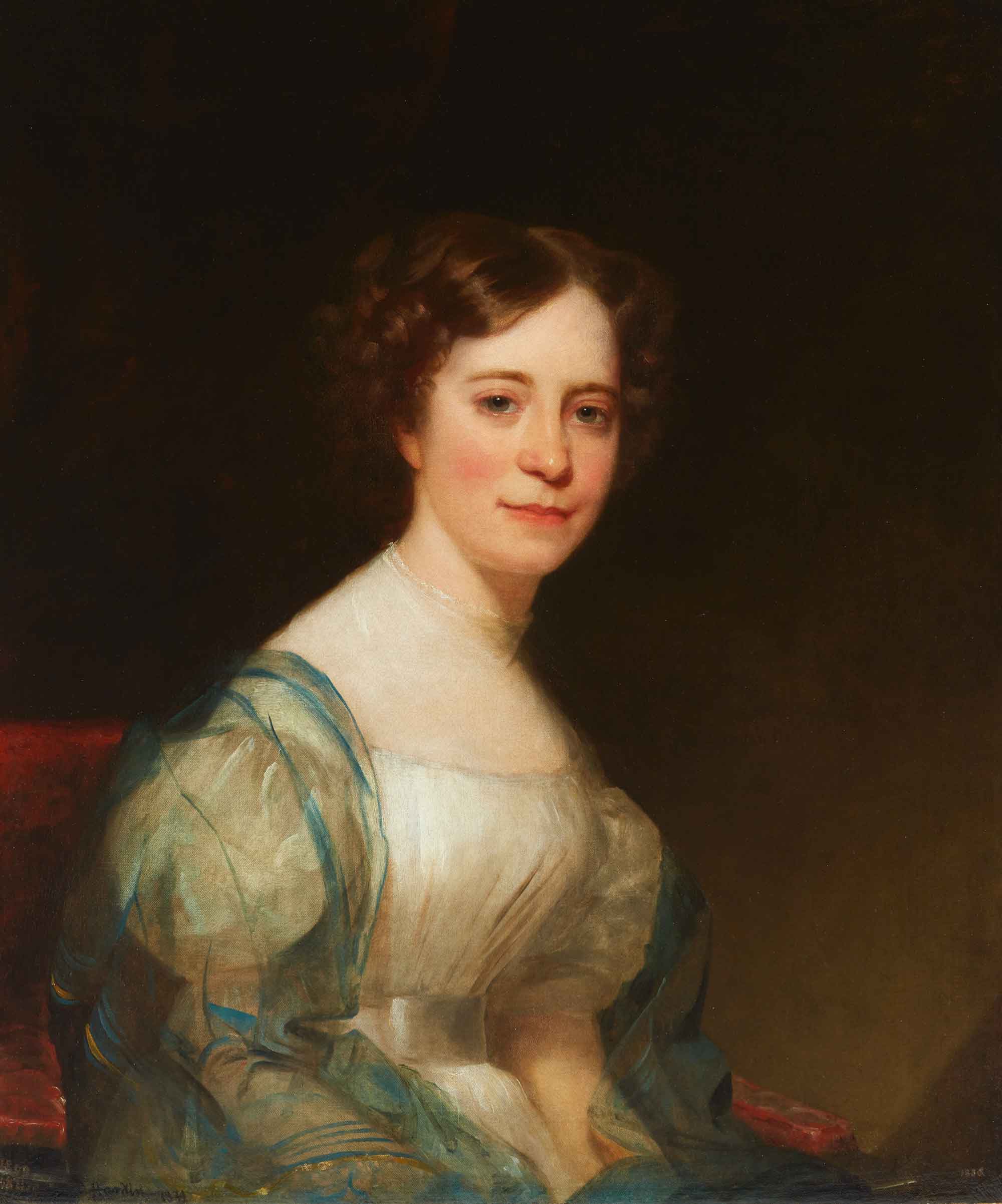
Sophia Peabody (1809-1871), portrait by Chester Harding, 1830
| Courtesy of the Peabody Essex MuseumDespite her best efforts, she was unable to keep up with the expense of maintaining the Wayside, the grand Concord home she and Nathaniel had bought in 1852. Sophia had health problems of her own (“lung fever,” as she called it.) So, in 1868, she sold the house in Concord and moved to Dresden, Germany, along with her daughters Una and Rose and her son Julian.
She chose Dresden for its lower cost of living, but the climate aggravated her respiratory illness. So, in 1870, she and her daughters relocated to England, where they had lived for a time in the 1850s. (Julian returned to the U.S.) Sophia’s health continued to worsen; she died in 1871 at the age of sixty-one and was buried in Kensal Green Cemetery in London.
Her daughter Una, who had been sickly since an adolescent case of malaria, died six years later at the age of thirty-three and was buried alongside her mother. And there they lay peacefully for more than a century under a hawthorn tree that Una had planted at her mother’s grave.
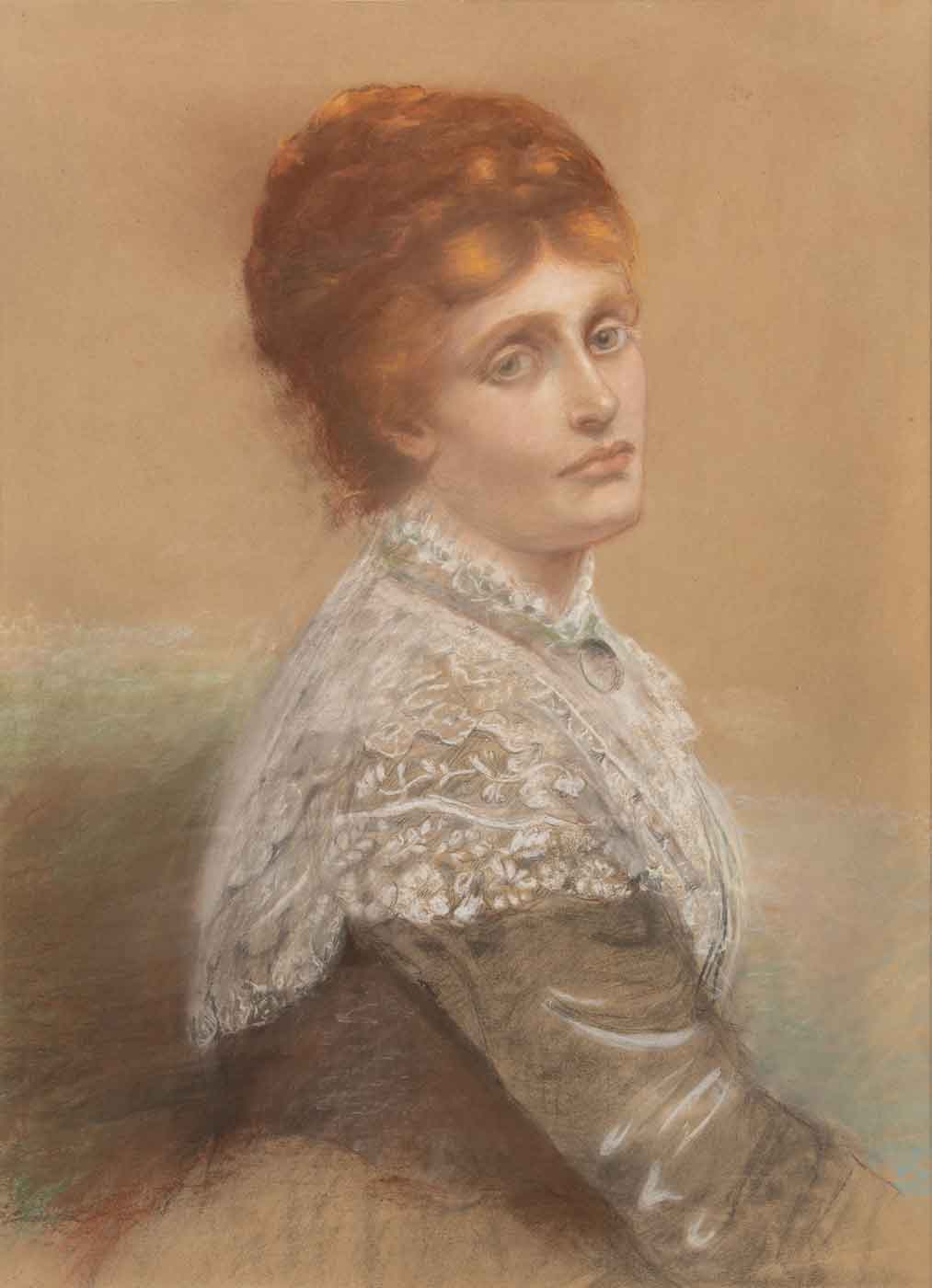
Una Hawthorne (1844-1877), pastel portrait by Henriette Corkran and William Gorman Wills, ca. 1874
| Reproduced by permission of William Munroe Special Collections, Concord Free Public Library.In the winter of 2005–06, the aged tree fell and damaged the two women’s headstones. The administrators of the cemetery contacted family members in the U.S. to ask what they wanted to do. And this is where the Hawthornes’ younger daughter, Rose, comes in.
Rose had married in 1871, but her husband later became abusive and they separated. After his death in 1899, she became a Roman Catholic nun, taking the name Mother Mary Alphonsa1, and founded the Dominican Sisters of Hawthorne, which is still an active religious order.
The Sisters of Hawthorne volunteered to help the family bring Sophia’s and Una’s remains back to their native land and lay them to rest alongside Nathaniel in Sleepy Hollow. They enlisted George Siegel, a New York funeral director, to collaborate with Safik Meah, superintendent of Kensal Green, on the logistics of exhumation and transportation. In Concord, Cemetery Supervisor Tish Hopkins worked with the Friends of Sleepy Hollow Cemetery and Robert Derry of the National Park Service to prepare for the burial and accompanying ceremony.2
In June, Sophia’s and Una’s remains were flown to New York, wrapped in smooth white fabric, and carefully placed in one coffin. This was done to allow space for the vault required for modern burials. When Nathaniel was buried in 1864, vaults were not required.
The Sisters brought the single coffin to their motherhouse in Hawthorne, New York, where they paid their respects before sending the remains on to Dee Funeral Home in Concord. Dee’s traces its history back to 1868, and they have a nineteenth-century horse-drawn hearse that is believed to have been used for Nathaniel Hawthorne’s funeral. That is the hearse in which they placed Sophia and Una’s coffin on June 26, 2006, bedecked with pink carnations given by the Friends of Sleepy Hollow Cemetery.
Two National Park Service rangers led the funeral procession, one carrying the American flag and the other the English flag. Rev. Gary Smith and Rev. Jenny Rankin offered prayers on the steps of the First Parish meetinghouse, where Nathaniel’s funeral had been held 142 years earlier. The procession continued through Monument Square on the way to Sleepy Hollow, passing buildings that Nathaniel himself had known.
At least sixty people followed the hearse north on Bedford Street and into the cemetery. Most were descendants of Julian Hawthorne or of Sophia’s brother Nathaniel. Ten Sisters of Hawthorne were there, as well as members of the clergy and Hawthorne scholars. In the hollow below Authors’ Ridge, the party stopped at the graves of Sophia’s sister Elizabeth Palmer Peabody and brother Nathaniel Peabody, where they heard reflections from Brad Johnston, a descendent of Nathaniel Peabody, and the Peabody sisters’ biographer, Megan Marshall.
On Authors’ Ridge, family members shared readings at a private service and placed flowers, letters, and other treasured objects in the coffin before it was lowered into the grave next to Nathaniel’s as a reverent hymn was sung.
The day’s observances ended on the lawn of the Old Manse. Family members and Sisters of Hawthorne welcomed the public, Concord historian Richard Smith read Louisa May Alcott’s poem “Thoreau’s Flute,” and flautist Jessi Rosinski provided music. The house where the Hawthornes had lived as newlyweds in the 1840s, and where Una was born in 1844, was the perfect backdrop for this moving scene.
NOTES: 1. In 2024, Pope Francis gave Rose Hawthorne the title of Venerable, the final step before beatification. 2. Many of these details were reported by Sister Mary Joseph in the Nathaniel Hawthorne Review, Vol. 32, No. 2 (2006).