I left the woods for as good a reason as I went there. Perhaps it seemed to me that I had several more lives to live and could not spare any more time for that one.
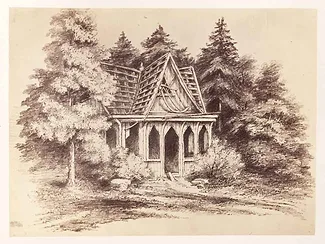
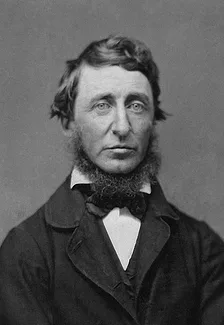
On September 6, 1847, Henry David Thoreau left his one-room house at Walden Pond and returned to Concord. Living at Walden for over two years had been a life-changing experience for the thirty-year-old Thoreau. Wanting to be a writer, he went to the pond to write, and while there he did exactly that. He produced two drafts of A Week on the Concord and Merrimack Rivers. He wrote one lecture about Thomas Carlyle and another about living at the pond called “A History of Myself.” He also penned an essay titled “Ktaadn” about going to Maine in the summer of 1846. And he wrote in his journal almost daily. But what would he do once he was back in Concord?
The abolitionists of the 19th century valued, revered, and lived by the words of the Declaration of Independence. The proclamation “We hold these truths to be self-evident, that all men are created equal, that they are endowed by their Creator with certain unalienable Rights, that among these are Life, Liberty and the pursuit of Happiness” affirmed that all individuals possess equal human dignity. The abolitionists lived in one era when our country was not living up to those words, and as we celebrate the 250th anniversary of the Declaration of Independence, like them, we find the promise of those words again in peril.
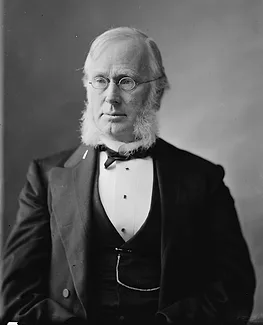
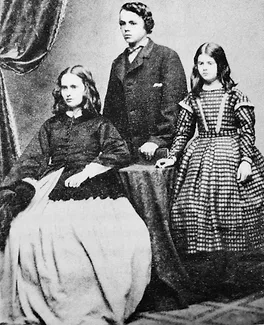
From almost the very beginning of Concord’s founding in 1635, the Hoar family played a prominent role in the town’s history. Recognized for their leadership in law, politics, and social reform, in addition to their distinguished legal and political careers, the Hoars shaped both local government and national policy. Described as “leaders to a higher and better sphere, both in social and political sense,”1 they were better known around town—and throughout Massachusetts—as the Royal Family of Concord. And none of them lived up to the family ideal of public service better than George Frisbie Hoar.
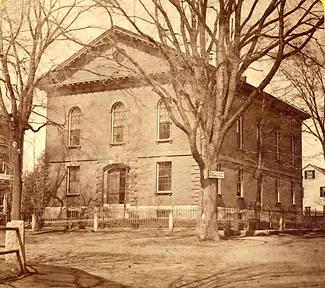
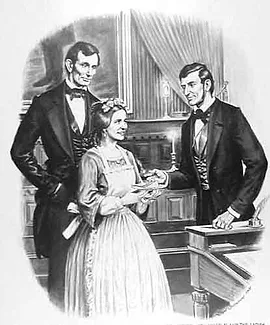
The Lyceum Movement started in New England in 1826, when educator and scientist Josiah Holbrook founded the first lyceum in Millbury, Massachusetts. Inspired by the classical Lykeios (Λύκειος) in Ancient Greece, where Aristotle taught, the movement was created to bring education to ordinary people through lectures, debates, and readings. Lyceums quickly spread across New England, fostering education, self-improvement, and civic engagement, and many towns soon formed lyceums of their own, including Boston in 1829 and Salem in 1830. By the 1830s, there were Lyceums across the country.
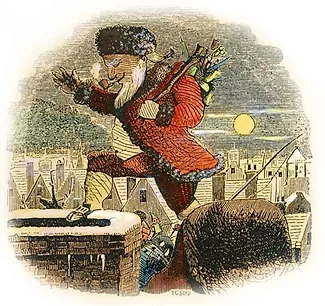
When November rolls around each year many Americans begin to think about the upcoming holidays. Traditional family recipes are dusted off for Thanksgiving as relatives and friends are invited to share the feast. Almost as soon as dinner is over, thoughts turn to Christmas as decorations, presents, and parties become the center of attention. Many of our holiday traditions date back to the 19th century, and modern Americans would easily recognize their ancestor’s Thanksgiving and Christmas celebrations.
“October is the month for painted leaves,” Henry Thoreau wrote in 1860. “Their rich glow now flashes round the world.” And while it’s true that other parts
of the world experience autumnal tints every year,
they seem to be brighter and more vivid in New England.
In 1860, Nathaniel Hawthorne and his family returned to Concord after living abroad for seven years. Now, back in the home they called The Wayside, the Hawthornes would rejoin their circle of literary friends.
As tensions between the North and South increased throughout the 1850s, Ralph Waldo Emerson, like many Americans, was becoming more resigned to the prospect of civil war. He was convinced that the “insanity” of the South’s attachment to slavery would soon tear the nation apart.
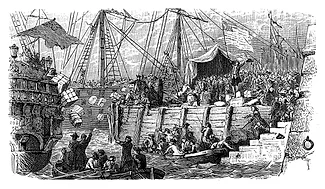
The Sons of Liberty was not just a Boston organization. The colonies of New York, New Hampshire, New Jersey, Maryland, South Carolina, and Virginia all had Patriot groups calling themselves the Sons of Liberty. In the years leading up to the American Revolution all the groups were in contact with each other, and all were united to rally public support for colonial resistance against the Crown.
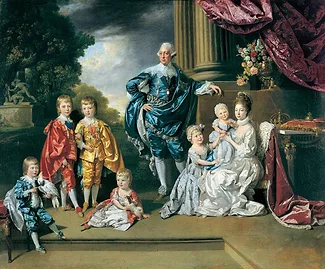
With the death of King George II on October 25, 1760, his 22-year-old grandson George III became the King of Great Britain and Ireland. Reports of the ascension of the new monarch reached the American colonies in early January 1761, and the first colonists to hear the news were the people of Massachusetts. The rise of the man who would become the last king of America was met with great fanfare and joy.