Discover Concord Logo
Toggle Mobile MenuToggle Mobile Menu
Subscribe
  • Home
  • Current Issue
  • Back Issues
    • Fall 2025
    • Spring 2025
    • Winter 2025
    • 2024 Back Issues
    • 2023 Back Issues
    • 2022 Back Issues
    • 2021 Back Issues
    • 2020 Back Issues
    • 2019 Back Issues
  • Browse Topics
    • Abolitionism in Concord
    • American Revolution
    • Arts & Culture
    • Celebrity Profiles
    • Civil War
    • Concord History
    • Concord Writers
    • First Nations People of Concord
    • Historic Sites in Concord
    • Parks & Nature
    • Patriots of Color
    • Things to See & Do
    • Transcendentalism
    • Trivia
    • Untold Stories of Concord
  • Plan Your Visit
  • Events
  • Purchase Subscriptions and Back Issues
  • Discover the Battle Road
  • 250 Collectibles
  • Trading Cards
  • More
    • About Us
    • Advertise
    • Contact Us
Toggle Mobile MenuToggle Mobile Menu
Home » Publications » Discover Concord

Our Publications

Please select a publication below.

Discover Concord
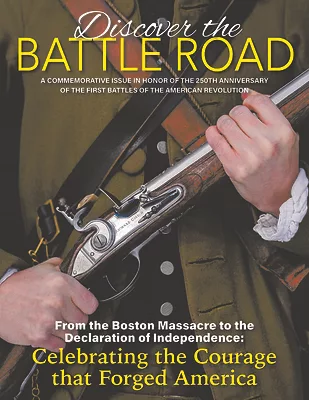
COVER BattleRoad.jpg

Discover the Battle Road

Volume: 1
Edition: 1
  • Content in this issue

Content in this issue

Back to Top
IMG_1378.jpg

Militia Companies and the April 19th Alarm

March 28, 2025
Jim Hollister
No Comments

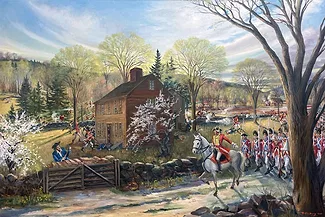
April 19, 1775, marked the first battle of the American Revolution. On that day, 700 British soldiers marched from Boston to Concord to seize a stockpile of military arms and supplies. The expedition caused Patriot leaders to raise the alarm and muster the militia. The scale of the response is truly staggering and hints at a surprising amount of organization. 


Read More
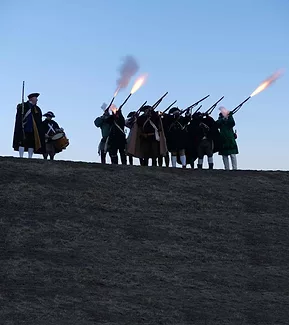
The-Acton-Minutemen-fore-a-volley-from-the-hill-at-NARA-Park-Winter-Carnival-2017.jpg

“I Haven’t a Man Who is Afraid to Go” The Acton Minutemen on April 19, 1775

March 28, 2025
Steve Crosby
No Comments

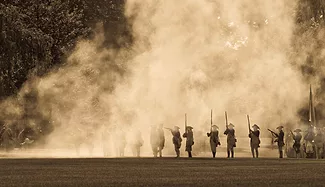
The Acton Minutemen were formed at the end of 1774 at a town meeting. Tensions with England had grown to a boil, and towns everywhere were responding by training their men to fight. The town of Acton, which had previously been part of Concord, chose their best men from their existing militia units to form the new Minute Company, and those men voted 30-year-old Isaac Davis as their captain.

It was the law of the land that every man between the ages of 16 and 60 was required to serve in his town’s militia. They were not paid and met twice each year to conduct marching and musket drills. By contrast, minute companies were paid and met twice each week to drill and train and were arguably among the best trained soldiers in the area when hostilities broke out in April of 1775.


Read More
alarm-riders-istock.com-sphraner.jpg

An Illustrated Timeline of April 19, 1775

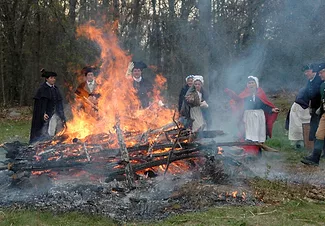
What happened on April 19, 1775? Explore this illustrated timeline for the full story.
March 28, 2025
Erica Lome
No Comments

What happened on April 19, 1775? Explore this illustrated timeline for the full story. 


Read More
The_bloody_massacre_by_Paul_Revere-Wikimedia.jpg

The Boston Massacre: Spark of Revolution or Act of Self-Defense?

March 28, 2025
Alexander Cain
No Comments

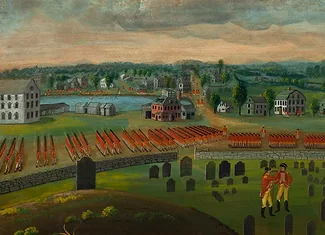
The Boston Massacre unfolded on March 5, 1770, on King Street in Boston. While often depicted as a brutal act of British oppression, a closer look reveals the incident was the result of increasing friction between the colonists and the British authorities. 

A series of economic acts passed by the British Parliament in the 1760s designed to generate revenue and curb England’s massive debt from the French and Indian War sowed the seeds of discontent in the Massachusetts colony. Colonists in America fiercely resisted these measures, viewing them as an infringement on their rights as British citizens. While many colonists adopted a policy of economic boycotts to reverse the laws, others, especially those in Boston, resorted to violence. 


Read More
Boston-Port-Bill-2.jpg

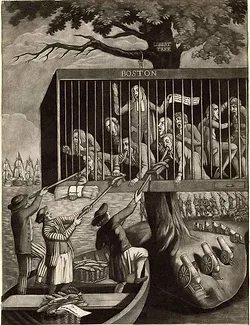
The Boston Port Act: A Closed Harbor Leads to Open Revolt

March 28, 2025
Alexander Cain
No Comments

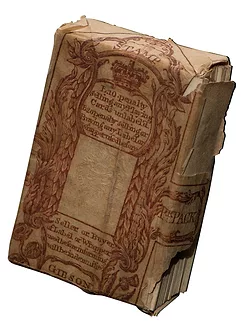
Passed on March 31, 1774, the Boston Port Act closed Boston Harbor to most commerce, demanded reparations for the destroyed tea, and imposed a naval blockade on the town. This drastic measure crippled the town’s economy—a significant blow to a seaport heavily reliant on maritime trade. Businesses shuttered, unemployment soared, and the town faced economic ruin.

Parliament believed that the colonies would not support Boston and that it would only be a short time before Boston acquiesced and paid for the tea, reestablishing British authority in the colonies.1 Word of the act reached the colonies on May 11, setting off immediate anger and opposition. The May 16 edition of the Boston Evening Post warned, “AMERICANS … Tyranny without a covering now stares you all in the face. . . You must ALL unite to guard your Rights, or you will ALL be slaves!”2


Read More
Massachusetts-Government-Act.jpg

The Massachusetts Government Act: Dismantling Self-Governance

March 28, 2025
Alexander Cain
No Comments
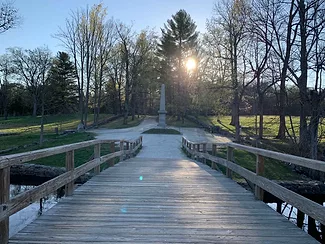
The Massachusetts Government Act of 1774 was a legislative measure enacted by the British Parliament in response to escalating colonial unrest, particularly following the Boston Tea Party. This act sought to tighten British control over the Massachusetts Bay Colony by significantly altering its governance structure and severely limiting the colonists’ civil liberties.

Before passage of the act, Massachusetts enjoyed a significant degree of self-governance, allowing colonists to exercise local autonomy and manage provincial affairs with minimal interference. However, following the Tea Party, British officials viewed this autonomy as a breeding ground for resistance to British economic and political policies and potential rebellion. Thus, the act aimed to curtail these self-governing privileges and signal expected obedience to royal authority.


Read More
Massachusetts-Court-Closure.jpg

The Massachusetts Court Closures: “The Flames of Sedition Spread”

March 28, 2025
Alexander Cain
No Comments

The Massachusetts Court Closures of 1774 marked the escalation of Massachusetts’ resistance to British authority. The closures were a direct response to the Coercive Acts (also known as the Intolerable Acts), a series of punitive measures passed by the British Parliament in 1774. Among the measures was the Massachusetts Government Act, which severely restricted colonial self-governance by placing the judicial system under the direct control of the royal governor and eliminating town meetings without prior approval. Many colonists believed that this act infringed their rights and autonomy as British citizens.


Read More
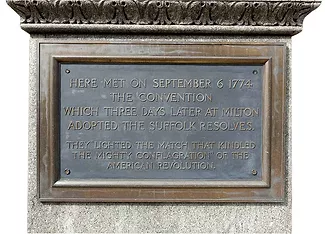
Suffolk-ResolvesNOBG.jpg

The Suffolk Resolves of 1774: A Comprehensive Plan of Defiance

March 28, 2025
Alexander Cain
No Comments

When General Thomas Gage dissolved the Massachusetts Colonial Legislature on June 21, 1774, many communities throughout the colony demanded that town and regional committees be organized to counter Gage’s actions and form a constitutional government that would protect their rights and liberties. By late August, correspondence committees across the colony called for representatives from every town to organize county conventions and draft resolutions outlining the strategy and legal justification for opposing Crown policy.


Read More
Massachusetts-Provincial-Congress-1.jpg

The Massachusetts Provincial Congress: A Coup d’Etat

March 28, 2025
Alexander Cain
No Comments

The Massachusetts Provincial Congress was a revolutionary governing body that played a crucial role in the lead-up to the American Revolution. Formed in response to escalating tensions with Great Britain, it served as a de facto government for the colony, exercising powers that had traditionally belonged to the British-appointed governor.

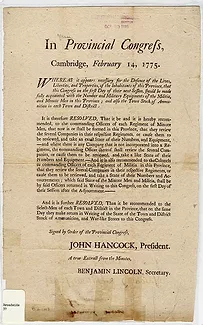
On October 5, 1774, over ninety representatives from the various Massachusetts county conventions met in Salem in defiance of General Thomas Gage’s dissolution of the Massachusetts Colonial Legislature. Upon learning of the meeting, Gage attempted to shut down the meeting but failed. Acting upon the advice of the various county conventions and resolves, especially the Suffolk Resolves, the representatives quickly voted to organize themselves into a “Provincial Congress…to take into consideration the dangerous and alarming situation of public affairs in this province, and to consult and determine on such measures as they shall judge will tend to promote the true interest of his majesty, and the peace, welfare, and prosperity of the province.”1 The representatives remained in Salem for a few days and then quickly adjourned to reconvene in Concord, Massachusetts.


Read More
Paul-Revere's-Ride---Charles-Green-Bush-TIFF-file.jpg

The Midnight Ride: Forewarned is Forearmed

March 28, 2025
Alexander Cain
No Comments

In late winter and early spring of 1775, General Gage, the British military governor of Massachusetts, received orders from London to arrest colonial leaders and seize rebel arms and ammunition stockpiles. Contemplating his options, Gage prioritized the recovery of four brass cannons, which had been stolen from Boston and reportedly hidden in Concord, along with stockpiles of muskets, ammunition, and gunpowder. His plan called for seven hundred elite troops under Lieutenant Colonel Francis Smith to march to Concord on the evening of April 18, with orders to destroy all military supplies while minimizing harm to civilian property. A small party of officers was also dispatched ahead to intercept any messengers, ensuring no warnings reached Concord ahead of the troops.


Read More
Old-North-Bridge-istock.com-Jmorse2000.jpg

Historic Concord: Plan Your Visit

March 28, 2025
No Comments
Natl-Park-Service-Map-Insert.p1.jpg

Minute Man National Historical Park: The Birthplace of the American Revolution

March 28, 2025
No Comments

Few places in America capture the spirit and legacy of a nation quite like Minute Man National Historical Park – located along the “Battle Road” corridor of Concord, Lincoln, and Lexington, Massachusetts. It was here that the first running battles of the American Revolution took place on April 19, 1775. Later, in the 19th century, Concord became the epicenter of a literary, philosophical, and environmental movement that endures today. Revolutions—whether on the battlefield or in the mind—demand vision, dedication, and sacrifice. The same is true for preserving the rich history to be found in these remarkable places.


Read More
iStock-458135085.jpg

The Loyalist Guides of Lexington and Concord

March 28, 2025
Alexander Cain
No Comments

In 1774 when Parliament passed the Boston Port Act in an attempt to break the Massachusetts colonists of their resistance to Crown policy, it also authorized English General and acting Massachusetts Governor Thomas Gage to undertake any military measures necessary to help bring the colony under control. In late winter and early spring of 1775, Gage received a series of dispatches from London ordering him to not only arrest the leaders of Massachusetts’ opposition party but to launch a major strike against the apparently growing provincial stockpiles of weapons and munitions located throughout eastern Massachusetts. As he contemplated these orders, Gage considered a variety of military options, including a long-range strike against the large store of weapons located in the shire town of Worcester, forty miles west of Boston.


Read More
4th-Regiment-of-Foot-Light-Infantry-Company.jpg

Who Won the Battles of Lexington and Concord?

March 28, 2025
Jim Hollister
No Comments

In war, there are many ways to define victory. So, who won the Battles of Lexington and Concord? On the surface this may seem simple. The colonists were able to keep most of their military supplies safely out of British hands. The British soldiers then suffered heavy casualties during their retreat to Boston where they were trapped and besieged. However, though things certainly did not go the way they wanted, did the British Army actually lose on April 19, 1775? The answer depends upon how you define victory.


Read More
thumbnail_POC-MINUTE-MAN-1-RGB.jpg

Local Patriots of Color in the American Revolution

March 28, 2025
Jarrad Fuoss
No Comments

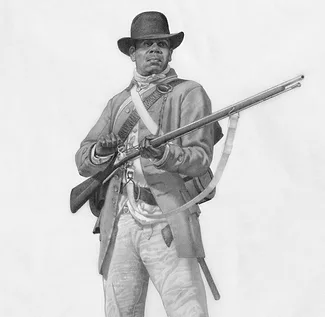
On April 19, 1775, an estimated twenty to forty colonists of African or Native American descent fought in the first battle of the American Revolution. On that historic day, those men, often termed “Patriots of Color,” joined approximately 4,000 other men fighting British Regular soldiers along the “Battle Road” from Concord to Boston. Over the last 250 years, racism and historical bias have effectively ignored or trivialized the contributions of those men and many other people of color in the historic struggle that produced the United States. To understand who the Patriots of Color were, how they contributed to the American Revolution, and why they chose to do so, we must examine their social context.


Read More
Nick-Johnson-096.jpg

The Unheard Voices of April 19, 1775

March 28, 2025
Erica Lome
No Comments

On the morning of April 19, 1775, 71-year-old Martha Moulton witnessed a terrifying scene: hundreds of red-coated British Regulars marching into the town of Concord. These men were on orders from British General Thomas Gage to seize and destroy contraband military supplies stockpiled by the Provincial Congress. The ensuing conflict between the Regulars and Provincials sparked the American Revolution. 


Read More
Filming-along-the-Battle-Road-Shyala-Jayasinghe-ret.jpg

Ken Burns’ American Revolution: A View Through the Lens of History

March 28, 2025
Jennifer C. Schünemann
No Comments

The American Revolution, a new six-part, 12-hour series directed by Ken Burns, Sarah Botstein, and David Schmidt and written by Geoffrey Ward will premiere on PBS on November 16, 2025. The series examines how America’s creation turned the world upside-down. Thirteen British colonies on the Atlantic Coast rose in rebellion, won their independence, and established a new form of government that radically reshaped the continent and inspired centuries of democratic movements around the globe.


Read More
vecteezy_a-long-road-with-trees-and-colorful-flowers-ai-generated_33927474.jpg

A Monumental Road Trip in the Freedom’s Way National Heritage Area

Discovering the Past Through Revolutionary War Monuments, Memorials, and Markers
January 28, 2025
Cynthia L. Baudendistel
No Comments

The forty-five communities within the Freedom’s Way National Heritage Area were at the epicenter of the earliest debates regarding independence and the first battles of the American Revolution. Those events live on in the region’s rich tapestry of monuments, memorials, and markers commemorating those events.

Our top favorites are presented here as a great ‘road trip’ that you can take to dive into the exciting history of our area. 


Read More
British-soliders-marching-behind-wall.jpg

Secrets, Stones, and Soldiers on the Battle Road

March 28, 2025
Jaimee Joroff
No Comments

On the morning of April 19, 1775, over 700 King’s troops marched into Concord to search for military supplies that spies had told Royal Governor Gage were being hidden there to support a rebellion against the King. Their search met unexpected resistance, exploding into a day-long battle over eighteen miles from Concord to Boston with fighting on open ground and from behind trees and stone walls. Today, you can retrace the soldiers’ steps along the Battle Road and imagine the landscape and walls as they were that day thanks, in part, to a 2024 project by Minute Man National Historical Park to rebuild the park’s historic stone walls in Concord, Lincoln, and Lexington. Led by Michael Papile, a team of professional stone wallers affiliated with The Stone Trust (an organization dedicated to preserving and advancing the art of dry stone walling) restored these walls. Stone by stone, stories of time were put back together.


Read More
Battle-of-Menotomy-Reenactment-2024---Kate-Fox.jpg
Cultural Spotlight

Arlington, Massachusetts: A Hidden Hub of Arts and Culture in the Heart of Greater Boston

March 28, 2025
Katie Luczai
No Comments

Arlington, Massachusetts, a town steeped in history and natural beauty, is also a vibrant center for arts, culture, and dining. Birthplace of Uncle Sam, the town boasts a legacy of heroes, from Revolutionary War Patriots like David Lamson to abolitionist Prince Hall. From its historic landmarks to its contemporary art scene, Arlington offers a rich tapestry of experiences for residents and visitors alike. 

Arlington’s history is deeply intertwined with the American Revolution. History has highlighted the Battles of Lexington and Concord, but a third battle occurred on the fateful day of April 19, 1775, – the Battle of Menotomy. 


Read More
TheMusicMan.Act-One-142.jpg
Cultural Spotlight

The Concord Players

March 28, 2025
No Comments

She was spirited, unconventional, energetic, and prodigiously creative, so it’s no surprise that Louisa May Alcott (along with her sister, Anna) founded a theater company to entertain family, friends, and neighbors in the Town of Concord. Their Concord Dramatic Union of 1856 featured Alcott’s original plays and vignettes. 

In 1872, the Union became The Concord Dramatic Club and, in 1919, The Concord Players, when a dedicated group of amateur actors and theater lovers came together to “stimulate interest in dramatic work in the town and to elevate the standard of performance.” The group first performed in Monument Hall but, over time, established a permanent space in the Veteran’s building, a former drill shed located at 51 Walden Street. They built a stage with the aid of theater architect Charles Blackhall; a small replica of his design for Boston’s Colonial Theater. 


Read More
1FmgoVwQ.jpg
Cultural Spotlight

The Harmony of Community at the Concord Conservatory of Music

March 28, 2025
Sara Seng
No Comments

The Concord Conservatory of Music (CCM) has been a cornerstone of Concord’s cultural life for over 20 years. More than just a music school, CCM prioritizes accessibility and collaboration, where music transforms lives, and the community fosters a sense of belonging for all. 


Read More
CFPL-89-2.jpg
Cultural Spotlight

Concord Free Public Library

March 28, 2025
No Comments

The Concord Free Public Library is one of the most unique small libraries in America. It was founded in 1873 as a public/private partnership between the non-profit Library Corporation and the Town of Concord. From the beginning, the Library Corporation has been a dedicated steward as the owner of the buildings, grounds, and special collections, and the Town has provided the outstanding staff. This successful partnership has created a dynamic and exciting community center for lifelong learning where everything is free and open to the public. 


Read More
Network-Performance1174.jpg
Cultural Spotlight

The Umbrella Arts Center: A Rich and Accessible Cultural Destination in the Heart of Historic Concord

March 28, 2025
No Comments

In the heart of the historic Concord Center Cultural District, The Umbrella Arts Center at 40 Stow Street is a multidisciplinary, non-profit contemporary arts organization committed to nurturing and encouraging the arts. A cultural leader in MetroWest Boston, it provides broad and diverse access to a wide range of performing arts, visual arts, and arts education programs. Through these offerings, The Umbrella promotes creativity, learning, personal growth, and cultural exchange. 


Read More
Discovery-Museum_Morphable-Stream_Water-gallery_2_(c)-Jessica-Cronin-Photography.jpg
Cultural Spotlight

Discovery Museum

March 28, 2025
No Comments

“…for children play is serious learning. Play is really the work of childhood.” – Fred Rogers

At Discovery Museum, we focus on helping kids develop the skills to learn about their world: exploration and experimentation; persistence and resilience; understanding their own and others’ emotions. Real stuff and simple materials are our preferred tools for learning. 

Our philosophy is that kids learn through play. We offer play in both a STEM-rich environment and a natural and inviting outdoor space. If you offer kids open-ended explorations, they will follow their natural instincts to observe, predict, and experiment—in other words, to be scientists. 


Read More
Parade.jpg
Cultural Spotlight

Where Community Meets Heritage: Discover Concord Scout House

March 28, 2025
No Comments

Step back in time at Concord Scout House, where history and community converge in a beautifully preserved New England barn. As you approach down the pine-lined driveway, the white clapboard building emerges like a hidden treasure in the heart of historic Concord.

The Concord Scout House stands on land that was farmed dating back to the founding of the town of Concord. The property, 74 Walden Street, was part of land owned by Timothy Wheeler during the American Revolution. Wheeler was known for successfully hiding colonial supplies from the British troops on April 19, 1775. After a succession of farming owners, The Concord Massachusetts Girl Scouts, Inc. acquired the land with the barn from the Stow family in 1930.


Read More
North-Bridge-no-photo-credit-needed.jpg
Cultural Spotlight

OARS 3 Rivers: Protecting Concord’s Historic Waterways

March 28, 2025
Sarah E. Kwan
No Comments

For the past 250 years, the Concord River has been a witness to American history. On its banks, the first battle of the American Revolution took place. Today, the river and its sister waterways, the Assabet and Sudbury, face another pivotal moment—one that will shape their future.

OARS 3 Rivers is the voice and steward of these historic waterways, working to protect, restore, and expand access to the Sudbury, Assabet, and Concord (SuAsCo) rivers. Founded in 1986 to fight pollution, OARS has become a leader in science-driven conservation, restoration, and public engagement. Once polluted and overgrown with algae, these rivers are now healthier—swimmable in sections, teeming with wildlife, and welcoming to paddlers and anglers.


Read More
Garden-at-Sleepy-Hollow.jpg
Cultural Spotlight

The Friends Of Sleepy Hollow Cemetery, Inc.: Its Continuing Story

March 28, 2025
No Comments

In the fall of 2002, a group of Concord residents formed The Friends of Sleepy Hollow Cemetery with the mission to provide leadership to beautify, enhance, and advance the Cemetery, one of Concord’s treasures. 

As a 501©(3) charitable entity with a 13-member volunteer Board of Directors and guided with by-laws, the organization continues to strive for the accomplishment of projects in the Cemetery, designated on the Register of Historic Places.


Read More
Modern-Orchard-House---Trey-Powers.png
Cultural Spotlight

Orchard House: A Legacy of Literature and History

March 28, 2025
Jan Turnquist
No Comments

It is rare to find the very home where a beloved feminist author penned her most famous work, Little Women—a novel that has never been out of print for over a century and has been translated into more than 50 languages. Rarer still is to find that home still preserved just as she and her family left it, filled with their personal belongings. Add to that a rich history spanning centuries, and you have Louisa May Alcott’s Orchard House in Concord, Massachusetts.


Read More
_TRH_Winter_Candles_A-(2).png
Cultural Spotlight

The Robbins House

March 28, 2025
Jen Turner
No Comments

The Robbins House was originally located on an isolated farm overlooking the Great Meadows along the Concord River. The first two families who lived there were descendants of Caesar Robbins, a Revolutionary Patriot of color, and the house is one of the only known historic sites commemorating the legacy of a previously enslaved Revolutionary War veteran. In 1823, Caesar’s son Peter Robbins purchased the new two-room house and over 13 acres for $260. 


Read More
TFT_birth-house-exterior-April-1024x768-ThoreauFarm.org.png
Cultural Spotlight

Thoreau Farm: Walking the Battle Road Trail with Thoreau

March 28, 2025
No Comments

Transcendental author and naturalist Henry David Thoreau knew Concord’s trails intimately. He walked daily “to exercise both body and spirit” and observe nature. He felt human connection to wild places was rapidly deteriorating. “Each town should have a park” he argued, “where a stick should never be cut for fuel, a common possession forever, for instruction and recreation.”

A half-mile section of Battle Road Trail from Meriam’s Corner toward Thoreau’s birthplace offers a chance to consider the landscape, now protected as part of Minute Man National Historical Park, and our own view of the world. Thoreau’s words can be our guide. 


Read More
AW-2024.png
Cultural Spotlight

The Walden Woods Project

March 28, 2025
No Comments

In 1990, two large commercial development projects threatened the historical and ecological integrity of Henry David Thoreau’s Walden Woods, an area of 2,680 acres surrounding Walden Pond. Under the leadership of recording artist Don Henley, the nonprofit Walden Woods Project was founded. The organization launched a successful national advocacy and fundraising campaign to preserve the endangered sites.  


Read More
1.-living-history.png

Many Voices, One Revolution

March 28, 2025
Jennifer C. Schünemann
No Comments

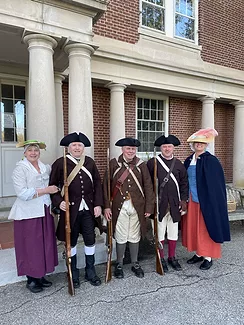
Each year, hundreds of thousands of visitors from across the globe come to Concord, Lexington, and the surrounding towns to witness the time-honored traditions, tactical demonstrations, and festive commemorations that pay tribute to the first battle of the American Revolution. These amazing living history moments are only possible with the dedication and support of hundreds of passionate historical reenactors who work year-round to ensure the stories of our nation stay alive in the hearts and minds of visitors to our national parks.


Read More
CentennialCelebration_DiningTent.jpg

Echoes of April 19: A Historical Look at Concord’s Anniversary Traditions

March 28, 2025
Anke Voss
No Comments

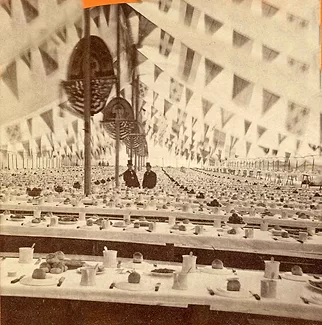
April 19, 2025 marks the semiquincentennial, or 250th anniversary, of the historic battles of Concord and Lexington. To mark the occasion, from April through June 2025, in collaboration with the Town Archives, the William Munroe Special Collections at the Concord Free Public Library will present an exhibition on Concord’s April 19 anniversary traditions. The exhibition features a lecture by Michael D. Hattem, a historian of the American Revolution and historical memory. We are excited to share some highlights from anniversary events held in Concord over the past 250 years. We hope they will get you in the spirit of the upcoming festivities!


Read More
Old-Hill-Burying-Ground-Concord-Freedom's-Way.jpg
Barrow Bookstore Presents

Discover the Battle Road Trivia

May 15, 2024
Jaimee Joroff
No Comments

Test your knowledge of the events of April 19, 1775, along the Battle Road!


Read More

Featured Stories

  • BridgeCollagePhoto.jpg

    It Began Here: Honoring America250

    This year's Patriots' Day honored the 250th anniversary of the first battles of the American Revolution with great fanfare, historic reenactments, commemorations, and somber remembrance of those who gave their lives to help give rise to the United States of America. As we make our way towards July 4, 2026, and the America250 celebrations, we hope you will enjoy a look back at the events of April 19, 2025.
  • istock.com-loop7--opening-image.jpg

    Winter Events to Light Up the Season

    Art, music, and theater make the winter months shine. Check here for everything that Concord's vibrant creative community has in store for us this year.
  • Santa-Claus2.jpg

    Tokens of Compliment and Love: 19th Century Concord Celebrates the Holidays

    When November rolls around each year many Americans begin to think about the upcoming holidays. Traditional family recipes are dusted off for Thanksgiving as relatives and friends are invited to share the feast. Almost as soon as dinner is over, thoughts turn to Christmas as decorations, presents, and parties become the center of attention. Many of our holiday traditions date back to the 19th century, and modern Americans would easily recognize their ancestor’s Thanksgiving and Christmas celebrations. 
©2026. All Rights Reserved. Content: Voyager Publishing LLC. Design, CMS, Hosting & Web Development: ePublishing
Facebook Instagram